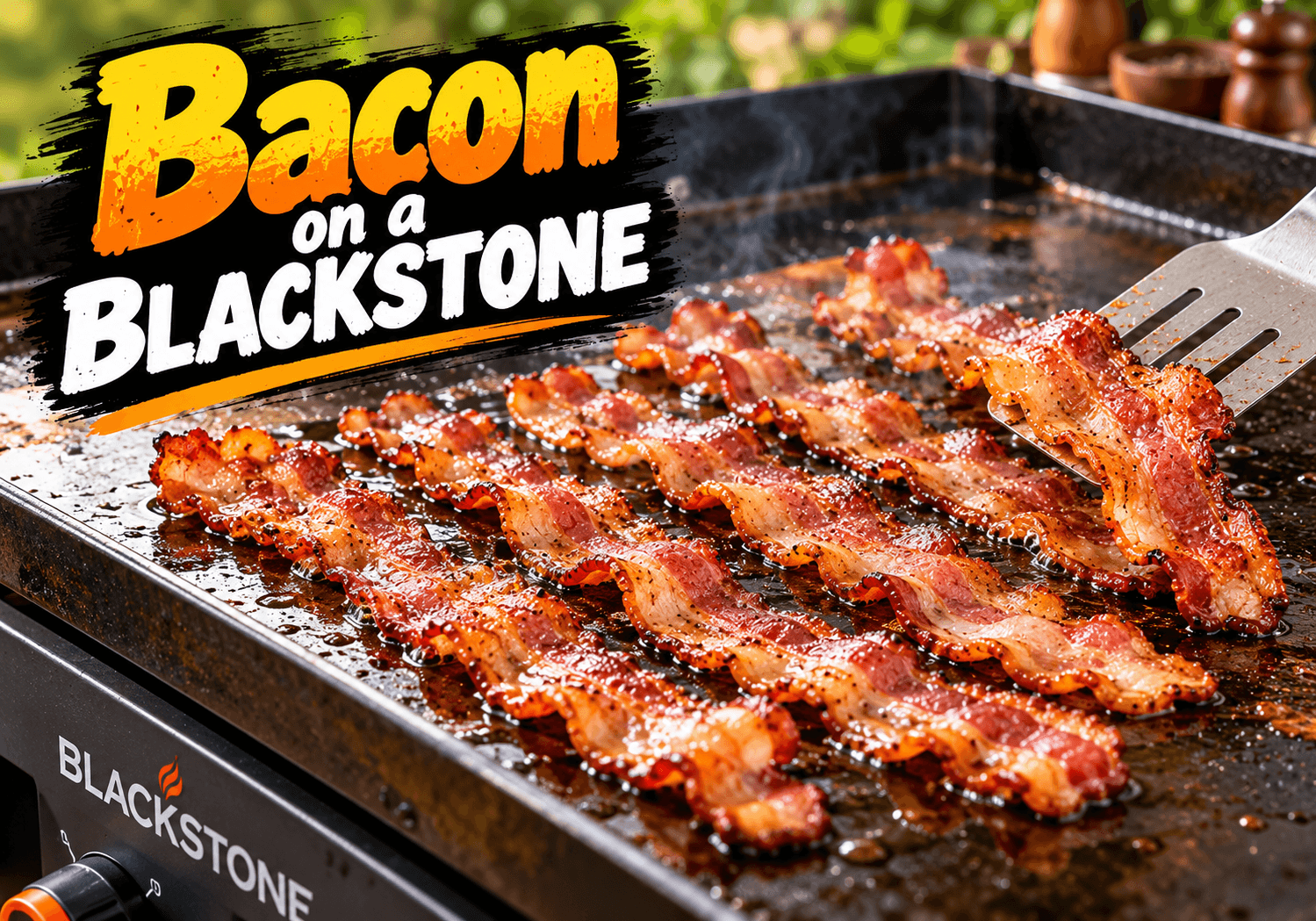
Cooking bacon on a flat-top griddle is faster and more controllable than pan frying, and Blackstone bacon is the best example of why. The wide, heavy surface holds steady heat, renders fat evenly, and lets you move strips with a spatula instead of crowding a skillet. This guide shows how to make bacon on a Blackstone from cold storage to crisp serving, including temperatures, timing, grease management, and cleanup. Whether you own a 17-inch, 22-inch, or 36-inch model, you can get consistent strips without burnt edges or rubbery centers. This is for beginner backyard cooks and Blackstone owners who want breakfast, burgers, or salads done on one surface.
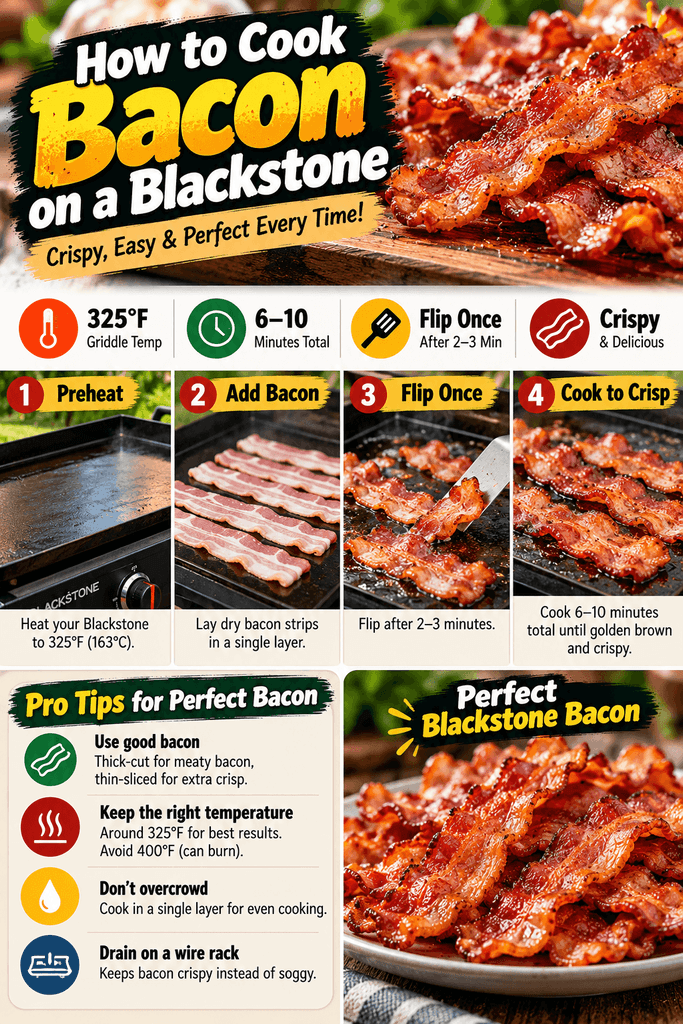
Quick Answer: For Blackstone bacon, heat the griddle to 325°F [163°C]. Lay dry strips in a single layer, flip once after 2–3 minutes, and cook 6–10 minutes total until fat renders and edges crisp. Pull thick-cut strips at deep golden brown; reheat leftovers to 165°F [74°C].What Makes Blackstone Bacon Different?
Blackstone bacon differs from stove-top bacon because the cooking surface is large, flat, and thermally heavy. On a cast iron or rolled steel flat-top griddle, heat spreads sideways instead of concentrating under one burner flame. That matters when you cook bacon on Blackstone surfaces: strips lie flush, fat pools away from the meat, and you can stage doneness across the griddle. The grease trap catches runoff, so you are not frying in a lake of oil.
Blackstone griddle bacon is a study in heat control. The main choice is hot start versus cold start. A hot start means preheating the griddle to 300–350°F [149–177°C] before laying down bacon. It gives faster browning and cleaner release once the seasoning layer is intact. A cold start means placing bacon on a cool surface, then warming it slowly. That method renders fat gently and can help thick-cut bacon cook evenly, but it takes longer and can stick if the metal is not seasoned or oiled.
For most Blackstone bacon, and especially Blackstone breakfast bacon, I use a moderate hot start. It gives crispy bacon on Blackstone without the scorched edges that happen at 400°F [204°C]. Watch surface temperature with an infrared thermometer; the plate can read hotter near burners and cooler at the ends. Turkey bacon and very lean center-cut bacon behave differently because they have less rendering fat, so they dry out faster and need lower heat or a brief finish on a wire rack.
What You Need for Blackstone Bacon
You do not need special gear to cook Blackstone bacon, but a few tools make the process safer and cleaner.
- Blackstone griddle: A 17-inch, 22-inch, or 36-inch flat top works. If you are new to outdoor cooking, learn how to start your grill safely before adding grease.
- Bacon: One pound (0.45 kg) of sliced pork belly is a standard batch. Thick-cut bacon gives meaty chew; thin-sliced bacon crisps fast.
- Oil: Optional. Use a high smoke point oil such as avocado, canola, or refined grapeseed. For best oil for Blackstone bacon, choose something neutral and apply a thin film with a silicone brush.
- Spatula: A thin, flexible turner slides under strips better than a bulky burger flipper.
- Tongs: Useful for moving curled pieces without tearing.
- Paper towels: Pat bacon dry before cooking; moisture is the enemy of browning.
- Wire rack: Drain crispy strips instead of trapping steam on paper towels.
- Grease trap or foil-lined container: Catch fat before it runs onto the ground or into a burner tube.
- Scrape block and grill brick: Clean carbon buildup after the plate cools.
- Infrared thermometer: Check surface temperature, especially near burners and edges.
If you do not have a wire rack, a paper towel-lined plate works for short holding. If you do not have a scrape block, use a wooden or plastic scraper while the griddle is warm, not scalding. Avoid metal blades on a seasoned surface unless you plan to re-season. For small apartments or camp kitchens, a single burner portable griddle can work, but the mass of a Blackstone gives more even Blackstone bacon.
Before lighting, clear a dry path to the grease trap and keep baking soda or a fire extinguisher nearby. Wear heat-resistant gloves when moving hot grease, and keep children and pets out of the cook zone. In wind, use a windscreen; drafts can swing surface temperature by 25–50°F [14–28°C].
Choosing Bacon for the Griddle
For Blackstone bacon, the label matters. Standard sliced bacon is cured pork belly, and it cooks predictably. Thick-cut bacon has more muscle and fat, so it needs a slightly lower surface temperature and a few extra minutes. Thin-sliced bacon can go from raw to brittle in under five minutes, so pull it early. Center-cut bacon is leaner and can turn chewy if you chase maximum crispness.
Flavored bacons add sugar and smoke. Applewood bacon and hickory smoked bacon often contain sweetener or glaze, which burns faster. Cook these at 300°F [149°C] and watch the color. Maple-glazed strips behave the same way: delicious, but quick to darken. Uncured bacon is not “raw” in the sense of unsafe; it is cured with celery powder or other natural sources, but it still needs the same refrigeration and heating rules.
If you buy slab bacon or a whole pork belly, slice it yourself into 1/4-inch (0.6 cm) strips. Use a knife for cutting meat and keep the belly chilled; cold fat slices cleaner. Streaky bacon, the British-style layered cut, works well on a griddle because fat and meat alternate evenly. Back bacon is leaner and more like a chop, so treat it as a quick sear rather than a strip bacon cook.
Also check whether the bacon is injected or natural. Water-enhanced slices can spit and steam more, so pat them well and expect a slightly longer render. Low-sodium or uncured bacon may taste milder, but it does not change the safety rules. If you like very crisp strips for salads, buy standard sliced bacon instead of thick-cut; it reaches shatter-crisp texture faster and uses less griddle space.
Step-by-Step Blackstone Bacon Method
- Keep the bacon cold until the plate is ready. Raw pork should stay at 40°F [4°C] or colder, following FoodSafety.gov cold food storage guidance. Pat each strip dry with paper towels. Wet bacon steams, and steaming is how Blackstone bacon starts to stick.
- Preheat to the right zone. Set the griddle to 325°F [163°C]. For thin-sliced bacon, 300°F [149°C] is safer; for thick-cut bacon, 350°F [177°C] can work if you watch closely. Use an infrared thermometer on the cooking zone, not just the burner flame. A Blackstone surface can have hot spots near the burners and cooler zones near the ends.
- Scrape and oil lightly. If the seasoning layer is bare or rough, wipe the plate with a paper towel and a tiny amount of oil. You want a sheen, not puddles. This is the simplest answer to how to keep bacon from sticking to a Blackstone: clean metal, steady heat, and a thin lubricating film.
- Lay strips flat in a single layer. Do not crowd. On a 22-inch griddle, cook one pound (0.45 kg) in two batches if needed. Overcrowding drops surface temperature and causes the bacon to stew in its own fat. For bacon on flat top griddle cooking, space is flavor. Blackstone bacon deserves open space.
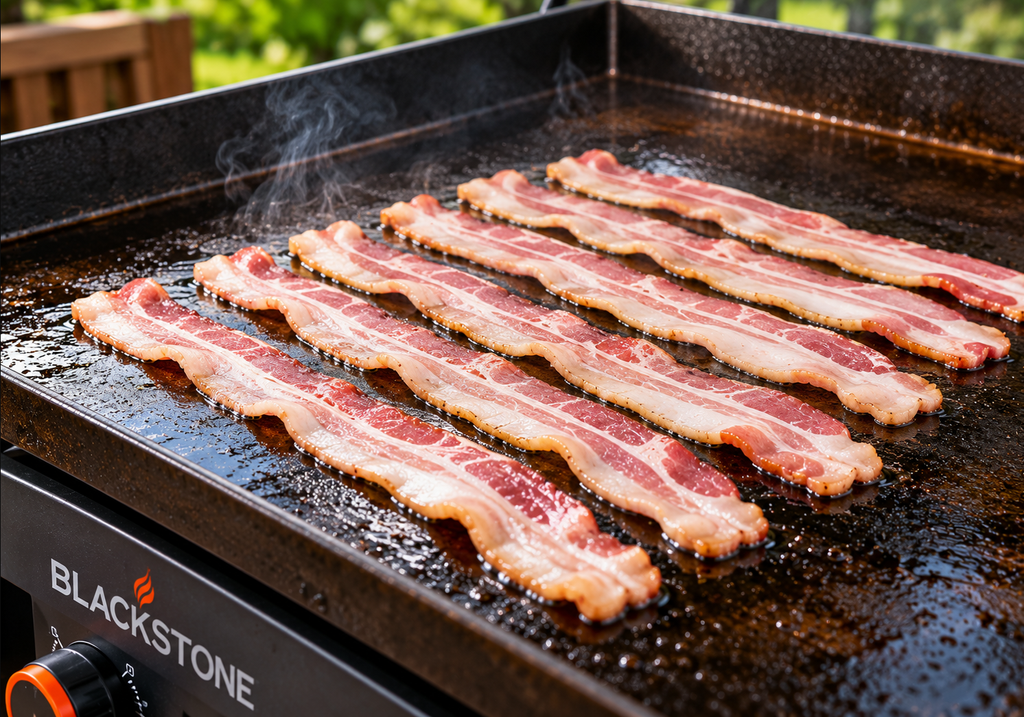
- Let it render. Cook 2–3 minutes without fiddling. The underside should turn golden and the fat should start to look glassy. If edges darken fast, slide the strip to a cooler zone. This is how to make crispy bacon on a Blackstone without burning: control the zone, not just the timer.
- Flip once. Use a thin spatula. Do you flip bacon on a Blackstone? Yes, but only once for most strips. Flipping too early tears soft meat; flipping too often prevents even browning. After the flip, the second side usually needs 3–7 minutes, depending on thickness.
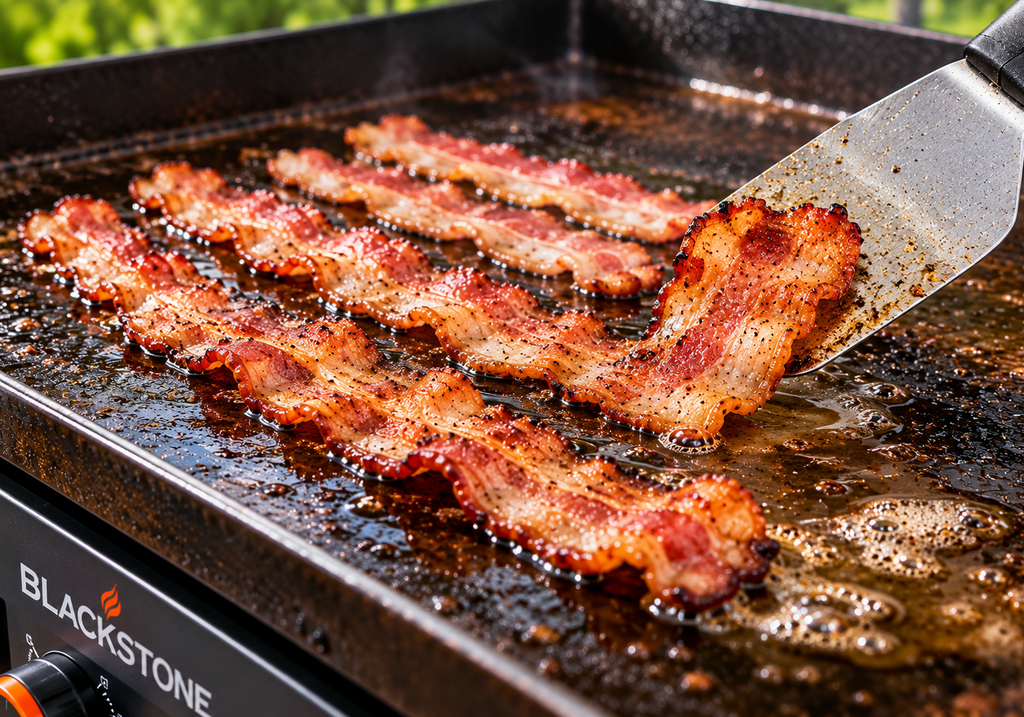
- Stage the batch. Move crisp strips to the cool edge or a wire rack while darker strips finish. Thick-cut bacon may need 8–10 minutes total; thin-sliced bacon may be done in 5–6. How long to cook bacon on a Blackstone is less important than how it looks: deep golden brown, firm but not charred, with no rubbery pink-gray patches. With Blackstone bacon, color and release matter more than the clock.
If you are cooking a mixed breakfast, plan the order. Bacon first, because its fat can flavor potatoes and eggs. Remove bacon to the cool edge, scrape loose bits into the fat zone, then add diced potatoes. Let them sit before stirring so they brown. Eggs go last on a cleaned, lightly oiled section, or you can crack them into bacon fat for richer whites. This sequence turns one pound (0.45 kg) of bacon into a full griddle meal without overcrowding.
- Check doneness safely. Bacon is cured, but it is still pork. Cook until the fat is rendered and the meat is no longer soft or raw-looking. If you slice your own pork belly or serve people who need extra caution, heat the thickest part to at least 145°F [63°C], the USDA safe minimum internal temperature for fresh pork cuts, then rest for 3 minutes. For reheated leftover Blackstone bacon, heat to 165°F [74°C].
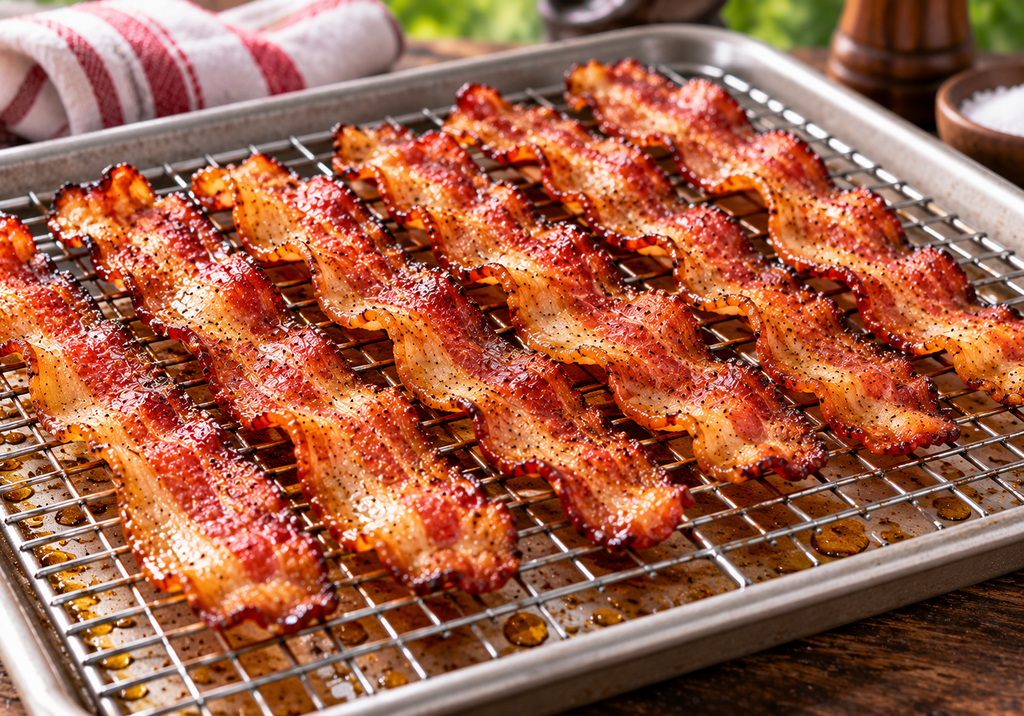
- Drain on a wire rack. A rack keeps air moving under the strips. Paper towels are fine for a quick blot, but stacked towels can steam the bottoms and soften your crispy bacon on Blackstone.
- Handle grease immediately. While the plate is warm, tilt or wipe runoff into the grease trap. Never pour hot grease down a drain. Once cooled, scrape carbon buildup with a scrape block. Deglaze with a small splash of water only if your griddle manual allows it and the surface is not electrically exposed; otherwise, scrape, wipe, and re-oil.
Frozen bacon note: Can you cook frozen bacon on a Blackstone? Yes, but separate slices first if possible. Frozen strips drop plate temperature and release more moisture. Start at 300°F [149°C], give extra 2–4 minutes, and flip when the first side releases cleanly.
Blackstone Bacon Temperature and Time Table
What temperature to cook bacon on a Blackstone depends on thickness, sugar content, and how crisp you like it. There is no single Blackstone bacon temperature that fits every strip. Use the table as a starting point, then trust your eyes and the release of the strip.
| Bacon type | Griddle temp | Total time | Flip cue | Done look |
| Thin-sliced | 300°F [149°C] | 4–6 min | 1.5–2 min | Pale gold, snappy |
| Standard sliced | 325°F [163°C] | 6–8 min | 2–3 min | Golden, flexible crisp |
| Thick-cut | 325–350°F [163–177°C] | 8–12 min | 3–4 min | Deep golden, meaty chew |
| Applewood or hickory smoked | 300°F [149°C] | 5–8 min | 2 min | Brown before sugar burns |
| Turkey bacon | 300°F [149°C] | 4–7 min | Halfway | Firm, not brittle |
| Frozen slices | 300°F [149°C] | 8–12 min | When releases | Even color, no icy spots |
For internal temperature checks, insert a probe into the thickest part of a wide strip. Commercial thin bacon is hard to probe accurately, so visual cues matter more. If the strip bends sharply instead of flopping, it is closer to crisp. If it tears when flipped, it needs another minute.
Pitmaster Tips for Better Blackstone Bacon
Pitmaster Tip: Save the rendered fat. It is liquid gold for hash browns, beans, or a redstone cornbread recipe variation. Strain it through a paper towel into a heat-safe jar, refrigerate promptly, and use within a week or freeze for longer storage.
- Preheat longer than you think. Ten minutes is often not enough for a heavy griddle. Give it 15 minutes at 325°F [163°C], then check the surface temperature in three spots.
- Make three zones. Keep one area hotter for searing, one medium for steady rendering, and one cool edge for holding. This is the easiest way to cook a full pound without turning half the batch to charcoal.
- Do not press hard. A light press can flatten curled strips, but squeezing forces fat out too fast and leaves meat tough.
- Season after, not before. Bacon is already salted. Cracked pepper, a whisper of maple sugar, or hot honey belongs after cooking, when it can cling without burning.
- Use the cool edge for burgers and eggs. Once the bacon is nearly done, push it aside and crack eggs or smash patties in the fat. That is the real advantage of Blackstone bacon in a breakfast lineup.
- Mind the hood. Can you cook bacon on a Blackstone with the lid down? If your setup has a cover or hood, avoid sealing it while strips are wet; trapped steam softens crust. Vent it, or cook uncovered.
- Smoke is optional. A Traeger pellet feeder or Weber smoke charger can add hickory smoke, but direct griddle heat is the point. If you want smoky meat, bacon on pellet grill is a better slow-cook route.
A 17-inch griddle fits a few strips; a 22-inch model handles a small family batch; a 36-inch surface can cook one pound (0.45 kg) in one pass with zones. Do not force a large batch onto a small plate, because crowding is why beginners think Blackstone bacon sticks or burns. In cold weather, preheat 5 minutes longer. In wind, shield the burners. Keep raw packages chilled until the plate is ready.
Common Mistakes That Ruin Blackstone Bacon
Common Mistake: The classic Blackstone bacon mistake is turning the burner to high because the bacon looks slow. A screaming 400°F [204°C] surface can brown the outside before the fat renders, leaving strips leathery and bitter.
- Skipping the dry step. Water on the surface creates steam. Steam prevents browning and makes bacon slip around instead of releasing cleanly.
- Crowding the plate. Piling strips together drops temperature and traps moisture. Cook in batches; the second batch will be easier because the griddle is already seasoned with fat.
- Flipping too often. One flip builds color. Constant turning gives pale, patchy strips and increases the chance of tearing.
- Using too much oil. Bacon has plenty of fat. A thin film is only insurance for a new or heavily scraped surface.
- Ignoring sweetened labels. Applewood bacon, hickory smoked bacon, and maple-glazed strips contain sugars that burn before pork proteins brown. Lower the heat and watch closely.
- Letting lean strips overcook. Turkey bacon and center-cut bacon have little fat to cushion them. Pull them when firm, not brittle.
- Cleaning with cold, hard grease. Scraping a frozen grease trap is messy and risky. Wipe while warm, then cool and dispose properly.
These fixes keep Blackstone bacon crisp, evenly colored, and safe to eat. If a batch sticks, do not add oil mid-cook; raise the heat slightly only if the surface is clean, and let the next strip release on its own.
Safety, Grease, and Cleanup for Blackstone Bacon
Food safety starts before the burner lights. Keep raw bacon refrigerated at 40°F [4°C] or colder, and handle it according to USDA FSIS pork guidance. Do not leave cooked bacon out longer than 2 hours, or 1 hour if the ambient temperature is above 90°F [32°C], following FoodSafety.gov. Use separate cutting boards and towels for raw pork, and wash hands before handling buns, eggs, or fruit.
Grease management is the other half of the job. Hot fat can ignite if it touches an open flame or overly hot metal. Route runoff into the grease trap, not into the burner box. If your model has a rear tray, line it with foil for faster cleanup. When the griddle cools to warm, scrape the surface, wipe with paper towels, and wash according to the manufacturer’s care instructions. Dry fully, then apply a light oil coat to protect the seasoning layer. Good grease habits protect Blackstone bacon flavor and your outdoor kitchen.
Reheat leftover Blackstone bacon to 165°F [74°C], the USDA safe minimum internal temperature for leftovers. Freeze cooked bacon in single layers between parchment, then wrap tightly; thaw in the refrigerator. Follow the FoodSafety.gov chart for opened raw bacon and frozen pork storage windows.
After cooking, outdoor grease smells can linger. Cover the griddle with one of the heavy-duty grill covers once it is cool, and use kitchen odor cures for towels, trash cans, and nearby cabinets.
Serving Ideas and Leftovers
Blackstone bacon is best when it still has a little snap. Serve it in stacks on a warm plate with eggs, toast, or cornbread. Chop crisp strips over salads, blend into burger toppings, or layer into club sandwiches. Rendered fat can fry potatoes, green beans, or rice for a quick hash. If you are hosting, cook a double batch and hold on a wire rack in a 200°F [93°C] oven; the rack keeps steam from making the bacon soggy.
For make-ahead brunch, cook bacon to just set, not fully crisp, then finish on the griddle for 30–60 seconds per side. This keeps strips pliable for egg wraps and burgers. For BLTs, drain 30 seconds so hot fat does not wilt lettuce. For pasta, chop warm bacon and toss off the burner.
Leftovers turn into bacon bits, pasta topping, or sandwich filler. Reheat in a skillet, oven, or microwave until steaming at 165°F [74°C]. Do not refreeze thawed cooked bacon more than once for best texture. When packing for camping, store cooled bacon in a rigid container so it does not crush.
FAQ
How long to cook bacon on a Blackstone?
For Blackstone bacon, most strips take 6–8 minutes total at 325°F [163°C]. Thin slices may finish in 4–6 minutes, while thick-cut bacon can need 8–12 minutes. Time is a guide; pull when the fat is glossy, the edges are crisp, and no soft raw patches remain.
What temperature to cook bacon on a Blackstone?
For Blackstone bacon, start at 325°F [163°C] for standard sliced bacon. Use 300°F [149°C] for thin slices, sweetened applewood or hickory smoked bacon, and turkey bacon. Use 350°F [177°C] only for thick-cut bacon if you watch closely, because higher heat burns sugars and dries lean strips.
Can you cook frozen bacon on a Blackstone?
Yes, but expect slower rendering. Frozen strips chill the plate and shed moisture, so use 300°F [149°C], avoid crowding, and flip only when the first side releases cleanly. Add 2–4 minutes compared with thawed bacon. Pat dry surfaces if ice crystals are visible.
How to keep bacon from sticking to a Blackstone?
Dry the strips, preheat fully, and use a thin film of high-smoke-point oil if the surface is new or scraped bare. Do not move bacon until it releases naturally. A clean, seasoned flat-top with steady 300–325°F [149–163°C] heat prevents most sticking better than extra oil.
Do you flip bacon on a Blackstone?
Flip once, usually after 2–3 minutes on a medium-hot griddle. One turn lets each side render and brown without tearing. If strips curl, press lightly with a spatula for a second, then move on. Constant flipping makes uneven color and can shred thin bacon.
How to clean grease after cooking bacon on a Blackstone?
While the griddle is warm, scrape fat into the grease trap or foil-lined container. Wipe the surface with paper towels, then use a scrape block for carbon buildup. Cool completely, wash with hot soapy water if your manual allows, dry, and apply a light oil coat.
Conclusion
Blackstone bacon is one of the fastest wins on a flat-top griddle. Heat the plate to 325°F [163°C], keep strips dry and spaced, flip once, and pull at deep golden brown. Manage grease while warm, store leftovers safely, and use the rendered fat for the next dish. Once you learn how the surface behaves, you can cook breakfast for a crowd without standing over a tiny skillet. Start with one pound (0.45 kg), take notes on your griddle’s hot spots, and make the next batch even crisper.
Laura Smith

I'm Laura, I like all the kind of delicious grilled foods which makes me hungry all the time I see them. That's why I built this blog to share with you all of my Grilling experiences, recipes, and all the tips about foods that I've learned from food experts.