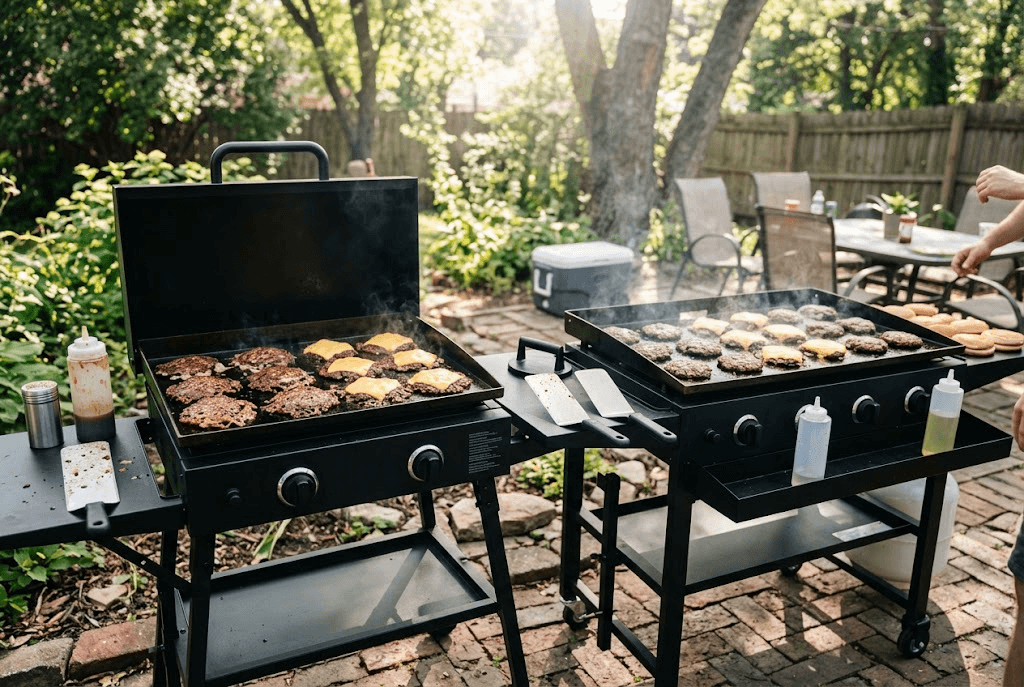
Blackstone 22 vs 28 inch is the question almost every first-time griddle buyer asks, and the answer depends on how many people you feed and where you store the thing. Both sizes use the same rolled steel cooktop, the same basic burner design, and the same easy cleanup. The real gap is cooking space, portability, and price.
I will walk you through both sizes the way a backyard cook would: what actually fits on the surface, how each one heats, what setup each needs, and who should buy which. By the end, you will know which one fits your patio, your family, and your budget.
Quick Answer: Blackstone 22 vs 28 Inch
Quick Answer: Choose the 22-inch if you cook for 1-4 people, want something portable, or have a small patio. Choose the 28-inch if you regularly feed 5-8 people, want built-in shelves and a stand, or cook full breakfasts. The 28-inch wins for most families because the extra cooking space makes big cooks far easier.
Blackstone 22 vs 28 Inch: Side-by-Side Comparison Table
Model names and specs change by year and retailer, so confirm the exact model you plan to buy. The figures below reflect the common 22-inch tabletop and 28-inch cooking station, per Blackstone’s official product pages.
| Factor | 22-Inch Tabletop | 28-Inch Cooking Station |
| Cooking surface | About 361 sq in | About 470 sq in |
| Burners | 2 | 2 |
| Total output | About 24,000 BTU | About 24,000 BTU |
| Typical setup | Sits on a table or counter | Folding legs with side shelves |
| Weight | Roughly 40-55 lb (18-25 kg) | Roughly 70-90 lb (32-41 kg) |
| Propane | 1 lb canisters, or 20 lb tank with adapter hose | 20 lb tank with regulator hose |
| Best for | Small households, camping, tailgating | Families, hosting, regular cooks |
| Price range | Lower tier, roughly 150-250 | Mid tier, roughly 250-400 |
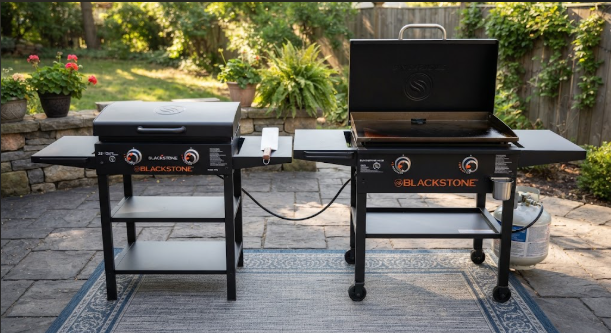
Cooking Space: The Biggest Difference Between Blackstone 22 vs 28 Inch
Cooking surface is the number that matters most. The 28-inch gives you roughly 30% more usable space than the 22-inch (about 470 versus 361 square inches ). That sounds modest, but it changes how you cook.
What Fits on Each Griddle
Here is a practical way to picture it using common foods. These counts are working estimates based on typical food sizes, so your results will vary with spacing and thickness.
| Food | 22-Inch (approx.) | 28-Inch (approx.) |
| 4 oz smash burger patties (about 4 in wide) | 6-8 | 10-12 |
| Pancakes (4 in) | 8-9 | 12-14 |
| Chicken thighs (boneless) | 6-8 | 10-12 |
| Hot dogs, in a row | 10-12 | 14-16 |
| Bacon strips (full length) | 8-10 | 12-14 |
The 22-inch handles a family of four in one or two batches. The 28-inch lets you cook for six to eight people with little waiting. When you are making smash burgers for a crowd, each extra round means cold burgers or a long line at the griddle.
Why Space Matters Beyond Capacity
A bigger surface also gives you room to run heat zones. You can sear meat on one side, cook vegetables in the middle, and keep cooked food warm on the cooler side. On the 22-inch, you can still make zones, but each zone is small, so one crowded pile of fajita veggies can eat half the surface.
Pitmaster Tip: Keep one-third of the griddle “empty” at all times. Use it as a staging zone for finished food and for flipping and tossing. If you cook edge to edge, the temperature drops fast and food steams instead of sears.
Heat Output and Performance on Each Size
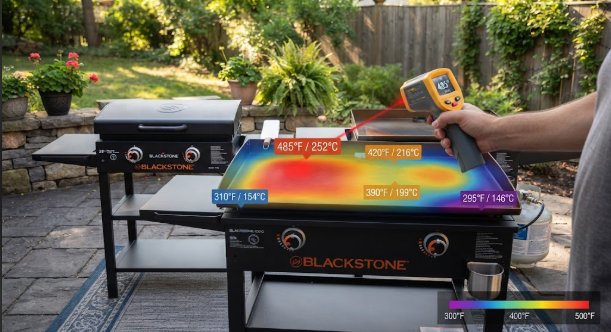
Both griddles use two burners and about the same total BTU], which creates an interesting result. The 22-inch has more BTU per square inch, so it heats faster and recovers faster after you drop cold food on it. The 28-inch has the same fuel spread over more steel, so it takes a few minutes longer to preheat and has cooler edges.
Preheating and Recovery
Plan on about 8-10 minutes of preheating for the 22-inch and 10-15 minutes for the 28-inch, depending on wind and ambient temperature. Aim for these surface temperatures:
- Pancakes and eggs: 300-350°F (150-175°C)
- Bacon and sausage: 325-375°F (165-190°C)
- Chicken thighs and veggies: 350-400°F (175-205°C)
- Smash burgers and steak strips: 450-500°F (230-260°C)
An infrared thermometer is the easiest way to check the real surface temperature. Do not trust the knob position alone, because wind and propane level change the result.
Hot Spots and Cool Zones
Both griddles run hottest directly over the burners and cooler in the corners and edges. The 28-inch makes this more noticeable because there is simply more steel to heat. The fix is to learn your map: test with a few drops of water or a row of pancake batter dollops and watch where they brown first.
Portability and Storage: Blackstone 22 vs 28 Inch Setup
This is where the 22-inch earns its place. It is built to move. It fits in an SUV or truck bed, sits on a picnic table, and works for camping, tailgating, and small balconies (check your building rules first).
Tabletop Convenience
The 22-inch needs a stable, heat-safe table or counter. That is both its biggest benefit and its biggest limit. If you do not own a sturdy table at the right height, you may end up buying one or cooking at an uncomfortable level.
Stand, Shelves, and Footprint
The 28-inch cooking station commonly includes folding legs and side shelves , so it feels like a complete outdoor kitchen. Shelves matter more than you think. You will set down spatulas, squeeze bottles, seasonings, and plates, and having them within reach makes cooking much smoother.
The trade-off is size and weight. It takes more storage space and is harder to lift into a truck alone. If you want to leave it outside, a good heavy-duty grill cover will protect the cooktop from rust and weather, and you will need a bigger one for the 28-inch.
Common Mistake: Storing a griddle uncovered on the patio after a rainy night. Rolled steel rusts fast when wet. Wipe it down, add a thin coat of oil while it is still warm, and cover it every time.
Fuel and Running Costs
Both sizes run on propane, but the setup differs. Many 22-inch models are designed for 1 lb propane canisters, which are convenient for camping but costly for regular use. With an adapter hose, you can run it from a 20 lb (9 kg) tank instead.
The 28-inch is normally set up for a 20 lb tank with a regulator hose]. That is the better long-term value if you cook often. Because both griddles have similar BTU ratings, fuel use per hour is close, though the 28-inch may burn a bit longer to heat and recover.
If you love gadgets on the side, a side burner on a gas grill can do things like boil pasta water or warm sauces while the griddle handles the main course. A griddle already has some of that flexibility built in.
Which Size Is Better for Different Foods?
The right size also depends on what you cook most. Here is how Blackstone 22 vs 28 inch plays out across common griddle meals.
Smash Burgers and Cheesesteaks
Smash burgers need a screaming hot surface and fast turnaround. The 22-inch recovers heat quickly, which is great for batches of four to six patties. The 28-inch lets you cook ten or more at a time, and you can melt cheese and toast buns in one pass.
Cook burgers to 160°F (71°C), which is the USDA safe minimum internal temperature for ground beef . Smash patties are thin, so use an instant-read thermometer to spot-check, and look for no pink in the center and clear juices.
Breakfast for a Crowd
Breakfast is where the 28-inch pulls ahead. You can run pancakes on one side, bacon in the middle, and eggs and hash browns on the other. On the 22-inch, you will cook in stages, and the first items go cold.
Pork products and sausage should reach 160°F (71°C) for ground pork and 145°F (63°C) for whole cuts with a 3-minute rest, per the same USDA chart .
Hibachi, Fried Rice, and Stir-Fry
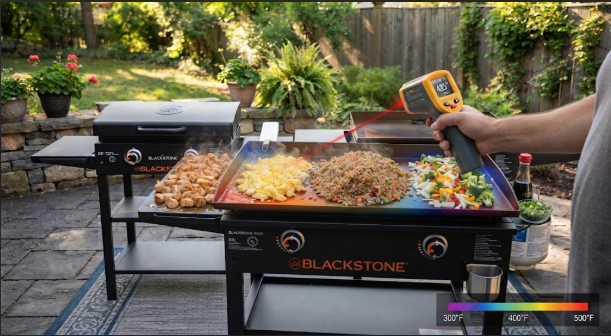
For hibachi-style meals, space is everything. You need room to toss rice, push veggies aside, and cook protein separately. The 28-inch is more comfortable for four or more diners, while the 22-inch works well for two to three people.
Cook chicken to 165°F (74°C) and keep cooked rice out of the danger zone. The USDA’s danger zone guidance says to keep cold foods at or below 40°F (4°C) and hot foods at 140°F (60°C) or above.
Fajitas and Sheet-Pan Style Dinners
Fajitas are a good test. Sliced peppers and onions take up lots of space, and the meat needs high heat. The 22-inch can do it, but you will cook veggies first, move them aside, then sear the protein. The 28-inch lets you do it all at once.
Beginner Friendliness and Learning Curve
If you are brand new to griddles, the 22-inch is simple and forgiving. A smaller surface is easier to keep clean and easier to learn how heat behaves. You will also use less oil and spend less time seasoning.
That said, the 28-inch is not hard to learn. The main skill is heat management: using one burner high and one lower, and keeping a cool zone for resting food. If you can start a grill safely, you can run either one.
If you are also weighing a different cooking style, like low-and-slow smoking, check our guide to the best pellet grills for beginners. A griddle and a pellet grill do very different jobs and pair well together.
Seasoning and Cleaning
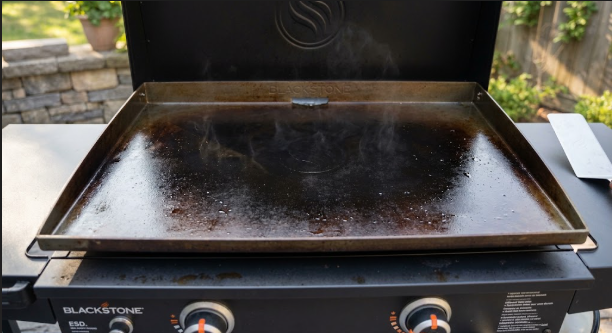
Both sizes need seasoning before first use. Apply a thin layer of high-smoke-point oil, such as flaxseed, avocado, or the oil recommended in your manual, heat until it smokes, then wipe and repeat 3-5 times. Follow Blackstone’s official seasoning instructions for your model .
Cleaning is the same on both: scrape while warm, squirt a little water on to steam off residue, wipe clean, and apply a thin oil film. The larger surface just takes a couple more minutes.
Pitmaster Tip: Wipe on oil with tongs and a folded paper towel, not your hand. A thin coat is better than a heavy one. Too much oil turns sticky and gummy instead of building a hard, black non-stick layer.
Cost Comparison: Blackstone 22 vs 28 Inch
Prices change often, so check current listings. As a rough guide, the 22-inch typically sits in the 150-250 range and the 28-inch in the 250-400 range . Bundles with a hood, cover, or accessory kit can shift these numbers.
The Real Cost of Ownership
The sticker price is only part of it. Add these essentials, whichever size you choose:
- Cover for your griddle (varies by size)
- Flat-top spatulas and a scraper
- Squeeze bottles for oil and water
- Seasoning oil or conditioner
- Instant-read thermometer
- Propane refills or canisters
- A table, if you buy the tabletop 22-inch
That last point is easy to miss. If the 22-inch requires a table you do not own, the price gap narrows. The 28-inch with built-in legs and shelves may be the better value once you add it all up.
Value Verdict
For casual cooks and travelers, the 22-inch is the budget winner. For people who cook weekly for four or more, the extra money for the 28-inch buys real time savings and comfort. If you cook for a crowd even occasionally, you will notice the difference.
When to Choose the 22-Inch Blackstone
Pick the 22-inch if most of these describe you:
- You cook for 1-4 people most of the time
- You camp, tailgate, or travel with your griddle
- You have limited patio or storage space
- You already own a sturdy outdoor table
- You want the lowest entry price
- You want faster heat-up and recovery
It is also a fine second griddle if you already own a larger one. Many cooks keep a 22-inch for travel and a bigger unit at home.
When to Choose the 28-Inch Blackstone
Pick the 28-inch if these sound like you:
- You feed 5-8 people regularly
- You host weekend cookouts or family breakfasts
- You want built-in shelves and a stable stand
- You cook full meals with several components at once
- It will live on your patio for most of the year
- You value comfort and speed over portability
If you host often, our tips for hosting a summer BBQ party on a budget pair well with a larger griddle, since it lets you cook for guests without leaving the party.
Prep Tools That Make Either Size Easier
Good tools matter as much as size. A sharp blade makes prep faster, especially for fajita strips, onions, and chicken. If you need to upgrade, see our picks for the best knives for cutting meat.
A few other basics:
- Two wide flat-top spatulas for flipping and chopping
- A sturdy scraper for smash burgers and cleanup
- Squeeze bottles for oil and water
- Melting dome for cheese and steaming
- Instant-read thermometer for safe temps
Final Decision Guide
Still torn? Use this quick filter:
- Count your regular diners. Four or fewer leans 22-inch. Five or more leans 28-inch.
- Check your storage. If you must move it often, choose the 22-inch.
- Check your furniture. No sturdy table? The 28-inch with a stand may be easier.
- Think about growth. If your family or guest list may grow, size up now.
- Set your budget. Tight budget, small crowd: 22-inch. Flexible budget, bigger crowd: 28-inch.
FAQ
Is a 22 inch Blackstone big enough for a family?
Yes, for a family of four it works well, especially for burgers, hot dogs, and stir-fry. You will cook in one or two batches. For five or more people, or full breakfast spreads, the cooking surface fills up fast and the 28-inch becomes more comfortable.
How many burgers fit on a 28 inch Blackstone?
Roughly 10-12 standard 4 oz (113 g) smash patties, depending on spacing. That is about 30% more than the 22-inch, which fits around 6-8. Leave room between patties for flipping and keep a cool zone for finished burgers and buns.
Is the Blackstone 28 inch worth the extra money?
If you regularly cook for five or more people, yes. The added space, shelves, and stand save time and reduce batch cooking. If you cook for one or two people or need portability, the 22-inch gives you the same cooking style for less money.
Can a 22 inch Blackstone run on a 20 lb propane tank?
Many 22-inch models can, using an adapter hose that connects to a standard 20 lb (9 kg) tank. Check your exact model and Blackstone’s manual first]. This is often cheaper than buying 1 lb canisters if you cook weekly.
Which Blackstone size is best for camping?
The 22-inch is the usual camping pick. It is lighter, easier to pack, and sits on a picnic table. The 28-inch is bulkier and heavier, so it suits home use better unless you drive a truck and camp near your vehicle.
Does a bigger Blackstone use more propane?
Not dramatically. Both sizes have similar total BTU ratings , so hourly fuel use is close. The 28-inch may use slightly more because it takes longer to preheat and recover, but your cooking time and heat setting matter more than size.
Conclusion: Blackstone 22 vs 28 Inch, My Recommendation
Blackstone 22 vs 28 inch comes down to people, space, and portability. Buy the 22-inch if you cook for a small group, travel, or want a lower price. Buy the 28-inch if you feed a family or host guests, because the extra surface, shelves, and stand make big cooks easier.
If you are still unsure and your household is four or more, size up. Most cooks outgrow a smaller griddle long before they regret a larger one.
Laura Smith

I'm Laura, I like all the kind of delicious grilled foods which makes me hungry all the time I see them. That's why I built this blog to share with you all of my Grilling experiences, recipes, and all the tips about foods that I've learned from food experts.