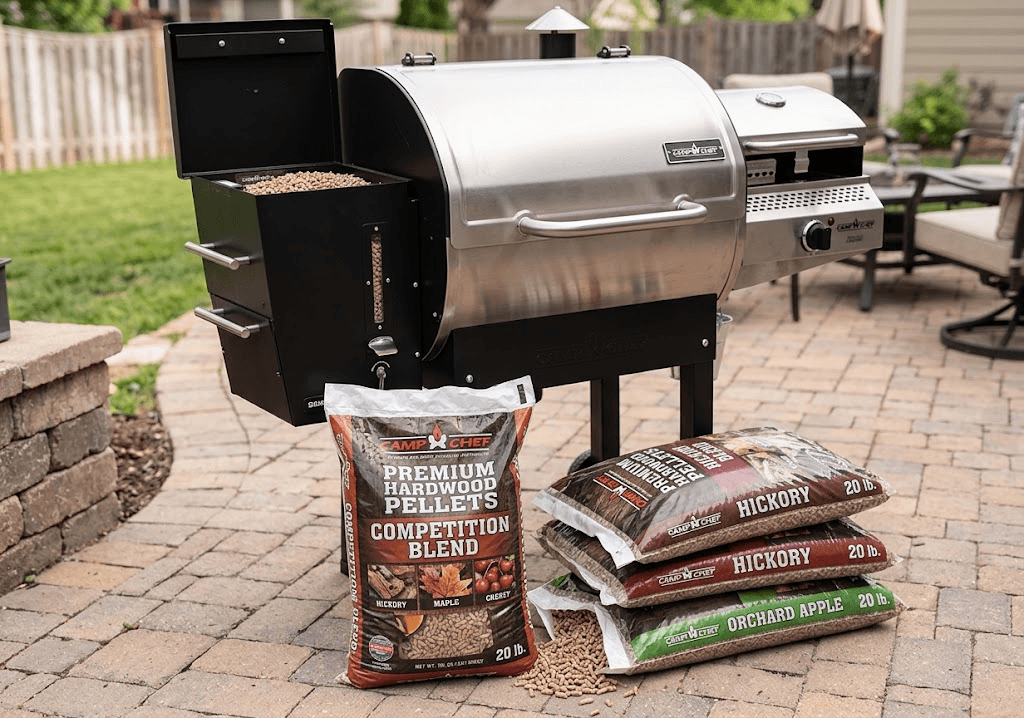
Picking the best pellets for Camp Chef Woodwind grills comes down to three things: 100% hardwood, low moisture, and a flavor that suits what you’re cooking. The Woodwind is a forgiving cooker with a smart controller, but it can only make clean smoke from clean fuel. Cheap, damp, or filler-heavy pellets cause temperature swings, extra ash, and a bitter edge on the meat.
This guide covers which pellets we’d put in a Woodwind, how each flavor behaves, and how to match them to brisket, ribs, chicken, and fish. It also covers storing pellets, switching flavors with the hopper purge, and the mistakes that waste money.
⚡ Quick Answer
The best pellets for Camp Chef Woodwind grills are 100% hardwood pellets with no fillers. Top pick: Camp Chef Competition Blend for all-around cooking. Budget pick: Hickory or Oak in 20 lb bags. Upgrade pick: a charcoal-hardwood blend for extra smoke on beef. Match the flavor to the food.
Why Your Pellet Choice Matters on a Woodwind
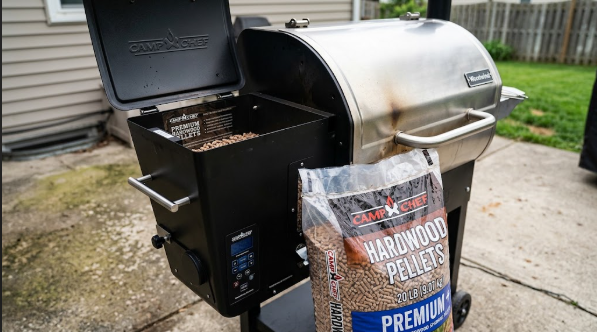
A Woodwind runs on a PID controller that feeds pellets to hold your set temperature. Camp Chef lists a range of 160°F to 500°F (71°C to 260°C) for the grill, plus a 25,000 BTU burner. That controller is only as steady as the fuel it’s burning.
Pellets that burn evenly give you tight temperatures and clean, light-blue smoke. Pellets that are damp or full of dust cause temperature spikes, more auger work, and more ash in the fire pot. On a long overnight cook, that difference shows up as a stalled brisket or a muddy-tasting bark.
The Woodwind also has a large hopper. Camp Chef lists the capacity at 22 lb (10 kg), which means a full 20 lb bag fits with room to spare. That’s a real advantage on low-and-slow cooks, as long as the pellets you load are good ones.
What Makes a Good Pellet for a Camp Chef Woodwind
Not every bag labeled “premium” earns the word. Here’s what to look at before you buy.
- 100% hardwood. The bag should say so. Avoid bags that mention fillers or flavor oils.
- No binders or added oils. Camp Chef states its Premium Hardwood pellets contain no oils, chemicals, or binders, which supports cleaner flavor and a more efficient burn.
- Low moisture. Kiln-dried pellets light faster and burn hotter with less ash. Dry pellets snap cleanly and sound like a pencil breaking.
- Few fines. A bag full of sawdust at the bottom means rough handling or old stock. Dust can clog the auger and cause flameouts.
- Low ash. Pellet industry grades set an ash ceiling around 1% for “premium” fuel , but the word isn’t always policed. A bag that says premium without a certification mark tells you little.
Pitmaster Tip: Pour a handful of pellets onto a plate before you load the hopper. If you see a lot of dust, crumbled ends, or pellets that look swollen, set that bag aside for a hot-and-fast cook rather than a long smoke.
Best Pellets for Camp Chef Woodwind: Quick Comparison
| Pellet | Flavor / Smoke Strength | Best For | Bag Size | Price Range |
| Camp Chef Competition Blend | Maple, hickory, cherry; medium | Everything; brisket, pork, chicken | 20 lb (9 kg) | ~13-25 |
| Camp Chef Hickory | Bold, classic BBQ | Pork, ribs, beef | 20 lb (9 kg) | ~13-25 |
| Camp Chef Orchard Apple | Light, mildly sweet | Chicken, pork, fish, baking | 20 lb (9 kg) | ~13-25 |
| Camp Chef Cherry | Mild, fruity, rich color | Chicken, ribs, turkey | 20 lb (9 kg) | ~13-25 |
| Camp Chef Oak | Medium, balanced | Beef, seafood, baking | 20 lb (9 kg) | ~13-25 |
| Camp Chef Southwest Mesquite | Strong, earthy | Steaks, short cooks | 20 lb (9 kg) | ~13-25 |
| Camp Chef Charwood (charcoal blend) | Extra-bold, charcoal edge | Beef, sear-and-smoke | 20 lb (9 kg) | |
| Traeger Signature Blend | Hickory, maple, cherry; medium | All-purpose alternative | 20 lb (9 kg) |
Prices change by retailer and season, so treat the ranges as rough guides and check the current price before you order.
1. Camp Chef Competition Blend: Best Overall
Who it’s for: Anyone who wants one bag that works for nearly everything.
Competition Blend mixes maple, hickory, and cherry, according to Camp Chef’s product page. Hickory gives the backbone, maple softens it, and cherry adds color. That combination makes it forgiving on chicken and strong enough for pork and beef.
Key features:
- Blend of maple, hickory, and cherry
- 20 lb bag
- Made for pellet grills and smokers of all kinds
Pros: Does almost everything well; hard to get wrong; the easiest first bag for new Woodwind owners. Cons: A blend can’t be tuned the way single flavors can, so the profile is the same bag after bag.
2. Camp Chef Hickory: Best for Classic BBQ Flavor
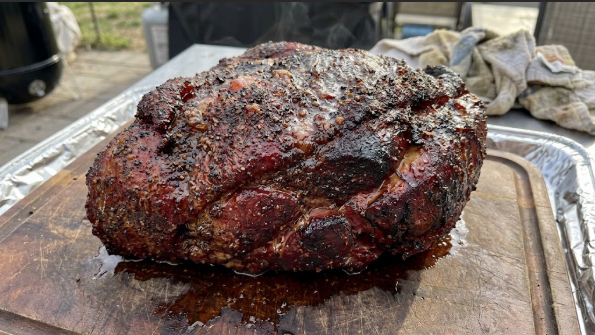
Who it’s for: Ribs, pork shoulder, and anyone who wants that familiar smokehouse taste.
Hickory has the bold, bacon-like smoke most people associate with barbecue. It’s strong enough to stand up to fatty cuts like pork butt and beef ribs. On lean or delicate foods it can turn harsh.
Key features:
- Bold, classic smoke
- 20 lb bag
- Works well from 225°F to 275°F (107°C to 135°C)
Pros: Great on pork and beef; the “BBQ” flavor most people expect. Cons: Easy to overdo on chicken or fish; pairs best when blended with a milder wood.
Want a rib recipe that uses it? Our guide on cooking ribs on a pellet grill walks through times and temperatures that work well with hickory-forward pellets.
3. Camp Chef Orchard Apple: Best for Poultry and Pork
Who it’s for: Cooks who want gentle, slightly sweet smoke.
Apple is light and fruity, which makes it a natural for chicken, pork loin, and bacon. It builds flavor slowly, so you can run it longer without the meat tasting heavy. Camp Chef also lists apple for baked goods.
Key features:
- Light, mildly sweet smoke
- 20 lb bag
- Pairs well with chicken, pork, fish, and vegetables
Pros: Hard to oversmoke with; great on poultry; pairs well with a hickory blend. Cons: Too subtle for brisket on its own.
If you’re smoking breakfast meat, apple is one of our favorite choices for bacon on a pellet grill.
4. Camp Chef Cherry: Best for Color
Who it’s for: Chicken, turkey, and ribs where you want a deep mahogany finish.
Cherry is mild and slightly sweet. Its real talent is color; it gives poultry skin and pork bark a rich reddish-brown that looks great on the table. It’s a common blending partner for hickory.
Pros: Beautiful finish; mild and approachable; blends well. Cons: Light smoke on its own, so beef lovers may want to mix it with something stronger.
For holiday birds, cherry is a good fit. See our Thanksgiving smoker recipes for menus that pair well with fruitwood smoke.
5. Camp Chef Oak: Best Balanced Pellet
Who it’s for: Beef, seafood, and baking.
Oak sits in the middle: stronger than fruitwood, gentler than hickory or mesquite. Retailer descriptions place oak as a medium-output smoke that pairs well with beef, seafood, and baking. Many pitmasters treat it as the “safe” beef wood.
Pros: Versatile; steady; good for brisket and tri-tip. Cons: Not as distinctive as hickory or cherry.
6. Camp Chef Southwest Mesquite: Best for Short, Hot Cooks
Who it’s for: Steaks, burgers, and fast cooks.
Mesquite is the strongest flavor in the lineup. It can turn bitter on a 12-hour smoke, but on a 20-minute sear or a quick cook, it’s excellent. Think of it as a seasoning, not a base fuel.
Pros: Big flavor in a short time; excellent on steak. Cons: Overpowers poultry and long cooks; best used sparingly or blended.
7. Camp Chef Charwood: Best Upgrade Pick for Beef
Who it’s for: Owners who want an extra layer of smoky, charcoal-like flavor.
Charwood is a charcoal-and-hardwood blend. Camp Chef owners often reach for it when they want an offset-style flavor from a pellet grill.
Pros: Bold, rich flavor on beef; a good fit when you want a “campfire” edge. Cons: Not as widely stocked; stronger flavor means it’s easy to overdo.
8. Traeger Signature Blend: Best Non-Camp Chef Option
Who it’s for: Woodwind owners who can’t find Camp Chef pellets locally.
Traeger’s Signature Blend is a mix of hickory, maple, and cherry, which makes it close in profile to Competition Blend. Pellets are sold for grills of any brand, so using them in a Woodwind won’t void the logic of the system. Always confirm that the bag is 100% hardwood with no fillers .
Pros: Easy to find; familiar profile. Cons: Check bag labels and prices; supply and formulas can change.
How to Choose the Best Pellets for Your Camp Chef Woodwind
Use this checklist when you’re standing in the aisle or comparing bags online.
- Read the label. Look for “100% hardwood” and “no fillers, oils, or binders.”
- Match flavor to food. Fruitwoods for poultry and fish; oak and hickory for pork and beef; mesquite for quick sears.
- Check the date and bag condition. Avoid torn bags, wet spots, or bags that feel soft.
- Look at the bottom of the bag. A pile of dust means a rough trip.
- Buy a size you’ll use. A 20 lb bag fits the Woodwind hopper, and a bag you finish in a few cooks stays fresher.
- Start with a blend. Competition Blend is a safe first bag while you learn how the Woodwind handles smoke.
Common Mistake: Buying pellets by price alone. A very cheap bag can cost more in the end because it burns less cleanly, makes more ash, and may need extra cleanouts or longer cook times.
Pellet Flavor Pairing Chart
| Food | Best Pellet | Pit Temp | Pitmaster Pull Temp | USDA Minimum |
| Brisket | Oak, Hickory, Charwood | 250°F (121°C) | 200-205°F (93-96°C) | 145°F (63°C) + 3 min rest |
| Pork butt | Hickory, Competition Blend | 250°F (121°C) | 195-205°F (91-96°C) | 145°F (63°C) + 3 min rest |
| Spare ribs | Hickory, Cherry, Competition | 250°F (121°C) | Probe-tender, roughly 195-203°F | 145°F (63°C) + 3 min rest |
| Whole chicken | Apple, Cherry | 275°F (135°C) | Thigh 175°F | 165°F (74°C) |
| Turkey breast | Apple, Cherry, Competition | 250°F (121°C) | Breast 160°F, carryover to 165°F | 165°F (74°C) |
| Salmon | Apple, Alder-style mild wood | 225°F (107°C) | 140-145°F (60-63°C) | 145°F (63°C) |
| Burgers | Mesquite, Hickory | 400-450°F (204-232°C) | 160°F (71°C) | 160°F (71°C) |
| Steaks | Mesquite, Oak | Grill setting | To preference | 145°F (63°C) + 3 min rest |
The safe minimums in the last column come from the USDA FSIS safe minimum internal temperature chart. Pitmaster pull temperatures are for tenderness, not safety. Brisket and pork butt need to go well past the USDA minimum before the collagen breaks down.
Using Pellets Well: Temperatures, Smoke, and Technique
Start Low for More Smoke
Smoke flavor builds fastest at lower temperatures. Camp Chef’s Smart Smoke feature gives you 10 smoke levels on the Woodwind , and lower pit temperatures are where it helps most. For most smoked cuts, we start at 225°F to 250°F (107°C to 121°C) and turn the heat up later.
On long cooks, a good pellet keeps the pit within a few degrees. Camp Chef rates the controller at about plus or minus 5°F for temperature accuracy, and fresh, dry pellets help you reach that range in practice.
Match the Smoke to the Cook Length
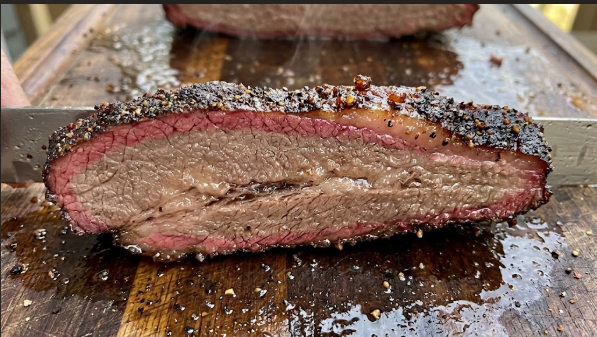
A 12-hour brisket takes smoke for the first few hours; after that, the surface of the meat stops absorbing much. Use a stronger pellet like hickory or oak early, and don’t worry if you switch to a milder wood later. Short cooks like chicken and fish only need a mild wood.
Using the Woodwind Pro Smoke Box
The Woodwind Pro has a smoke box that holds wood chips, chunks, or charcoal for added flavor . Use it with a standard pellet like Competition Blend, then add a chunk of oak or hickory for a deeper, offset-style smoke. Start small, because it’s easy to overdo.
Switching Pellet Flavors with the Hopper Purge
One reason the Woodwind is easy to live with is the pellet purge. Camp Chef describes it as a lever that empties the hopper so you can change flavors without scooping by hand. Here’s how we’d switch.
- Let the grill cool and make sure it’s off.
- Place a bucket or container under the purge chute.
- Pull the lever and let the pellets drain.
- Brush out leftover dust from the hopper floor.
- Load the new pellets and prime the auger according to the manual.
The first few minutes after a switch may still include a few old pellets in the burn pot. That’s normal and rarely changes flavor in a noticeable way.
How to Store Pellets So They Burn Clean
Pellets are compressed sawdust, so moisture is the enemy. Damp pellets swell, crumble, and burn poorly, which causes smoke that tastes sour.
- Keep bags in a dry, sealed container, such as a lidded bucket or a bin with a gasket.
- Store them off the floor of a garage or shed.
- Don’t leave pellets sitting in the hopper for weeks. If the grill will sit unused, purge the hopper and store the pellets in a sealed bin.
- Keep your Woodwind under a good cover. Our list of heavy-duty grill covers can help you protect the hopper from rain and humidity.
Pitmaster Tip: Write the purchase date on the bag with a marker. Rotate older bags forward so you never find a forgotten, stale bag at the back of the shelf.
Cleaning and Maintenance for Better Pellet Performance
Even the best pellets leave ash. The Woodwind’s ash cleanout is designed to help you remove it without taking the grill apart . A clean fire pot lights faster and holds temperature better.
- Empty the burn pot ash every few cooks, and more often on long smokes.
- Vacuum ash from the firebox and pot when the grill is cold.
- Clean grease from the drip tray so a flare-up doesn’t scorch your flavor.
- Wipe the hopper window and check for dust or moisture.
Fuel Costs: How Far Does a Bag Go?
Burn rates change with the weather, the temperature you set, and the wind. As a rough rule, plan on around 1 lb per hour at low smoking temperatures and more at high heat . That puts a 20 lb bag at a full day of low-and-slow cooking, and far less at searing temperatures.
Cold weather and wind increase pellet use. If you cook in winter, a grill blanket or a sheltered spot can cut consumption. Plan a spare bag on hand for big cooks like holiday dinners; see our turkey breast at 250°F guide for a low-and-slow example.
Food Safety Notes When Smoking
Smoke flavor doesn’t tell you when meat is safe. A pink smoke ring is normal and doesn’t mean the meat is raw, but you still need a thermometer. The USDA says all poultry should reach 165°F (74°C), and whole cuts of beef, pork, and lamb should reach 145°F (63°C) with a 3-minute rest.
Cornell Cooperative Extension also notes that you can’t tell whether meat is safely cooked by looking at it. Use the Woodwind’s included meat probes, and double-check with a handheld instant-read thermometer in the thickest part of the cut.
Common Problems and Fixes
| Problem | Likely Cause | Fix |
| Bitter or acrid smoke | Damp pellets, dirty fire pot, or too much mesquite | Swap to dry pellets, clean the pot, and switch to a milder wood |
| Temperature swings | Dust in the hopper or damp pellets | Purge and reload fresh pellets |
| Too much ash | Low-grade pellets or full burn pot | Empty the pot; try a cleaner brand |
| Weak smoke flavor | Cooking too hot or a very mild wood | Lower the temp, raise the smoke setting, or try hickory or oak |
| Flameouts | Auger jam or pellet dust | Clear the auger and use fresher pellets |
Common Mistake: Switching flavors mid-cook by adding new pellets on top of old ones. The flavors mix unpredictably, and you can’t tell what you’re tasting. Purge between flavors, or keep a standard blend for long cooks.
How We Picked These Pellets
We looked at pellets that match what Camp Chef says its grills are designed for, plus what’s easy for Woodwind owners to find. Our criteria were:
- 100% hardwood composition
- No fillers, oils, or binders
- Low-moisture, kiln-dried manufacturing
- A flavor lineup that covers beef, pork, poultry, and fish
- Availability in 20 lb bags that fit the hopper
- Brand transparency about ingredients
We did not invent test results. Details marked should be checked against the current manufacturer pages and your local pricing before you publish.
Frequently Asked Questions
Can I use any brand of pellets in a Camp Chef Woodwind?
Yes, as long as they are food-grade cooking pellets made for pellet grills. Avoid heating pellets or anything with fillers or oils. For best results, buy 100% hardwood pellets that are dry and low in dust, and keep your first bag a familiar blend.
What are the best pellets for brisket on a Woodwind?
Oak and hickory are the safest picks for brisket, and Competition Blend works well too. Stronger flavors suit beef’s rich fat and long smoke. Cook at 250°F (121°C) and pull the brisket around 200-205°F (93-96°C) when a probe slides in like butter.
How do I change pellet flavors on a Woodwind?
Let the grill cool, place a bucket under the purge chute, and pull the hopper purge lever to drain the pellets. Brush out dust, then load your new flavor. A few old pellets in the fire pot may burn first, which is normal.
How many pounds of pellets does a Woodwind use per hour?
Most pellet grills burn roughly 1 lb per hour at low smoking temperatures and more at high heat, though weather and wind change this. A full 20 lb bag typically covers a long low-and-slow cook. Keep a spare bag nearby for big holiday cooks.
Can I mix pellet flavors in the hopper?
You can, and many cooks do. Try 50/50 mixes like hickory and apple for pork, or oak and cherry for beef. Mix in a clean bucket first so the blend is even, and avoid mixing in mesquite unless you want a strong flavor.
How long do pellets stay fresh in storage?
Dry pellets keep for a long time in a sealed container, but moisture ruins them quickly. Store bags off the floor in a covered bin, and don’t leave pellets in the hopper for weeks. If pellets crumble or swell, discard them.
Conclusion
The best pellets for Camp Chef Woodwind owners are 100% hardwood, dry, and matched to what’s on the grate. Competition Blend is the easiest all-around choice, hickory and oak handle pork and beef, and apple and cherry are the best bets for chicken, turkey, and fish. Store them dry, purge between flavors, and keep a thermometer in the meat.
Start with one blend and one new flavor, then change one thing at a time so you can taste the difference. If you’re still deciding on a grill, our list of the best pellet grills for beginners is a good place to compare. Once you’ve dialed in a favorite, try a dessert like our smoked pecan pie and see how a mild smoke carries into the sweet side.
Laura Smith

I'm Laura, I like all the kind of delicious grilled foods which makes me hungry all the time I see them. That's why I built this blog to share with you all of my Grilling experiences, recipes, and all the tips about foods that I've learned from food experts.