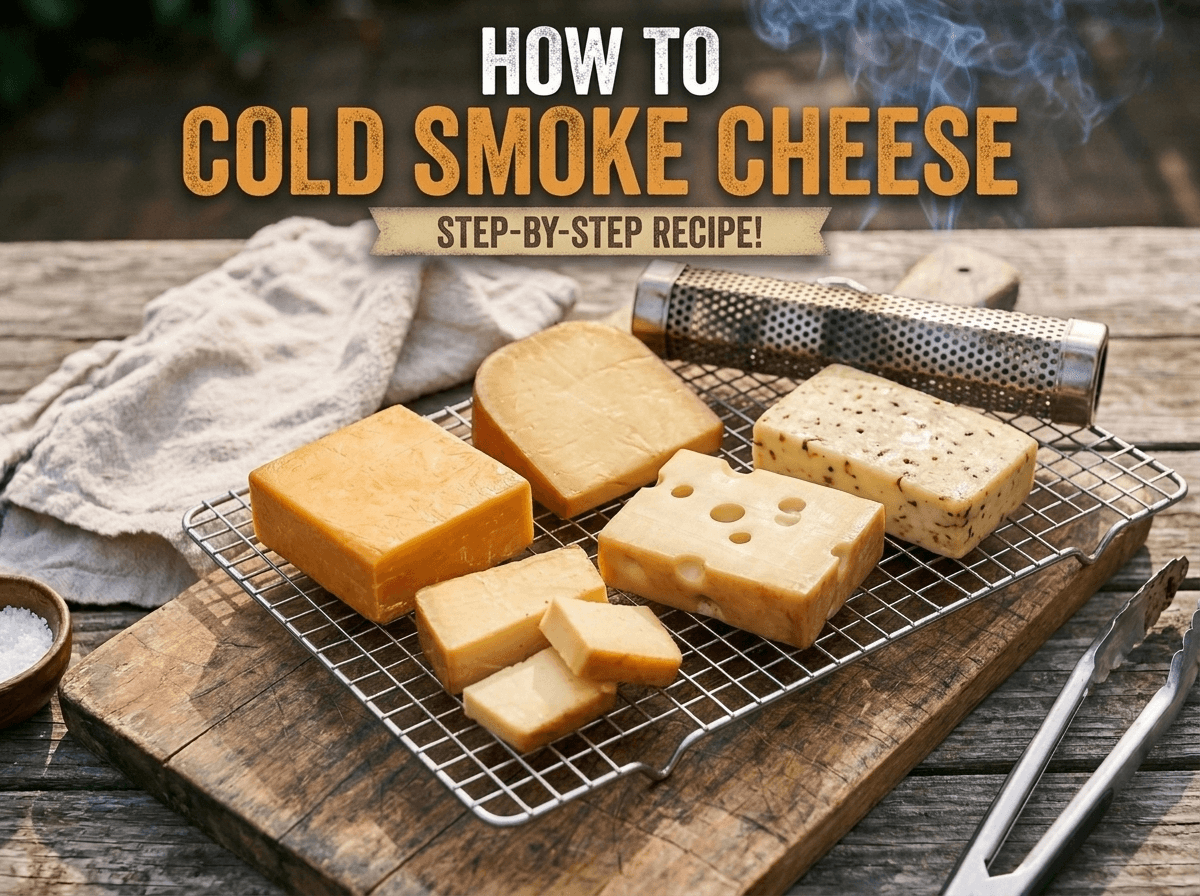
Homemade smoked cheese is the easiest way to upgrade a charcuterie board. A plain grocery-store block of cheddar picks up a golden color and a rich, campfire flavor after about two hours in light smoke. This smoked cheese: step-by-step recipe works on a pellet grill, a charcoal grill, or an offset smoker, even if you have never cold smoked anything before.
The one rule that matters is to keep it cold. Cheese melts at the temperatures where you would normally smoke ribs, so we use cold smoke, with the smoker chamber at 90°F (32°C) or lower. Below you’ll find the exact ingredients, timing, temperature targets, storage rules, and fixes for the problems beginners run into.
Quick Answer
To make smoked cheese, cold smoke firm cheese like cheddar or Gouda for about 2 hours with the smoker chamber at 90°F (32°C) or below, using a pellet smoke tube. Chill it, then rest it wrapped in the fridge for 1–2 weeks so the harsh smoke mellows. Cheese is not cooked, so there’s no pull temperature.
Why This Smoked Cheese Step-by-Step Recipe Works
Cheese absorbs smoke best when it is cold and dry on the surface. A smoke tube makes smoke with almost no heat, so the cheese holds its shape while the flavor builds. Short sessions also keep the cheese from sitting too long in the temperature range where bacteria grow.
The recipe also builds in a resting period, which most quick guides skip. Fresh from the smoker, cheese tastes sharp and a little bitter. After a week or two wrapped in the fridge, the smoke spreads evenly through the block and the flavor turns smooth and mellow.
Ingredients and Equipment
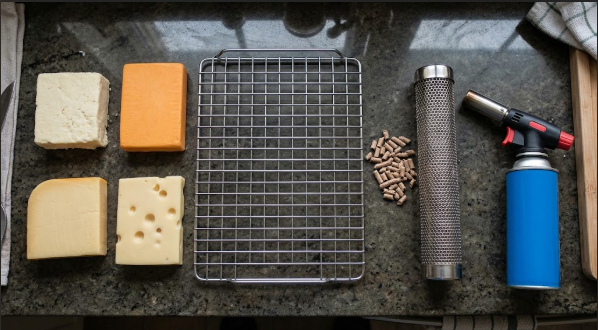
Cheese (about 2 lb / 0.9 kg total):
- 8 oz (227 g) sharp cheddar
- 8 oz (227 g) Gouda
- 8 oz (227 g) Swiss or provolone
- 8 oz (227 g) pepper jack or Colby Jack
Fuel: About 1 cup of wood pellets for a 12-inch smoke tube. Apple, cherry, pecan, and alder are mild and safe choices. Hickory works but can turn harsh, so I use it for only 1 hour on the first try.
Equipment:
- Pellet smoke tube or A-MAZE-N pellet maze
- Torch lighter (a butane kitchen torch works)
- Wire cooling rack that fits your grill
- Digital thermometer with a probe you can place at cheese level
- Parchment paper and zip-top bags or a lidded container
- Optional: a foil pan of ice
Substitutions:
- Wood chips in a small foil pouch work, but they run hotter and are harder to control than a tube.
- Low-moisture mozzarella works, but it smokes faster and softens more easily. Cut the time to 45–60 minutes.
- Skip fresh mozzarella and soft spreadable cheeses on your first try. They hold moisture and melt too easily.
If you are still choosing a cooker, our guide to pellet grills for beginners covers models that work well with a smoke tube.
Choosing and Prepping the Cheese
Pick firm, low-moisture cheeses. They hold their shape, take smoke evenly, and keep well. Sharp cheddar and Gouda are the best starting points because their strong flavors stand up to smoke.
Buy blocks, not pre-shredded or sliced cheese. Shreds clump and slices curl, and neither handles the process well. Blocks of 8 oz (227 g) are a good size. If you have a 1 lb (0.45 kg) block, cut it in half so more surface is exposed to smoke.
Keep the cheese in the fridge until the smoker is ready. Take off all packaging and pat each block dry with a paper towel. Surface moisture grabs smoke unevenly and can cause blotchy color.
Choose a cool day. I aim for an outside temperature below 70°F (21°C), and 40–60°F (4–16°C) is ideal. On a hot day the smoker chamber climbs fast, and the cheese will sweat and soften.
Pitmaster Tip: Smoke ribs or a pork butt on the weekend, then cold smoke your cheese on a cool morning before you light the grill again. A day with no wind and an air temperature in the 40s is the best setup for smoked cheese. Planning a rib cook? See how to cook ribs on a pellet grill.
Smoked Cheese Step-by-Step Recipe: Instructions
- Pick your smoking window. Check the forecast. Plan on 2 hours of smoking with the air temperature at or below 90°F (32°C).
- Set up the smoker chamber. On a pellet grill, leave the grill powered off and use the tube as your only smoke source. Place the thermometer probe on the rack at cheese level, not near the tube.
- Fill and light the tube. Pack a 12-inch tube with pellets, tapping it so there are no gaps. Light one end with the torch for 5–10 minutes until the pellets glow and flame, then blow it out. You want a steady smolder, not a flame.
- Let the smoke settle. Close the lid and wait 10–15 minutes. Look for thin, pale blue smoke. If the smoke is thick and white, wait or adjust airflow before adding cheese, because dirty smoke makes bitter cheese.
- Add the cheese. Set the blocks on a wire rack with 1 inch (2.5 cm) between them for airflow. Keep them away from the tube, on the opposite end of the rack or on an upper shelf.
- Add ice if it’s warm. If the air is above 65°F (18°C), put a foil pan of ice on a lower rack to hold the chamber temperature down.
- Smoke for 2 hours. Check the thermometer every 20–30 minutes. Flip the blocks once at the halfway mark so all sides pick up smoke. If the reading hits 90°F (32°C), open the lid or pull the cheese out.
- Pull and check. The cheese should be pale gold to light amber, with firm edges and square corners. It should not look shiny or oily.
- Chill it. Move the cheese straight to the fridge. Wrap each block in parchment paper and place it in a zip-top bag, leaving the bag slightly open or loosely sealed.
- Rest it. Leave it in the fridge for at least 48 hours, and ideally 1–2 weeks, before eating.
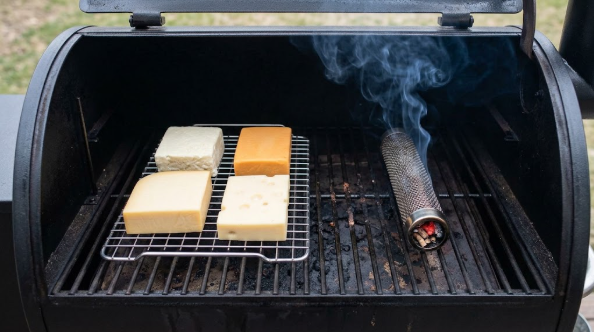
Common Mistake: Lighting the grill and “just turning it down low.” Even a pellet grill on its lowest setting runs well above 90°F (32°C), which melts cheese into a greasy puddle. Always use a tube or maze with the grill off.
On pork and sausage cooks, keep raw meat away from your finished cheese. USDA says to use a food thermometer when smoking, and it sets 145°F (63°C) as the minimum for pork roasts and chops followed by a 3-minute rest. Cheese is a ready-to-eat food, so it never touches raw juices or boards.
Time and Temperature Table
| Cheese | Chamber Temp | Smoke Time | Flavor Strength |
| Sharp cheddar | 70–90°F (21–32°C) | 2 hours | Medium |
| Gouda | 70–90°F (21–32°C) | 1.5–2 hours | Medium |
| Swiss / provolone | 70–90°F (21–32°C) | 1.5–2 hours | Light–medium |
| Pepper jack / Colby Jack | 70–90°F (21–32°C) | 1–2 hours | Medium |
| Low-moisture mozzarella | 70–85°F (21–29°C) | 45–60 minutes | Light |
| Rest in fridge at or below 40°F (4°C) | n/a | 1–2 weeks | Smooth and balanced |
Chamber temps and times are my own working numbers from cold-smoke practice, not USDA values]. The chamber ceiling of 90°F (32°C) is a guideline to prevent melting, so adjust it by feel and cheese type.
How to Tell When Smoked Cheese Is Done
Look at the color first. A good result is pale gold to amber, and anything dark brown is over-smoked. The surface should be dry with a slightly tacky feel, and the cheese should still be firm.
Smell and touch matter too. Fresh from the smoker it will smell like a campfire, and it may taste sharp. If the cheese is soft in the middle, shiny with oil, or losing its corners, the chamber ran too warm.
Don’t judge the final flavor on day one. Smoked cheese is “done” after the resting period, not when you pull it from the grill.
Resting, Slicing, and Serving
After the rest, unwrap the cheese and let it sit at room temperature for about 20–30 minutes before slicing. Cold cheese is dull in flavor, and room-temperature cheese tastes fuller. Don’t leave it out more than 2 hours (1 hour above 90°F), following USDA danger zone guidance.
Use a sharp knife and cut thin slices for a board. If you’re packing out knives for a big spread, see our picks for the best knives for cutting meat — wait, check that page before linking. (This knife link is optional and not counted in the link table; delete if unwanted.) Cube the cheddar, slice the Gouda, and wedge the pepper jack.
What to Serve With Smoked Cheese
Smoked cheese pairs well with sweet, salty, and crunchy foods. Here are my favorite combos:
- Fruit: apple slices, pears, grapes, and fig jam
- Meats: salami, prosciutto, and smoked sausage
- Crunch: crackers, toasted baguette, and pecans
- Pickles: cornichons, pickled onions, and mustard
Smoked Gouda also melts beautifully in soup. Check our ideas to serve with French onion soup for a smoky, bubbling top. Stir smoked cheddar into batter for a Redstone corn bread recipe that tastes like it came off a pit.
For parties, a smoked cheese board is cheap and easy. Pair it with bacon on a pellet grill for a smoky platter. If you want a budget-friendly spread, here’s how to host a budget BBQ.
Around the holidays, a smoked cheese plate fits right in beside the turkey. See our Thanksgiving smoker recipes for what else to fire up.

Storing, Freezing, and Reheating Leftovers
Store smoked cheese wrapped in parchment inside a loosely closed bag or container at 40°F (4°C) or below. Treat it like opened hard cheese. Michigan State University Extension, citing the USDA FoodKeeper app, lists hard cheese at 3–4 weeks after opening. I use that as my limit for smoked hard cheese for smoked cheese], and I use mozzarella within a week or two.
Be careful with vacuum sealing. Regulators treat smoked cheese in reduced-oxygen packaging as a higher-risk product, and the Michigan State Extension variance form for reduced-oxygen smoked cheese points to Listeria and Clostridium botulinum controls URL]. For home use I skip vacuum bags and stick to parchment.
Freezing changes the texture. Hard cheese turns crumbly after thawing, so use it for melting, in sauces and soups, instead of slicing for a board. Keep the freezer at 0°F (-18°C), and compare notes in our guide on whether you can freeze smoked salmon, since the same cold-chain rules apply. Thaw frozen cheese in the fridge freezer time for cheese].
If you make a dish with your cheese, like smoked mac and cheese, follow USDA leftover guidance: refrigerate within 2 hours, eat within 3–4 days, and reheat to 165°F (74°C).
Variations: Pellet Grill, Offset, Charcoal, and Oven Backup
Pellet grill (easiest): Turn the grill off and burn a smoke tube inside. This is the method used in the steps above, and most pellet grills from Traeger, Pit Boss, and Camp Chef work.
Offset smoker: Keep a tiny fire in the firebox so little heat reaches the chamber. This is tricky because offsets run hot, so I stick to cold days and put the smoke tube in the cook chamber instead. See our notes on lump charcoal in an offset smoker, or shop affordable offset smokers if you’re building a setup.
Charcoal kettle (Weber): Don’t light the charcoal. Place a smoke tube on the charcoal grate, set the cheese on the top rack, vent the lid, and add a pan of ice.
Oven backup: No home oven can cold smoke. Use a handheld smoking gun with a cloche or lidded container instead. The flavor is lighter, so repeat the smoking twice for more punch.
Stronger smoke, safely: Smoke 1 hour, chill the cheese, and smoke another hour the next day. This keeps each session short.
Troubleshooting
- Cheese sweated or melted: The chamber was too warm. Smoke on a cooler day, use ice, and shorten the time.
- Bitter, “ashtray” taste: The smoke was thick and white, or you ate it too soon. Light the tube fully, wait for thin blue smoke, and rest the cheese for at least 1 week.
- Too little smoke flavor: Add 30–60 minutes, use a stronger wood like pecan, or do a second smoke the next day.
- Blotchy color: The surface was wet or the blocks touched. Pat dry and leave 1 inch (2.5 cm) of space between pieces.
- Tube kept going out: Pellets were packed too loose or damp. Use dry pellets and relight with the torch.
- White film or beads on the surface: That’s usually moisture or fat. Pat it dry and check that the chamber stayed under 90°F (32°C). Throw out any cheese that has fuzzy mold or smells off.
Smoked Cheese: Step-by-Step Recipe Card
Servings: About 16 (2 oz / 57 g each) | Prep: 15 minutes | Smoke time: 2 hours | Rest: 1–2 weeks in fridge | Chamber temp: 90°F (32°C) or below
Ingredients: 2 lb (0.9 kg) cheese (cheddar, Gouda, Swiss, pepper jack), 1 cup wood pellets (apple, cherry, or pecan)
Quick steps:
- Pick a cool day and unwrap and pat dry the cheese.
- Fill the tube with pellets and light it, then let thin blue smoke build for 10–15 minutes.
- Place cheese on a wire rack with 1 inch (2.5 cm) between pieces.
- Smoke for 2 hours, flipping once and checking the chamber temp.
- Wrap in parchment and refrigerate at 40°F (4°C) or below.
- Rest 1–2 weeks, then slice and serve.
FAQ
Can you smoke cheese on a pellet grill?
Yes, but not by running the grill normally. Turn the grill off and burn a pellet smoke tube or maze inside. The grill acts as an insulated smoke box. Keep the chamber at 90°F (32°C) or below so the cheese stays firm.
How long should you smoke cheese?
Most hard cheeses need about 2 hours of cold smoke. Cheddar and Gouda can go the full 2 hours, while mozzarella needs only 45–60 minutes. For stronger flavor, smoke twice in short sessions on separate days instead of one long session.
What is the best cheese to smoke?
Sharp cheddar and Gouda are the best for beginners. They’re firm, low in moisture, and flavorful enough to stand up to smoke. Swiss, provolone, pepper jack, and Colby Jack also work well. Avoid soft, wet cheeses until you have a few batches behind you.
Can you smoke cheese at 225°F?
No. Cheese melts well below 225°F (107°C), so it would turn into oil and a puddle. Cheese needs cold smoke with the chamber at about 90°F (32°C) or lower. Use a smoke tube or maze with the grill turned off.
How long does smoked cheese last?
Stored wrapped at 40°F (4°C) or below, smoked hard cheese should last about 3–4 weeks, the same as opened hard cheese per USDA FoodKeeper guidance via Michigan State Extension. Soft cheeses go faster. Toss anything that smells off or shows fuzzy mold.
Why does my smoked cheese taste bitter?
Bitterness usually comes from thick white smoke, too much smoke time, or skipping the rest. Wait for thin blue smoke, keep the session around 2 hours, and let the cheese rest in the fridge for 1–2 weeks. The harsh edge fades as the smoke spreads through the block.
Conclusion
This smoked cheese: step-by-step recipe comes down to three things: keep the chamber at 90°F (32°C) or below, use clean thin blue smoke, and give the cheese time to mellow. Start with sharp cheddar and Gouda, smoke them for about 2 hours with a tube, and wrap them in parchment for a week or two in the fridge. Once you’ve nailed the basics, try pecan or cherry pellets, a double-smoke for bolder flavor, or a whole board of different cheeses. Your first batch will make any grocery-store block taste like a specialty cheese.
Laura Smith

I'm Laura, I like all the kind of delicious grilled foods which makes me hungry all the time I see them. That's why I built this blog to share with you all of my Grilling experiences, recipes, and all the tips about foods that I've learned from food experts.