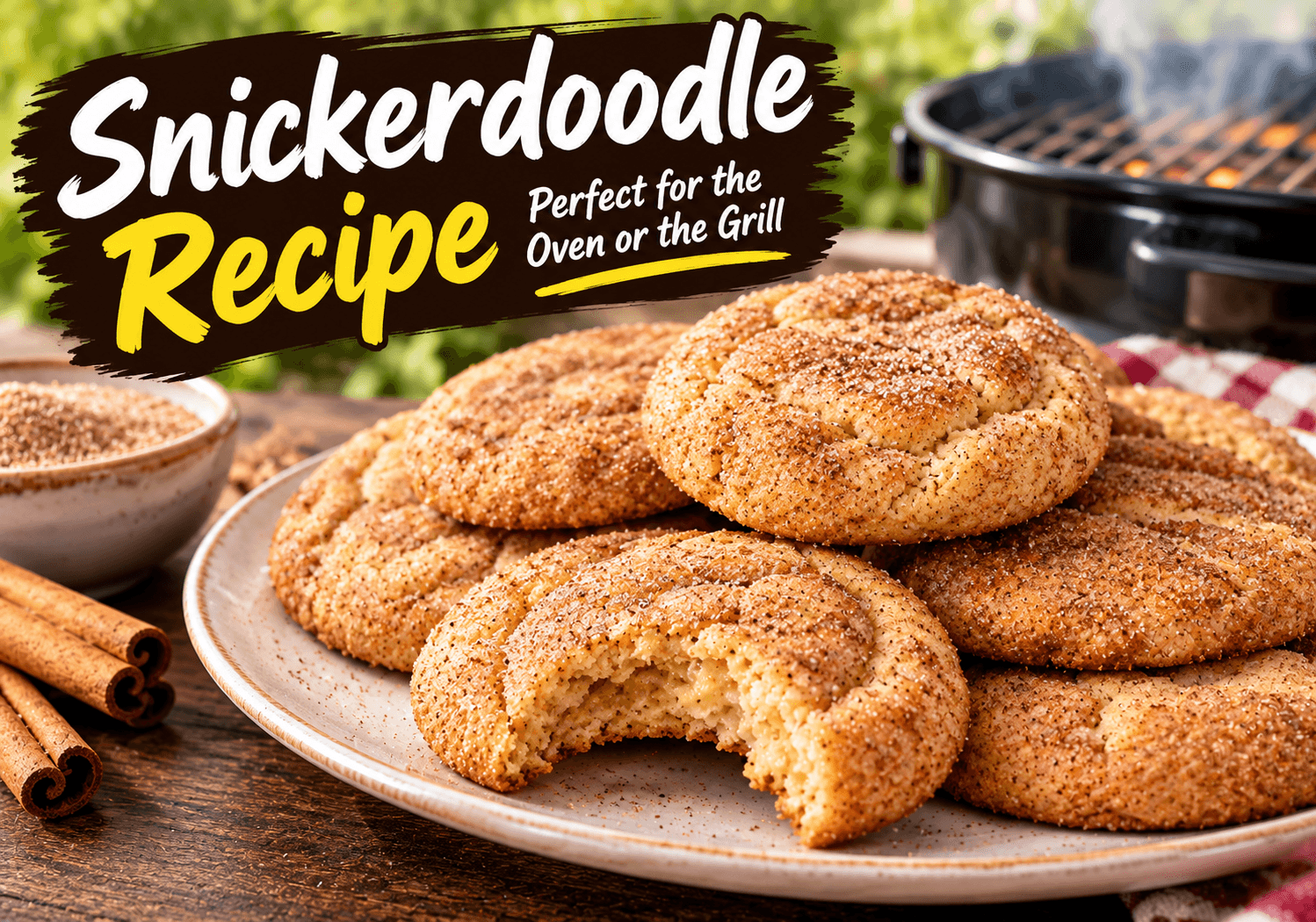
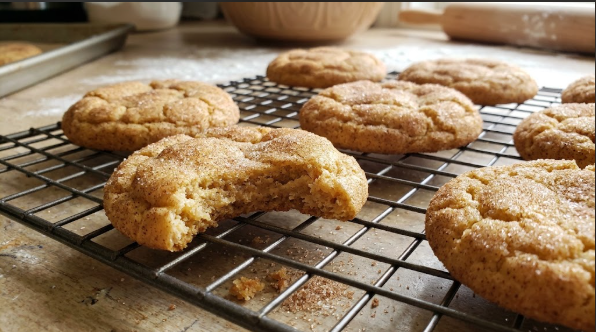
This snickerdoodle recipe gives you thick, soft cookies with crisp edges, crackly tops, and a cinnamon-sugar crust. The secret is cream of tartar, which adds the gentle tang that makes a snickerdoodle taste like a snickerdoodle. You can bake them in a regular oven, and I also show you how to bake them on a pellet grill, a charcoal kettle, or an offset smoker.
If you already own a grill, it can double as your dessert oven. A cookout does not need a store-bought dessert when a tray of warm cinnamon cookies is 25 minutes away. Every temperature, time, and weight below is written out so you can repeat it.
Quick Answer: Mix 1 cup (8 oz / 227 g) butter, 1½ cups sugar, 2 eggs, and 2¾ cups flour with 2 tsp cream of tartar. Chill 30 minutes, roll in cinnamon sugar, and bake at 375°F (190°C) for 9 to 11 minutes. Pull when edges are set and centers look puffy.
Why This Snickerdoodle Recipe Works
A good snickerdoodle is soft in the middle and slightly crisp at the edge. Three things make that happen here.
- Cream of tartar plus baking soda. Together they lift the dough and give the signature tang. The mild acid also helps the cookie stay tender and chewy instead of cakey.
- A short chill. Thirty minutes in the fridge firms the butter so the cookies spread less and bake thicker.
- A hot oven and a short bake. At 375°F (190°C), the edges set fast while the centers stay soft. Pulling the cookies while the middle still looks a little underdone is how you get chewy rather than hard.
The cinnamon-sugar coat does the rest. It forms a thin crackly shell on top as the cookie spreads and settles.
Ingredients and Equipment
Ingredients (makes about 24 cookies)
For the dough
- 1 cup (8 oz / 0.5 lb / 227 g / 0.23 kg) unsalted butter, softened to about 65°F (18°C)
- 1½ cups (10.5 oz / 300 g) granulated sugar
- 2 large eggs, room temperature
- 2 tsp vanilla extract
- 2¾ cups (about 12 oz / 345 g / 0.35 kg) all-purpose flour
- 2 tsp cream of tartar
- 1 tsp baking soda
- ½ tsp fine salt
For rolling
- ¼ cup (50 g) granulated sugar
- 1 tbsp ground cinnamon
The full batch of dough weighs about 2.2 lb (1 kg). Each cookie is a little under 1.5 tbsp, or about 1.4 oz (40 g).
Equipment
- Stand mixer or hand mixer
- Two heavy, light-colored baking sheets (dark pans brown the bottoms too fast)
- Parchment paper or silicone baking mats
- Cookie scoop (about 1.5 tbsp) or a kitchen scale
- Cooling rack
- Oven thermometer, or an instant-read thermometer for checking grill grate temperature
Substitutions
- No cream of tartar: Use about 2½ tsp baking powder and leave out the baking soda . The cookie will be softer and less tangy.
- Salted butter: Use it and cut the added salt to ¼ tsp.
- Brown sugar swap: Replace ¼ cup of the white sugar with light brown sugar for a chewier, slightly caramel flavor.
- Gluten-free: Use a cup-for-cup gluten-free flour blend. Expect a slightly sandier crumb.
Smoked Butter Idea: If you like a faint campfire note, make a batch of smoked butter, chill it hard, then soften it for this dough. Use it cold-smoked and unsalted for the best result.
Choosing and Prepping Your Ingredients
Cookie dough is mostly about temperature and measuring. These small steps matter more than any fancy ingredient.
Butter and eggs
Softened butter should dent when you press it but still feel cool. If it looks shiny or greasy, it is too warm and your cookies will spread flat. Set eggs out for 20 to 30 minutes so they blend in smoothly.
Measuring flour
Too much flour makes dry, cakey cookies. Weigh the flour if you can: 345 g is the target. If you use cups, fluff the flour, spoon it into the cup, and level it with a knife. Do not scoop straight from the bag, which packs in extra.
Food safety note on raw dough
Bakers love to sneak a taste, but the CDC advises against eating raw dough or batter because flour and raw eggs can carry germs that cause illness. Germs in flour are killed only when it is baked or cooked. Keep raw flour and eggs away from ready-to-eat food, and wash your hands, bowls, and counters after handling them.
Step-by-Step Snickerdoodle Recipe (Oven Method)
- Heat the oven. Set it to 375°F (190°C) with a rack in the center. Line two baking sheets with parchment.
- Mix the dry ingredients. Whisk the flour, cream of tartar, baking soda, and salt in a bowl. Set aside.
- Cream the butter and sugar. Beat the butter and 1½ cups sugar on medium speed for 2 to 3 minutes. It should look pale and fluffy.
- Add the eggs and vanilla. Beat in one egg at a time, then the vanilla. Scrape the bowl once.
- Add the dry mix. Mix on low until just combined. The dough will be soft and slightly sticky. Stop as soon as no dry streaks remain.
- Chill. Cover and refrigerate for 30 minutes. The dough should feel firm enough to scoop without sticking to your palms.
- Make the coating. Stir ¼ cup sugar and 1 tbsp cinnamon together in a shallow bowl.
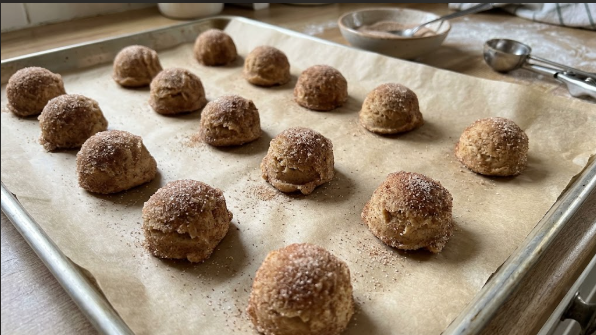
- Scoop and roll. Scoop 1.5 tbsp portions, roll each into a smooth ball, and coat it all the way around in the cinnamon sugar.
- Space them out. Place the balls 2 inches (5 cm) apart on the sheets. Do not flatten them.
- Bake. Bake one sheet at a time for 9 to 11 minutes. Pull them when the edges are set and the tops look puffy with fine cracks. The centers will look slightly underdone.
- Cool. Leave them on the hot pan for 5 minutes so the bottoms finish setting. Move them to a rack. They firm up as they cool.
Pitmaster Tip: Bake one tray at a time on the center rack. Two trays at once lead to uneven heat, pale tops on one pan, and burned bottoms on the other. Rotate the pan front to back at the 5-minute mark if your oven has hot spots.
Common Mistake: Overbaking. A snickerdoodle that looks fully done in the oven will be hard once it cools. Pull it while the middle still looks soft and puffy; carryover heat on the hot pan finishes the job.
Time and Temperature Table
| Cooker | Set temperature | Rack position | Bake time | Notes |
| Conventional oven | 375°F (190°C) | Center | 9–11 min | Best all-around result |
| Convection oven | 350°F (175°C) | Center | 8–10 min | Fan dries tops faster; check early |
| Pellet grill (indirect) | 375°F (190°C) | Center grate, tray on a baking steel or stone | 10–13 min | Preheat 15 min; rotate at 6 min |
| Charcoal kettle (two-zone) | 350–375°F (175–190°C) | Indirect side, lid on | 11–14 min | Rotate at 6 min; watch bottoms |
| Offset smoker (clean fire) | 350–375°F (175–190°C) | Far end from firebox | 12–15 min | Use well-seasoned hardwood only |
| Gas grill (one burner on) | 350–375°F (175–190°C) | Indirect side | 10–13 min | Use a tray with a stone for even heat |
| Air fryer | 325°F (165°C) | Basket, parchment liner | 6–8 min | Bake in small batches |
How to Tell When Snickerdoodles Are Done
Go by looks and feel, not just the timer. Every grill and oven runs a little different.
- Edges: Set and lightly golden, not brown.
- Tops: Puffed, with fine cracks in the cinnamon sugar. A glossy, wet-looking center means more time.
- Press test: Lightly touch the center. It should feel soft but not wet.
- Bottoms: Light tan. Dark brown means the pan or grill ran too hot.
They will flatten slightly as they cool, which is normal. That settling is what produces the crinkly top.
Resting, Serving, and Slicing Your Snickerdoodles
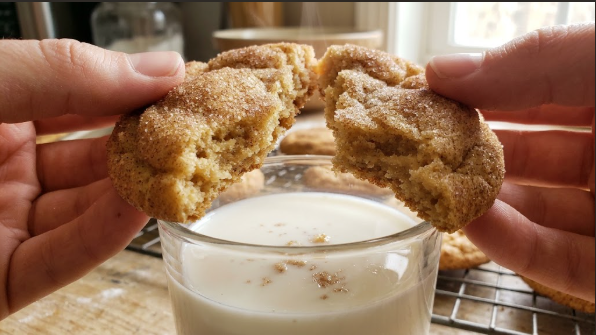
Snickerdoodles need a short rest. Leave them on the hot pan for 5 minutes, then slide the parchment onto a rack. Wait another 10 minutes before you bite in, because the centers set during that time and the texture turns from gooey to chewy.
Serve them warm or at room temperature. A warm cookie with a cold glass of milk is hard to beat. For a grill-night dessert board, stack a few next to a wedge of grill-baked pecan pie so guests can pick small bites of both.
What to Serve With a Snickerdoodle Recipe
The cinnamon and tang pair well with cold, creamy, and fruity flavors.
- Vanilla ice cream: Press a scoop between two cookies for an easy ice cream sandwich.
- Coffee or chai: The warm spice in the cookie matches both.
- Fresh apples or pears: Sliced fruit cuts the sweetness.
- Grilled fruit desserts: After the cookies come off, use the leftover heat for fruit. For a griddle option, try Blackstone bananas foster and crumble a cookie over the top.
- Hot chocolate: A good fit for fall and winter cookouts.
Storing, Freezing, and Reheating Leftovers
Room temperature
Cool the cookies fully, then store them in an airtight container at room temperature. They keep their best texture for 3 to 4 days. Do not stack warm cookies, because trapped steam makes them soggy.
Freezing baked cookies
Freeze cooled cookies in a single layer on a tray for 1 hour, then move them to a zip-top freezer bag with the air pressed out. For best quality, use them within about 3 months. The USDA FSIS notes that food kept frozen at 0°F (-18°C) stays safe, and that recommended freezer times are about quality, not safety.
Freezing the dough
Scoop and roll the dough balls, but hold off on the cinnamon sugar. Freeze them on a tray, then bag them. Roll in cinnamon sugar while still frozen and bake straight from the freezer at 375°F (190°C) for 11 to 13 minutes . Keep any unbaked dough refrigerated or frozen; the FDA advises following package directions for refrigerating dough and keeping raw flour and eggs away from ready-to-eat foods.
Reheating
- Microwave: 8 to 10 seconds on a plate for a soft, just-baked feel.
- Oven or grill: 300°F (150°C) for 3 to 5 minutes on a sheet pan.
Variations: Pellet Grill, Charcoal, Offset, and Oven Backup
The dough stays the same. What changes is how you manage heat. Cookies are delicate, and grills run hotter underneath than ovens, so the setup matters.
Pellet grill snickerdoodles
Set the pellet grill to 375°F (190°C) and let it preheat for 15 minutes with the lid closed. Place a baking steel or pizza stone on the grate, then set your parchment-lined cookie sheet on top. The stone shields the cookies from direct heat and keeps the bottoms tan instead of dark.
Use a mild pellet such as apple, pecan, or maple. At 375°F, a pellet grill makes very little smoke, so the cookies pick up only a faint hint. If you want a flavor match, check this guide to the best pellets for the Camp Chef Woodwind and pick a fruitwood or nut blend.
Pitmaster Tip: Skip strong woods like mesquite or hickory for cookies. Dough absorbs smoke fast, and a heavy smoke flavor can taste bitter against sweet cinnamon. If your grill has a smoke setting, turn it off.
Charcoal kettle (two-zone)
Bank 25 to 30 lit coals on one side of the grill. Set the grate in place and aim for 350–375°F (175–190°C) on the cool side. Close the lid with the top vent over the cookies, which pulls the heat across them. Set the sheet pan on a stone, bake 11 to 14 minutes, and rotate at the 6-minute mark.
Offset smoker
Run a clean, hot fire with dry, well-seasoned hardwood. Place the tray at the far end of the cooking chamber, away from the firebox. Offsets swing in temperature, so check the cooking chamber with a thermometer at grate level, not just the lid gauge. Smoke should look thin and blue. A good set of offset smoker accessories like a grate-level thermometer makes this much easier.
Oven backup and air fryer
If the weather turns, the oven method above is the foolproof route. For small batches, an air fryer at 325°F (165°C) for 6 to 8 minutes works too. You can find more small-appliance ideas in our collection of easy air fryer recipes.
Flavor twists
- Brown butter: Brown the butter, chill it until soft but not melted, then continue as written.
- Chai spice: Add ½ tsp ground cardamom and ¼ tsp ground ginger to the cinnamon sugar.
- Pecan crunch: Fold in ½ cup (2 oz / 57 g) chopped, toasted pecans.
- Chocolate chip hybrid: Fold in ¾ cup semisweet chips. If you want a different cookie style, see our chocolate chip cookie recipe.
- Baking with kids: Let them roll the dough in cinnamon sugar, and remind them the UC Master Food Preserver Program says not to taste anything with raw flour or eggs.
Troubleshooting Your Snickerdoodle Recipe
| Problem | Likely cause | Fix |
| Cookies spread flat | Butter too warm; dough not chilled | Soften butter to about 65°F (18°C); chill 30 min |
| Cakey, puffy cookies | Too much flour or too much leavening | Weigh flour (345 g); measure cream of tartar and soda exactly |
| Hard, dry cookies | Overbaked or overmixed | Pull when centers look puffy; mix just until combined |
| Burnt bottoms on the grill | Direct heat or dark pan | Use a baking stone, light-colored sheet, and indirect heat |
| No crackly top | Dough not rolled in sugar fully, or oven too cool | Coat completely; confirm 375°F with a thermometer |
| Smoky or bitter taste | Heavy wood smoke | Use fruitwood pellets or a clean fire; turn off smoke setting |
| Uneven browning | Hot spots | Rotate the pan at the halfway point |
Snickerdoodle Recipe Card
Servings: about 24 cookies | Prep time: 20 minutes | Chill time: 30 minutes | Bake time: 9–11 minutes per tray (oven), 10–14 minutes (grill) | Cooker temperature: 375°F (190°C)
Ingredients: 1 cup (227 g) unsalted butter; 1½ cups (300 g) sugar; 2 large eggs; 2 tsp vanilla; 2¾ cups (345 g) flour; 2 tsp cream of tartar; 1 tsp baking soda; ½ tsp salt. Coating: ¼ cup (50 g) sugar and 1 tbsp cinnamon.
Short steps:
- Heat oven or grill to 375°F (190°C) for indirect heat.
- Whisk flour, cream of tartar, baking soda, and salt.
- Cream butter and sugar for 2–3 minutes; add eggs and vanilla.
- Mix in dry ingredients; chill dough 30 minutes.
- Roll 1.5 tbsp balls in cinnamon sugar.
- Bake 9–11 minutes (oven) or 10–14 minutes (grill) until edges are set and centers are puffy.
- Rest 5 minutes on the pan, then cool on a rack.
FAQ
What is the difference between a snickerdoodle and a sugar cookie?
A snickerdoodle uses cream of tartar and baking soda, which give it a mild tang and a soft, chewy bite. It is also rolled in cinnamon sugar before baking. A plain sugar cookie usually skips both, so it tastes sweeter and more buttery.
Can you make snickerdoodles without cream of tartar?
Yes, but the flavor changes. Swap in baking powder and drop the baking soda, using roughly 2½ teaspoons for this batch. You lose the tang, and the cookies turn a little softer and more cake-like. For true snickerdoodle flavor, keep cream of tartar in the pantry.
Why are my snickerdoodles flat?
Flat cookies usually come from butter that was too warm, dough that was not chilled, or too little flour. Soften butter to about 65°F (18°C), chill the dough 30 minutes, and weigh the flour at 345 grams. Check that your baking soda is fresh, too.
How long do you bake snickerdoodles?
In a 375°F (190°C) oven, bake 1.5-tablespoon dough balls for 9 to 11 minutes. On a pellet grill or kettle at the same temperature, plan on 10 to 14 minutes. Pull them when the edges are set and the centers look puffy.
How do you keep snickerdoodles soft?
Underbake them slightly, cool them completely, and store them in an airtight container at room temperature. A slice of sandwich bread in the container adds moisture. Do not stack warm cookies. Eat them within three to four days for the best texture .
Can you bake snickerdoodles on a grill?
Yes. Set a pellet grill, charcoal kettle, or gas grill up for indirect heat at 350 to 375°F (175–190°C), and put the cookie sheet on a baking steel or pizza stone. Rotate the tray halfway through and watch the bottoms. Cookies take about 10 to 14 minutes.
Conclusion
This snickerdoodle recipe is simple, and it rewards a few good habits: cool butter, weighed flour, a 30-minute chill, and a short bake while the centers still look soft. Do those four things and you will get thick, chewy cookies with crackly cinnamon tops every time. The same dough works on a pellet grill, a charcoal kettle, or an offset smoker once you set up indirect heat and a baking stone.
Bake a batch for your next cookout, then browse more easy dessert recipes to round out the menu.
Laura Smith

I'm Laura, I like all the kind of delicious grilled foods which makes me hungry all the time I see them. That's why I built this blog to share with you all of my Grilling experiences, recipes, and all the tips about foods that I've learned from food experts.