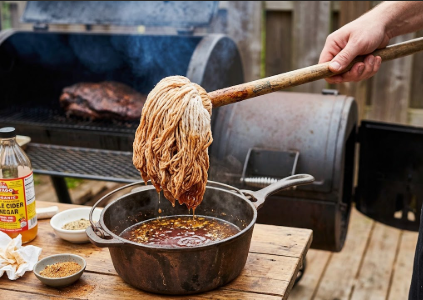
A good basting mop does one job a brush can’t: it carries a lot of thin liquid to the meat and lays it on gently, without scraping off the bark you spent hours building. If you cook brisket, pork shoulder, ribs, or whole birds low and slow, the best basting mop is a cheap tool that makes your cook easier to manage.
I put this guide together to help you pick the right one fast. Below you’ll find eight options, a buyer’s checklist, a simple mop sauce recipe, safe-handling rules, and cleaning tips. Specs come from brand and retailer listings, so check anything marked before you buy.
Quick Answer: The best basting mop for most cooks is an 18-inch cotton mop with a wooden handle and a screw-on, replaceable head. Budget pick: a 16-inch two-pack. Upgrade pick: a rosewood-handle mop with a hanging loop. Pair any cotton mop with thin, vinegar-based sauce, never thick, sugary sauce.
Basting Mop Comparison Table
| Name | Key spec | Best for | Price range |
| GRILLHOGS 18″ Basting Mop | 18″, two cotton heads, screw-on head | Best overall | $15-25 |
| Better Grillin BBQ Mop (16″) | 16″ wood handle, cotton head, 1/2/6-packs | Budget pick | $8-20 depending on pack |
| Hedume 2-Pack 18.2″ | 18.2″, 6 extra heads | Heavy use, big cooks | $20-30 |
| Charcoal Companion Rosewood 17″ Sauce Mop | 17″, rosewood handle, hand wash only | Classic look | $10-20 |
| Traeger BBQ Sauce Mop (BAC428) | 100% cotton, rosewood handle, leather loop | Pellet grill owners | $10-20 |
| WHTCHSU 11.2″ Mop | 11.2″, one extra head | Griddles, small cookers | $8-15 |
| VEVOR Cast Iron Sauce Pot and Mop Set | Pot plus mop in one kit | Keeping sauce warm | $20-35 |
| Napoleon PRO Silicone Brush (55005) | Silicone head, stainless handle | Thicker sauces, easy cleanup | $10-20 |
Best Basting Mop Picks for 2027
1. GRILLHOGS 18″ Basting Mop: Best Overall
Who it’s for: Cooks who want a long, sturdy, no-nonsense mop for the smoker.
Key features: The listing describes an 18-inch wooden handle, two cotton mop heads in the box, and a head that screws on for easy removal. It is described as dishwasher-safe, with a 5-year warranty claim .
Pros:
- Long enough to reach a full-size brisket without leaning over hot metal
- The spare head means you always have a clean one for the next cook
- Screw-on head makes washing simple
Cons:
- One buyer comment says the cotton seemed to repel liquid at first, so pre-wet it
- Only suits thin liquids
2. Better Grillin BBQ Basting Mop: Best Budget Pick
Who it’s for: Beginners who want to try mopping before spending real money.
Key features: A 16-inch wooden handle and an all-cotton head that washes out with soap and water. It’s sold as a single, a 2-pack, and a 6-pack .
Pros:
- Very low price per mop
- Head is large enough to cover most cuts in one pass
- Cheap enough to treat as disposable if you prefer
Cons:
- 16 inches is shorter than some, so keep your hand clear of the firebox opening
- Not designed for thick sauces
3. Hedume 2-Pack BBQ Basting Mop (18.2″): Best Multi-Pack
Who it’s for: People who cook large batches, cater for friends, or hate washing mid-cook.
Key features: Two 18.2-inch wooden-handle mops with six extra replacement heads in the pack, per the listing.
Pros:
- Enough heads that you can run one for sauce and one for a different liquid
- Long handle
- Strong value if you mop often
Cons:
- More heads than a casual cook will ever use
- Wood handles need to stay dry
4. Charcoal Companion Rosewood 17″ Sauce Mop: Best Classic Style
Who it’s for: Cooks who like the traditional look and plan to hand wash.
Key features: A 17-inch rosewood handle and cotton head, listed as hand wash only. It’s marketed for thin Carolina and Texas-style sauces.
Pros:
- Nice feel in the hand
- Good match for vinegar mops
- Washes out with soap and water
Cons:
- No dishwasher shortcut
- May be hard to find in stock
5. Traeger BBQ Sauce Mop (BAC428): Best for Pellet Grill Owners
Who it’s for: Traeger owners or anyone who likes matching brand gear.
Key features: A 100-percent cotton head and a rosewood handle with a leather loop for hanging on the grill .
Pros:
- Hanging loop keeps it off the cooking surface
- Gentle on bark
- Simple design
Cons:
- Availability looks inconsistent
- Little information on spare heads
If you’re still choosing a cooker, our guide to the best pellet grills for beginners covers the basics.
6. WHTCHSU 11.2″ Basting Mop: Best Short-Handle Mop
Who it’s for: Griddle cooks, kitchen use, and small cookers where an 18-inch handle is overkill.
Key features: An 11.2-inch wooden handle, 100-percent cotton threads, and one spare head with a threaded connector, according to the listing].
Pros:
- Easy to store
- Works as a pastry or butter brush too, per the maker
- Spare head included
Cons:
- Too short for a deep offset firebox or kettle
- Keep your hand away from direct flame
7. VEVOR Cast Iron Sauce Pot and BBQ Mop Set: Best Combo Kit
Who it’s for: Cooks who want to keep mop sauce warm right next to the cooker.
Key features: A cast iron sauce pot with a mop brush.
Pros:
- Warm sauce absorbs and spreads more easily than cold
- One purchase covers pot and mop
- Cast iron holds heat
Cons:
- Heavy to move around
- Cast iron needs seasoning and care
8. Napoleon PRO Silicone Basting Brush (55005): Best Alternative for Thick Sauces
Who it’s for: Cooks who glaze with thicker sauces or want zero-fuss cleanup.
Key features: A silicone head with a stainless steel handle .
Pros:
- No fibers to absorb odors or trap bacteria
- Easy to rinse or put in the dishwasher
- Works with thicker finishing sauce
Cons:
- Holds much less liquid than a cotton mop
- It’s a brush, not a true mop
Cotton vs. Silicone: Which Basting Mop Should You Choose?
Cotton wins for absorbing and spreading thin liquid. A mop head can hold a surprising amount of vinegar-based sauce, which is why pitmasters have used them for decades on pork and brisket.
Silicone wins for hygiene and cleanup. Napoleon’s own guide recommends silicone over cotton, noting that cotton can hold odors and bacterial growth if not cleaned well. That’s a fair point, and a reason to wash cotton heads right after every cook.
My simple rule: use cotton for thin mop sauce during the cook, and use silicone for thick glazes at the end.
How to Choose the Best Basting Mop
Use this checklist before you buy.
- Handle length: Aim for 16 to 18 inches (40 to 46 cm) if you cook on an offset or kettle. Shorter handles suit griddles and kitchen work.
- Head material: Cotton absorbs thin liquid. Silicone is easier to sanitize.
- Replaceable head: A screw-on head lets you swap in a clean one and wash the dirty one.
- Head size: Larger heads cover big cuts like brisket in fewer passes.
- Handle material: Wood stays cooler but dislikes soaking. Stainless handles survive washing but can heat up.
- Hanging loop: Handy for keeping the head off the grates and out of the dirt.
- Washing method: Dishwasher-safe saves time. Hand wash only is fine if you’re diligent.
- Pack size: A multi-pack makes sense if you cook often.
Common Mistake: Buying a mop for thick, sugary barbecue sauce. Thick sauce clings, clumps in the cotton, and is hard to wash out. Keep the mop for thin liquids and brush the thick sauce on in the last 15 to 30 minutes.
How We Picked the Best Basting Mop
We haven’t run lab tests on these mops. This list is built from the product details brands and retailers publish, then filtered by what matters at the smoker. Here is what we weighed:
- Reach: Is the handle long enough to keep your hand clear of heat?
- Head quality: Cotton thickness, size, and whether it’s replaceable.
- Cleanup: Can you wash it fully and dry it between cooks?
- Value: Cost per usable head, not just the sticker price.
- Availability: We flagged any model that showed as sold out.
- Fit: Whether the tool matches how people actually cook (offset, pellet, griddle).
Before publishing, we recommend confirming every spec and price against the maker’s own page.
When to Use a Basting Mop (and When Not To)
Mopping is most useful on long cooks where the surface can dry out, like brisket, pork shoulder, and ribs. A thin mop sauce adds a layer of tang and moisture and helps bark stay supple rather than crusty.
Don’t mop constantly. Every time you open the lid or door, you lose heat and smoke, and a cold or wet surface can slow bark formation. Napoleon notes that basting can extend cook time on low and slow cooks, so be sparing at smoker temperatures and a little freer above 300°F (149°C).
A Simple Mopping Schedule
- Smoker at 225-250°F (107-121°C): Wait until the bark has set, about 2 to 3 hours in. Then mop every 45 to 60 minutes.
- Hot-and-fast at 275-325°F (135-163°C): Mop every 30 to 40 minutes.
- Stop mopping about 30 to 45 minutes before the meat is done so the surface can firm up.
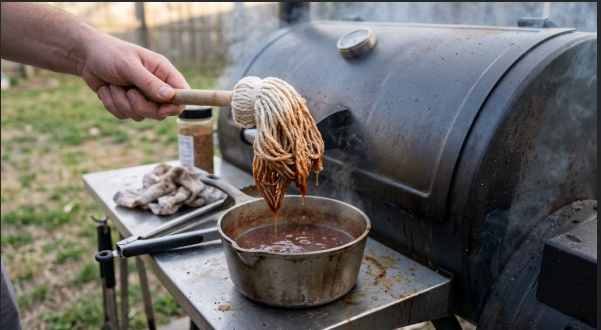
Pitmaster Tip: Wet the mop head with warm water and squeeze it out before dipping it in sauce. A dry mop can repel the first dip, while a pre-moistened head soaks up sauce evenly. Dab and drag lightly rather than scrubbing.
A Basic Mop Sauce Recipe
This is a starting point, not a secret formula. Adjust it to your pork, beef, or chicken.
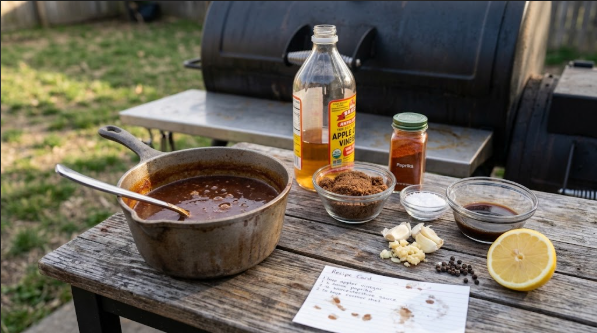
Ingredients:
- 1 cup (240 ml) apple cider vinegar
- 1 cup (240 ml) water or apple juice
- 2 tablespoons Worcestershire sauce
- 1 tablespoon of your favorite BBQ rub
- 1 tablespoon melted butter or oil
- 1 teaspoon black pepper
Method: Stir everything together in a small pot and warm it over low heat until it’s just steaming. Keep it warm near the cooker and stir before each dip.
If you’re doing ribs, our pellet grill ribs method shows where a light mop fits into the timeline.
Mopping Different Cuts
Brisket
Brisket is a pitmaster favorite for mopping, especially a thin, vinegar-forward mop in the second half of the cook. Pitmasters usually pull brisket at 200-205°F (93-96°C) for tenderness, even though beef’s minimum safe temperature is lower. See the safety section below.
Pork Shoulder
Pulled pork loves mopping. Pull at roughly 195-205°F (90-96°C) for easy shredding. A cider-vinegar mop adds tang that cuts through the fat.
Ribs
Go light. Ribs are thin, and heavy mopping can make the bark soft. One or two light passes is usually plenty before saucing at the end.
Poultry
Poultry skin can turn rubbery under a wet mop. Use a butter-based baste sparingly and keep the smoker hotter, around 325°F (163°C). For a full turkey plan, see our turkey breast at 250°F guide and our Thanksgiving smoker recipes.
Food Safety When Using a Basting Mop
A mop goes back into the sauce again and again, which is exactly where food safety slips happen.
- Never dip a used mop back into the main sauce pot after it has touched raw or partly cooked meat. Pour a working portion into a second pot and use that.
- Discard or boil leftover mop sauce that touched raw meat. USDA FSIS guidance on preventing cross-contamination is worth a read.
- Cook to safe temperatures. Poultry needs 165°F (74°C), the USDA’s safe minimum internal temperature. Whole cuts of beef, pork, and lamb need 145°F (63°C) with a 3-minute rest, per the same chart]. Ground meats need 160°F (71°C).
- Watch the clock. Keep cold food out of the danger zone between 40°F and 140°Fas much as you can.
- Use a clean head for each cook. Never reuse a head that has stayed damp in a bag.
Pitmaster pull temps like 200-205°F for brisket are about tenderness, not safety. Treat the USDA number as the floor and the pitmaster number as the goal.
Care and Maintenance Tips
A mop head that smells sour or looks grey is done. Here’s how to keep one longer.
- Rinse right away. Don’t let sauce dry in the fibers.
- Wash with hot, soapy water. Unscrew the head if it detaches and wash the head and handle separately.
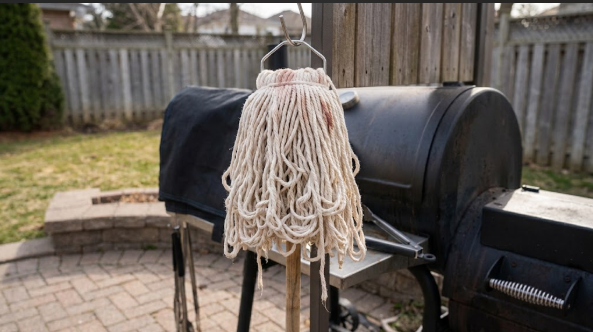
- Squeeze and air dry. Hang it in a dry spot. Never store it damp.
- Use the dishwasher only if the listing says so. Some cotton heads are dishwasher-safe, but wood handles often are not .
- Sanitize cotton occasionally. One reviewer-suggested method is a warm water and bleach solution, then a thorough rinse. Check the maker’s instructions first .
- Replace heads often. Heads are cheap. If the fibers shed, smell, or stain, swap them out.
- Keep wood dry. Wipe the handle and let it dry fully after washing.
Good tools last longer when you also keep your cooking surface and knives in order. See our picks for knives for cutting meat to slice the finished brisket cleanly.
Which Cooker Does Your Basting Mop Fit?
- Offset smoker: An 18-inch mop is ideal because the firebox and cook chamber make you reach. If you’re shopping, see our look at the best affordable offset smoker and our notes on lump charcoal in an offset smoker.
- Pellet grill: Mop sparingly because opening the lid drops temperature and hurts the controller’s recovery.
- Kettle or kamado: A 16 to 18 inch mop works. Keep your hand off the rim.
- Gas grill or griddle: A shorter mop or silicone brush is plenty. New to charcoal? Our how to start a grill guide covers the basics.
FAQ
What is a basting mop used for? A basting mop applies thin liquids like mop sauce, marinade, or butter to meat during a long cook. The cotton head holds a lot of liquid and spreads it gently, adding flavor and moisture without scraping off the bark on brisket, ribs, or pork.
Is a mop better than a basting brush? It depends on the sauce. A mop is better for thin, runny liquids because it soaks up and carries more. A brush is better for thick glazes. Many cooks keep one of each and use the mop mid-cook and the brush to finish.
How often should you mop brisket? Wait until the bark is set, usually 2 to 3 hours in, then mop every 45 to 60 minutes at 225-250°F (107-121°C). Stop about 30 to 45 minutes before pulling so the surface firms up. Frequent lid-opening costs heat and time.
What goes in a BBQ mop sauce? A basic mop sauce uses apple cider vinegar, water or apple juice, Worcestershire sauce, a little rub, pepper, and a bit of butter or oil. Keep it thin. Thick or sugary mixes clump in the cotton and are harder to clean.
Can you put a basting mop in the dishwasher? Some cotton heads are listed as dishwasher-safe, especially when the head unscrews from the handle. Many wooden handles are not. Check the listing for your model and hand wash the handle, dry both fully, and replace worn heads.
Is a silicone or cotton basting mop safer? Neither is unsafe if handled properly. Cotton holds more sauce but can keep odors and bacteria if not cleaned well. Silicone is easier to sanitize. Either way, never dip a used mop back into the main sauce after it touched raw meat.
Conclusion: Our Pick for the Best Basting Mop
For most backyard cooks, the best basting mop is a long-handled cotton mop with a replaceable head and a spare or two. The GRILLHOGS 18″ is our top pick, Better Grillin is the easy budget buy, and a rosewood mop is a nice step up. Add a silicone brush for thick sauces and you’re covered.
Remember: thin liquid, warm sauce, light touch, a clean head every cook, and a thermometer to confirm doneness. Check every price and spec marked before you click buy, and your next brisket will thank you.
Laura Smith

I'm Laura, I like all the kind of delicious grilled foods which makes me hungry all the time I see them. That's why I built this blog to share with you all of my Grilling experiences, recipes, and all the tips about foods that I've learned from food experts.