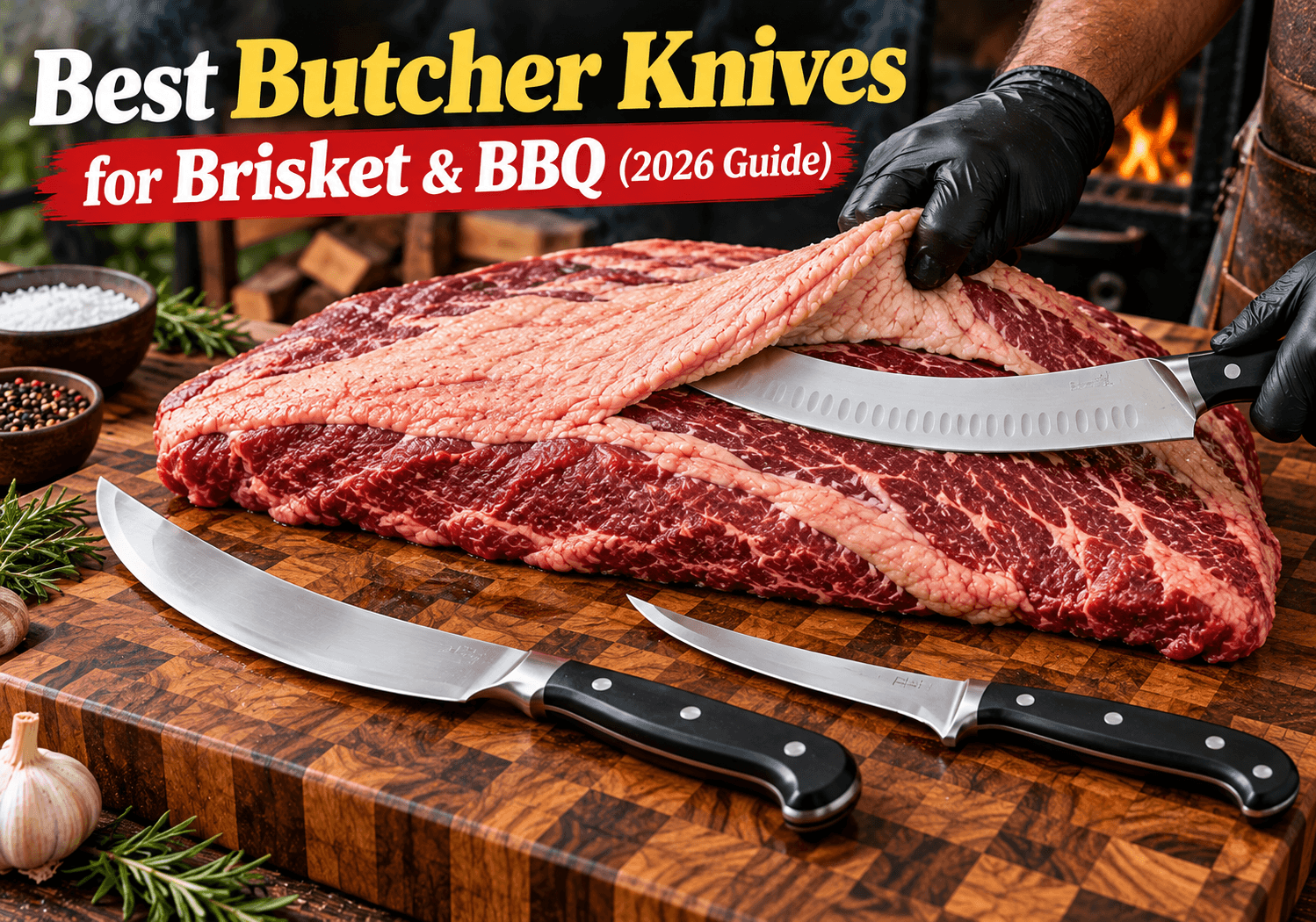
It’s 6 a.m., the smoker is warming up, and a 14 lb (6.4 kg) packer brisket is sitting on your cutting board. Thick hard fat on top, a slab of silverskin underneath, and a deckle that needs shaping. With the wrong knife, this turns into 45 minutes of sawing, tearing and swearing. With the right one, the blade glides under the fat and the trim is done before your second cup of coffee.
That’s why choosing one of the best butcher knives is the biggest upgrade most backyard cooks never make. Below, we compare seven proven knives from Victorinox, Mercer, Dexter-Russell, WÜSTHOF and Old Hickory, explain breaking knives vs cimeters vs boning knives, and show you exactly how to choose, use and care for the one that fits your cook.
Quick Answer: The best butcher knife for most people is the Victorinox Fibrox Pro 10″ Curved Breaking Knife: Swiss-made, grippy, NSF-certified and affordable. On a tight budget, choose the Mercer Millennia 10″ Breaking Knife. For a premium forged blade, choose the WÜSTHOF Classic 8″ Butcher Knife. Pair any of them with a 6″ boning knife.
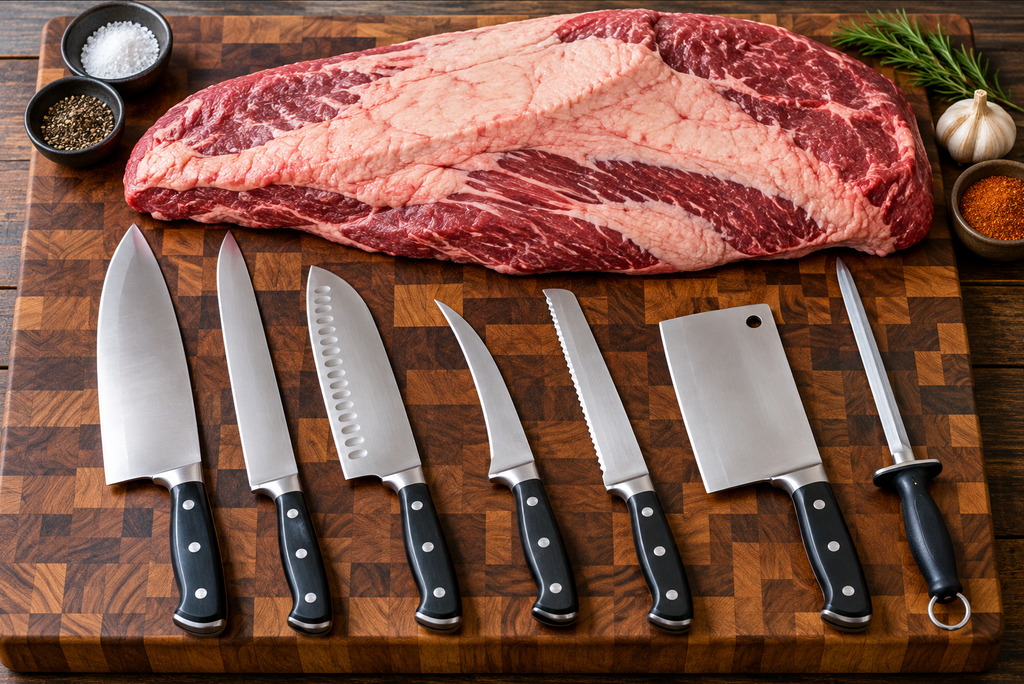
Best Butcher Knives Compared
| Knife | Blade | Steel | Best for | Typical price |
| Victorinox Fibrox Pro Curved Breaking Knife | 10 in (25 cm), curved | Swiss stainless, HRC 56 | Best overall | Check Price✅ |
| Mercer Millennia Breaking Knife (M13714) | 10 in (25 cm), curved | High-carbon German steel | Best budget | Check Price✅ |
| Dexter-Russell Sani-Safe Cimeter (S132-10) | 10 in (25 cm), long curve | Dexter stainless | Made in USA, pro use | Check Price✅ |
| Victorinox Fibrox Pro Curved Cimeter (5.7303.25) | 10 in (25 cm), wide curve | Swiss stainless | Cutting steaks from roasts | Check Price✅ |
| WÜSTHOF Classic Butcher Knife, Hollow Edge | 8 in (20 cm) | Forged stainless, HRC 58 | Premium upgrade | Check Price✅ |
| Old Hickory 14″ Butcher Knife (7-14) | 14 in (36 cm) | 1075 carbon steel | Big cuts, old-school value | Check Price✅ |
| Victorinox Fibrox Pro Flexible Boning Knife | 6 in (15 cm), flexible | Swiss stainless, HRC 55–56 | Best companion knife | Check Price✅ |
Prices change often, so check current listings before you buy.
The 7 Best Butcher Knives, Reviewed
1. Victorinox Fibrox Pro 10″ Curved Breaking Knife: Best Overall

Who it’s for: Anyone who trims briskets, breaks down pork butts or portions big cuts more than a few times a year.
This is the knife you’ll find in a lot of meat departments, and for good reason. The 10-inch (25 cm) curved blade has an upswept tip that lets you follow seams and slip under fat caps without hacking. Retailer specs list Swiss martensitic stainless steel at about HRC 56 with a 50/50 bevel, which means it’s tough, easy to sharpen and forgiving of the occasional bone strike. The Fibrox handle stays grippy even with greasy hands, and it’s listed as NSF-certified for commercial kitchens.
- Pros: Excellent control for trimming; grippy, comfortable handle; Swiss-made; easy to resharpen; great value
- Cons: Stamped, not forged, so it feels light; the plain plastic handle isn’t fancy; needs regular honing
2. Mercer Millennia 10″ Breaking Knife (M13714): Best Budget

Who it’s for: Beginners, occasional smokers and anyone who wants a capable breaking knife for the price of a takeout dinner.
The Millennia uses ice-hardened, high-carbon German steel and a textured, glass-reinforced nylon handle with a finger guard, which is a real safety bonus when your hands are slick with fat. It’s NSF-certified and backed by a limited lifetime warranty. Out of the box it’s sharp enough for brisket trimming; it simply needs touching up a little more often than the Victorinox.
- Pros: Very low price; finger guard; textured grip; lifetime warranty
- Cons: Edge retention is a step below pricier knives; Mercer says it is not dishwasher safe (no butcher knife should be)
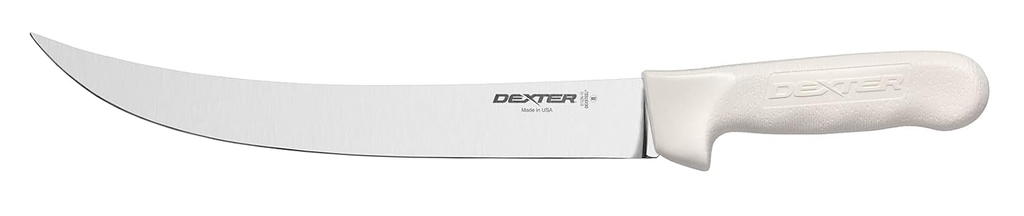
3. Dexter-Russell Sani-Safe 10″ Cimeter (S132-10): Best Made in USA
Who it’s for: Hunters, home butchers and cooks who want the American-made workhorse that meat cutters have used for decades.
Dexter-Russell is a long-time American knife company, and Dexter says its knives are made in Massachusetts [VERIFY for this model]. The S132-10 has a long, curved cimeter blade built to cut steaks and cubes from a large roast or subprimal in one smooth stroke. Dexter describes it as made for “deep cuts in one motion.” The textured white Sani-Safe handle is designed for wet, slippery work and easy sanitizing.
- Pros: Long slicing stroke; easy to clean; proven commercial design; American company
- Cons: Wide blade is less nimble for detailed trimming; white handle shows stains; check the steel grade on the exact listing
[PHOTO: cimeter knife cutting thick ribeye steaks from a whole boneless rib roast]
4. Victorinox Fibrox Pro 10″ Curved Cimeter (5.7303.25): Best for Cutting Steaks and Slicing Big Roasts
Who it’s for: Cooks who buy whole strip loins, ribeye rolls or tenderloins and cut their own steaks.

The cimeter has a wider, more sweeping blade than a breaking knife. That long curve lets you rock through a 1½-inch (4 cm) steak in a single pull, leaving a clean, flat face that sears evenly. It shares the Fibrox Pro slip-resistant handle and NSF listing with our top pick. If you buy whole subprimals to save money, this knife pays for itself fast.
- Pros: Clean single-stroke cuts; great for portioning; same trusted handle as our top pick
- Cons: Too large for detailed trimming; the wide blade is overkill if you only trim brisket
5. WÜSTHOF Classic 8″ Butcher Knife with Hollow Edge: Best Premium Upgrade

Who it’s for: Cooks who want one forged, heirloom-quality knife that handles carving, trimming and portioning.
According to WÜSTHOF, this knife is forged in Solingen, Germany, from corrosion-resistant stainless steel hardened to HRC 58, with a hollow-ground edge that reduces drag and keeps meat from sticking. The oversized triple-riveted handle and full bolster feel solid and balanced. WÜSTHOF lists it for carving, trimming, skinning, portioning and slicing meat.
- Pros: Forged and balanced; harder steel holds an edge longer; hollow edge releases meat cleanly; limited lifetime warranty
- Cons: Much more expensive; the 8″ blade is shorter for big subprimals; hand-wash and dry immediately
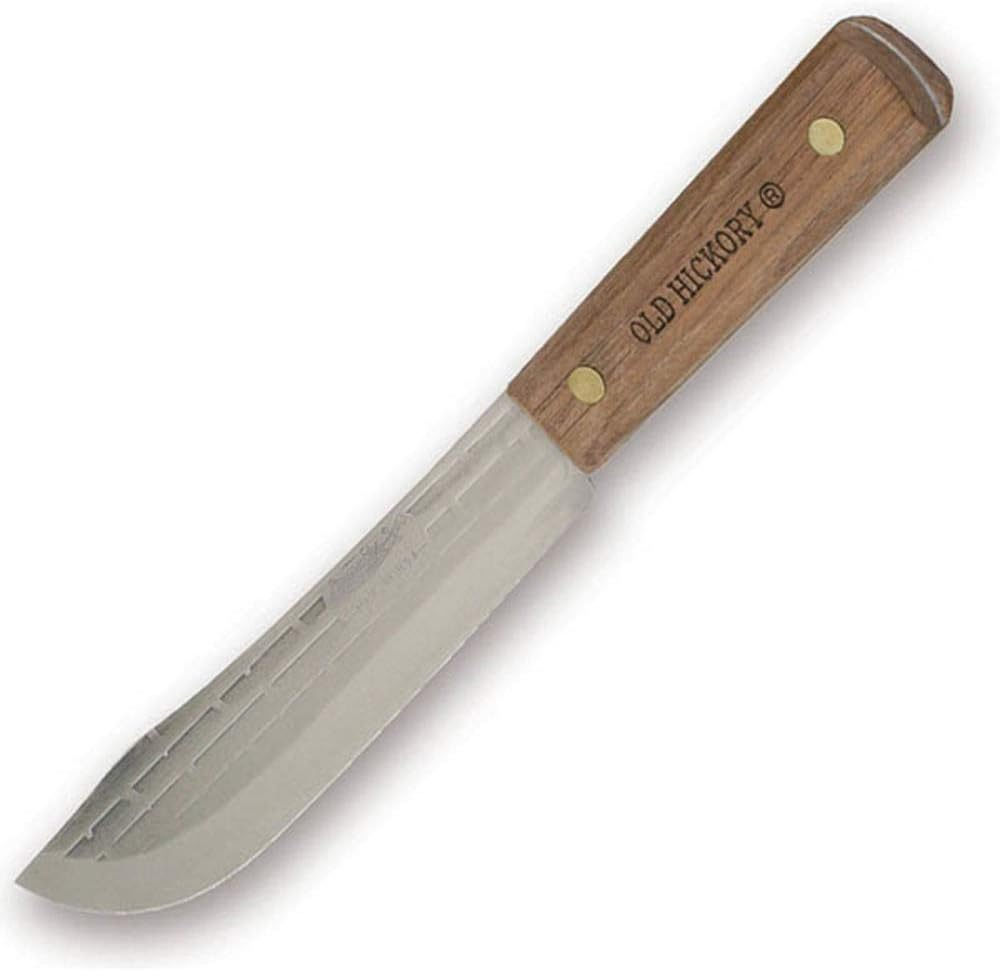
6. Old Hickory 14″ Butcher Knife (7-14): Best Old-School Value
Who it’s for: Traditionalists, hunters breaking down deer, and anyone who loves a carbon steel blade that takes a wicked edge.
Ontario Knife Company makes the Old Hickory in the USA from 1075 carbon steel, with a hardwood handle fixed by brass compression rivets. The 14-inch (36 cm) blade is 19½ inches (50 cm) overall, enough for halving whole primals. Carbon steel sharpens easily and gets very sharp, but it can rust if left wet and will darken to a patina with use.
- Pros: Incredibly cheap; huge blade; takes a razor edge; classic American design
- Cons: Needs drying and oiling to prevent rust; wood handle needs care; too big for small jobs
7. Victorinox Fibrox Pro 6″ Flexible Boning Knife: Best Companion Knife
Who it’s for: Every reader of this guide. A boning knife handles the jobs a long butcher knife can’t.
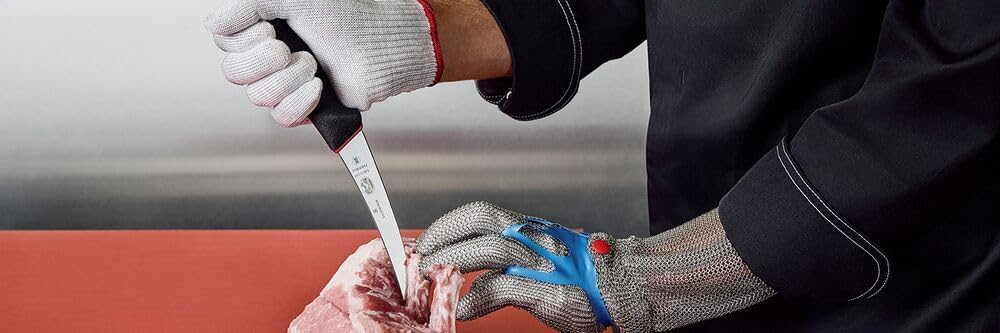
The 6-inch (15 cm) flexible blade bends around joints and bones, which makes it ideal for removing silverskin, deboning chicken thighs, trimming pork tenderloin and separating the point from the flat. Retailer specs list Swiss stainless steel at HRC 55–56 with the same Fibrox grip as our top pick.
- Pros: Flexible for precise work; inexpensive; pairs perfectly with a breaking knife
- Cons: Too flexible for heavy cuts; not a replacement for a long butcher knife
Pitmaster Tip: Use two knives for brisket. Take off the thick hard fat and shape the deckle with the 10″ breaking knife, then switch to the 6″ boning knife for silverskin and tight spots. You’ll trim faster and waste less meat.
How to Choose the Best Butcher Knife for You
Breaking knife vs cimeter vs boning knife vs cleaver
| Knife type | Blade | What it does best |
| Breaking knife | 8–10 in (20–25 cm), narrow, curved tip | Trimming fat, breaking down large cuts, brisket prep |
| Cimeter (scimitar) | 10–14 in (25–36 cm), wide, sweeping curve | Cutting steaks and portions in one stroke |
| Boning knife | 5–7 in (13–18 cm), narrow, stiff or flexible | Deboning, silverskin, poultry, tight spaces |
| Cleaver | Heavy, rectangular | Chopping through small bones and joints |
A butcher knife is not a cleaver. Butcher knives slice and trim; cleavers chop. Never use a thin breaking knife to chop through bone, because it will chip or roll the edge.
Buyer’s checklist
- Blade length: 10 inches (25 cm) is the sweet spot for most home cooks. Go to 12–14 inches (30–36 cm) only if you regularly handle whole primals or game.
- Blade shape: Pick a curved breaking knife for trimming and a cimeter for portioning. If you can only buy one, buy the breaking knife.
- Steel: Stainless steel (HRC 55–58) is low-maintenance and easy to sharpen. Carbon steel gets sharper but needs drying and oiling to prevent rust.
- Stamped vs forged: Stamped blades are lighter, more flexible and cheaper; most professional butchers use them. Forged blades are heavier and more balanced and usually cost more.
- Handle: Choose a textured, non-slip handle. Greasy hands plus a smooth handle is how accidents happen.
- NSF certification: Not required at home, but it signals a handle and build that are easy to clean and sanitize.
- Budget: You can get an excellent butcher knife for 25–65. Spending more buys refinement, not necessarily better cutting.
If you’re still deciding between knife styles for the rest of your kitchen, our guide to the best knives for cutting meat and our Santoku vs Nakiri comparison cover slicers and everyday knives.
Common Mistake: Buying a big, heavy “butcher knife” that’s really a cleaver-style chopper for trimming brisket. Trimming needs a thin, curved, sharp blade that you can guide, not a heavy one that you swing.
How We Picked These Butcher Knives
We focused on knives that backyard cooks and home butchers actually use for BBQ prep, and judged them on:
- Blade shape and length for trimming brisket, pork butt and big roasts
- Steel and hardness as published by the maker or a major retailer
- Grip and safety with wet, greasy hands
- Ease of sharpening at home
- Value across budget, mid-range and premium price points
- Reputation in commercial and butcher-shop use
We did not rely on brand marketing claims about “razor sharpness” or invent test scores. Specs come from manufacturer or major retailer listings; check the exact model before you buy.
How to Use, Clean and Sharpen a Butcher Knife
Use it safely: Always cut away from your body and your guiding hand. Use a large, stable cutting board on a damp towel so it can’t slide. When trimming a brisket, angle the blade slightly upward toward the fat, not down into the meat. A pair of cut-resistant gloves on your guiding hand is cheap insurance.
Clean it right away: Wash the knife by hand with hot, soapy water after cutting raw meat, then dry it completely. Cleaning knives, boards and hands after raw meat is one of FoodSafety.gov’s four steps to food safety. Don’t put any butcher knife in the dishwasher; heat and banging dull the edge and damage the handle.
Hone often, sharpen sometimes: A few strokes on a honing steel before every cook realigns the edge. Sharpen on a whetstone or guided sharpener when honing no longer brings the edge back, usually every few months for home use. Keep the factory angle; most Western butcher knives are sharpened at about 15–20 degrees per side [VERIFY for each brand].
Care for carbon steel: Dry carbon blades like the Old Hickory immediately and wipe them with a thin coat of food-safe oil. A gray-blue patina is normal; orange rust is not.
Store it safely: Use a blade guard, a magnetic strip or a knife block, never loose in a drawer.
[PHOTO: honing a 10-inch breaking knife on a steel before trimming a brisket]
Frequently Asked Questions
What knife do professional butchers use?
Most professional butchers use inexpensive, stamped stainless knives with non-slip handles, such as Victorinox Fibrox Pro, Dexter-Russell Sani-Safe and Mercer models. A typical kit includes a 10-inch breaking knife, a cimeter for portioning and a 6-inch boning knife, plus a honing steel used throughout the day.
What is the best knife for trimming brisket?
A 10-inch curved breaking knife is the best tool for trimming brisket. The narrow blade and upswept tip slide under hard fat and follow the curve of the meat. Pair it with a 6-inch boning knife for silverskin and tight spots between the point and the flat.
What’s the difference between a breaking knife and a cimeter?
Both are long and curved, but a breaking knife has a narrower blade with a sharper upswept tip for trimming and separating cuts. A cimeter (or scimitar) is wider with a longer sweeping curve, designed to slice steaks and portions from large roasts in one clean stroke.
How long should a butcher knife be?
For most home cooks, 10 inches (25 cm) is the most useful length. It’s long enough for brisket and pork butt but still easy to control. Choose 12–14 inches (30–36 cm) for whole primals or game, and add a 6-inch (15 cm) boning knife for detailed work.
Can butcher knives go in the dishwasher?
No. Dishwashers dull edges, can damage handles and may cause carbon steel to rust. Wash butcher knives by hand in hot, soapy water right after use, especially after raw meat, and dry them completely before storing them in a guard, block or magnetic strip.
Forged or stamped: which butcher knife is better?
Neither is automatically better. Stamped knives are lighter, slightly flexible and affordable, and most working butchers prefer them for trimming. Forged knives are heavier, more balanced and often harder, so they hold an edge longer but cost more. Choose based on feel and budget.
Conclusion: Which of the Best Butcher Knives Should You Buy?
For most backyard cooks, the best butcher knife is the Victorinox Fibrox Pro 10″ Curved Breaking Knife. It’s grippy, Swiss-made, easy to sharpen and priced so you won’t hesitate to use it hard. If money is tight, the Mercer Millennia 10″ does the job for less. If you want a forged heirloom, the WÜSTHOF Classic 8″ is the upgrade. Whichever you pick, add a 6-inch boning knife.
Any of these best butcher knives will turn brisket trimming from a chore into a five-minute job. Put yours to work on a perfect oven roast beef, a turkey breast smoked at 250°F or a slab of pellet grill ribs, and you’ll wonder how you ever trimmed meat without one.
Laura Smith

I'm Laura, I like all the kind of delicious grilled foods which makes me hungry all the time I see them. That's why I built this blog to share with you all of my Grilling experiences, recipes, and all the tips about foods that I've learned from food experts.