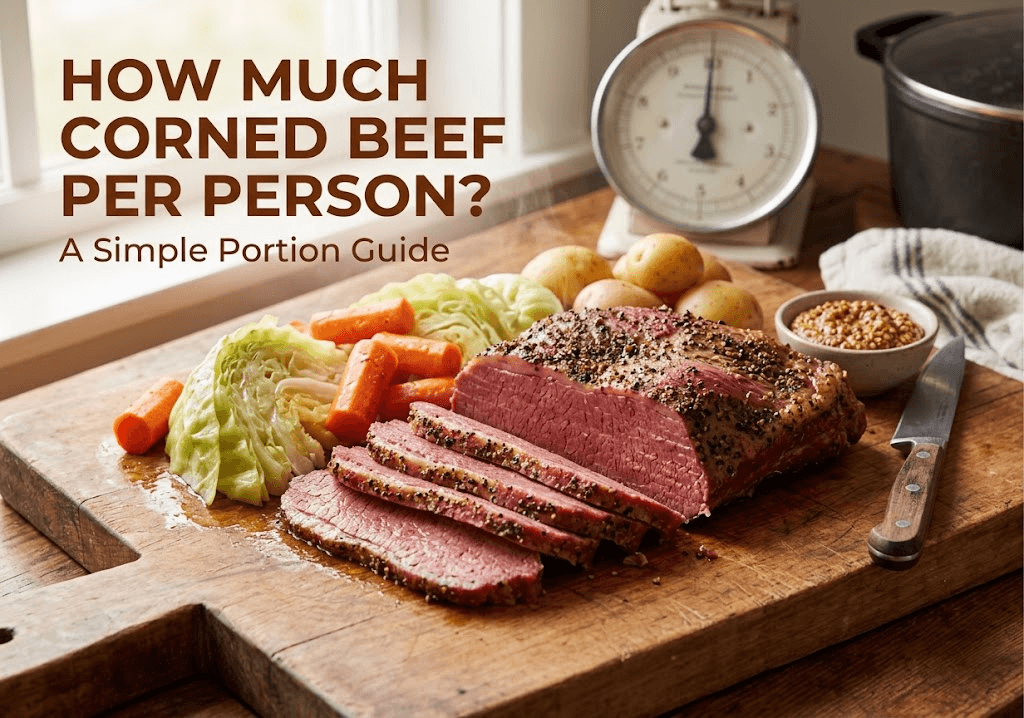
Figuring out how much corned beef per person to buy is the first thing that decides whether your dinner party is a hit or a stress test. Buy too little and guests leave hungry. Buy too much and you are eating hash for a week.
The good news is that the math is simple once you know one fact: corned beef shrinks a lot as it cooks. This guide gives you exact numbers for dinners, sandwich spreads, and big parties, plus the cook times and temperatures that keep every slice tender.
Quick Answer Plan on ½ lb (0.23 kg) of raw corned beef per person for a standard dinner, or ¾ lb (0.34 kg) if you want big portions or leftovers for hash and sandwiches. For deli-sliced meat, buy ¼–⅓ lb (0.11–0.15 kg) per sandwich. Corned beef loses about 35% of its weight as it cooks.
How Much Corned Beef per Person: The Basic Math
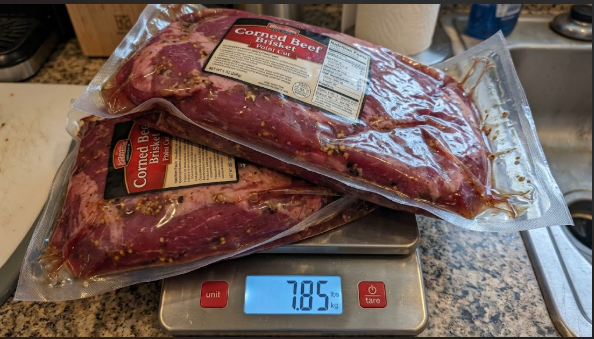
Start with the number on the package. That weight is raw weight, and it includes the brine the brisket is packed in. Once the meat is cooked and trimmed, you will have roughly 60-65% of what you bought.
Here is how that plays out for one hungry adult:
- Standard dinner portion: 4-6 oz (113-170 g) of cooked, sliced meat. That means about ½ lb (0.23 kg) raw.
- Hearty portion: 6-8 oz (170-225 g) cooked. Buy ¾ lb (0.34 kg) raw per person.
- Leftover-friendly: 1 lb (0.45 kg) raw per person if you want sandwiches, hash, and Reuben nights the next few days.
- Light eaters or a buffet with many sides: ⅓ lb (0.15 kg) raw per person.
For a classic corned beef and cabbage dinner with potatoes, carrots, and bread, ½ lb raw per person is the sweet spot. Most guests take 2-3 slices and fill the rest of the plate with sides.
I use a simple rule when I shop: take the number of adults, multiply by ½, and round up to the next whole pound. Then add a pound if anyone at the table is a big eater or if I want leftovers.
Corned Beef Portion Chart by Crowd Size
Use this table to find your raw weight at a glance. “Standard” is ½ lb per person. “Hearty” is ¾ lb per person.
| Guests | Standard (raw) | Hearty / leftovers (raw) | Approx. cooked meat (standard) |
| 2 | 1 lb (0.45 kg) | 1.5 lb (0.7 kg) | 10 oz (285 g) |
| 4 | 2 lb (0.9 kg) | 3 lb (1.4 kg) | 1.25 lb (0.57 kg) |
| 6 | 3 lb (1.4 kg) | 4.5 lb (2 kg) | 1.9 lb (0.85 kg) |
| 8 | 4 lb (1.8 kg) | 6 lb (2.7 kg) | 2.5 lb (1.1 kg) |
| 10 | 5 lb (2.3 kg) | 7.5 lb (3.4 kg) | 3.2 lb (1.45 kg) |
| 12 | 6 lb (2.7 kg) | 9 lb (4.1 kg) | 3.8 lb (1.7 kg) |
| 16 | 8 lb (3.6 kg) | 12 lb (5.4 kg) | 5 lb (2.3 kg) |
| 20 | 10 lb (4.5 kg) | 15 lb (6.8 kg) | 6.5 lb (2.9 kg) |
For a group of 10, that means about 5 lb (2.3 kg) of raw corned beef. Most grocery stores sell flats from 2.5-4 lb, so two packages usually cover you.
Why Raw Weight Is Not Cooked Weight
A corned beef brisket is cured in a salty brine, and it sits in that liquid inside the package. When you cook it, the meat loses water and some fat. Most of the weight loss comes in the first few hours.
In my experience, a 4 lb (1.8 kg) flat ends up around 2.5 lb (1.1 kg) of trimmed, sliceable meat. The fat cap, any gristle, and the ends you nibble in the kitchen account for the rest. Smoking at 250°F (121°C) tends to shrink the meat a little more than simmering, because the surface dries and forms a bark.
That is why buying exactly one serving’s worth of raw meat per person falls short. Always calculate from the cooked yield you need, then work backward to the raw weight.
Pitmaster Tip: Weigh the brisket after you drain it and trim the extra fat cap. Then write the number on a sticky note. After cooking, weigh it again so you know your own yield for next time.
Flat Cut vs Point Cut: Which Gives More Servings?
Corned beef is usually made from beef brisket, and brisket comes in two parts. Knowing the difference changes how much you need to buy.
Flat Cut (First Cut)
The flat is lean, uniform, and slices into neat, even pieces. It has less waste, so the cooked yield is higher, close to 65%. If you want pretty slices for a dinner party, this is the cut to buy.
Point Cut (Second Cut)
The point has more fat marbling, which makes it juicier and more forgiving. It also shrinks more because that fat renders out. Plan for about 55-60% yield, and buy about 10% more raw weight than you would with a flat.
Whole Packer
A whole brisket, point and flat together, can run 8-10 lb (3.6-4.5 kg) raw. It works well for large crowds of 14-16 people, but it takes longer to cook and needs a bigger pot or smoker.
| Cut | Typical raw size | Cooked yield | Best for |
| Flat | 2.5-4 lb (1.1-1.8 kg) | 60-65% | Dinner slices, sandwiches |
| Point | 2-3.5 lb (0.9-1.6 kg) | 55-60% | Hash, shredded meat, smoking |
| Whole packer | 8-10 lb (3.6-4.5 kg) | 55-60% | Big parties, smoker cooks |
Adjusting How Much Corned Beef per Person for Your Event
The ½ lb rule is a starting point. Your menu, your guests, and your goals change the number.
St. Patrick’s Day Dinner
A traditional plate has corned beef, boiled cabbage, potatoes, and carrots. Because the sides are filling, ½ lb raw per person works for most families. Add ¼ lb if you want enough for sandwiches the next day.
Sandwich Party or Reuben Bar
A piled-high Reuben holds 4-6 oz (113-170 g) of cooked meat. Plan on ⅔ lb (0.3 kg) raw per sandwich if you are cooking the brisket yourself. Teenagers and big eaters often make two.
Buffet With Multiple Mains
When you are serving ham, chicken, or other proteins alongside, guests take smaller portions. Drop to ⅓ lb (0.15 kg) raw per person. This is also a good approach for a potluck or open house.
Kids and Light Eaters
Children under 10 eat about half an adult portion. Count two kids as one adult and you will be close. Teenagers should count as full adults, or more.
Leftovers on Purpose
Corned beef hash, breakfast tacos, and grilled Reuben sandwiches are the best reasons to cook extra. If leftovers are the goal, buy ¾ to 1 lb (0.34-0.45 kg) raw per person. The extra cost is small compared to how many meals you get.
If you are hosting a larger gathering, these tips for hosting a summer BBQ party on a budget also help with portion planning and cost control for any big meat dinner.
Deli and Pre-Sliced Corned Beef Amounts
If you are buying cooked, sliced corned beef from the deli counter, the math is easier because there is no shrinkage. You pay for what you eat.
- Sandwich: ¼ lb (0.11 kg), about 4 oz, makes a solid sandwich. A deli-style Reuben holds ⅓ lb (0.15 kg).
- Plate with sides: ⅓ lb (0.15 kg) per person.
- Appetizer or sliders: 2 oz (57 g) per person.
- Party platter: 3-4 oz (85-113 g) per person, with rolls and mustard.
One pound of deli corned beef feeds 3-4 people at dinner or makes 3-4 hearty sandwiches. Ask the counter to slice it thin; thin slices pile higher and look like more food.
How to Cook the Corned Beef Once You Have the Right Amount
Buying the correct amount only helps if the brisket turns out tender. Here are three reliable methods. All of them work with a 3-4 lb (1.4-1.8 kg) flat, and the times scale with weight.
Before You Cook: Rinse and Check the Brine
Take the brisket out of the package and rinse it under cold water. Pat it dry. Most packages include a spice packet; use it or swap in your own pickling spice with peppercorns, mustard seed, coriander, and bay leaves.
If you plan to smoke it, soak the brisket in cold water for 2-4 hours, changing the water once or twice. This pulls out some of the salt so the bark does not turn out too salty. Keep the bowl in the refrigerator while it soaks.
Method 1: Smoke It on a Pellet Grill or Offset
Smoked corned beef tastes a lot like pastrami, and it is my favorite way to cook it. Set your smoker to 250°F (121°C) and use a mild wood like oak, cherry, or pecan. Hickory works too, but use a lighter hand.
If you are new to this setup, the steps are the same as in our guide to cooking ribs on a pellet grill. Not sure which grill to buy? Our best pellet grills for beginners list is a good place to start.
Stick-burner fans can run the same cook on an offset. Using lump charcoal in an offset smoker gives you a clean fire and steady heat for the long haul.
- Rub the brisket with coarse black pepper and a little coriander. Skip extra salt.
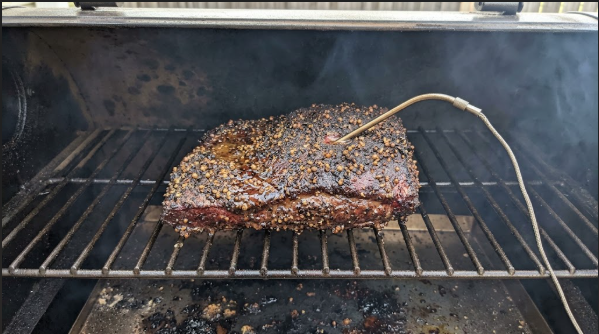
- Place it fat side up on the smoker and insert a leave-in probe into the thickest part.
- Smoke for about 3 hours, until the bark is dark and set and the internal temperature hits 160-170°F (71-77°C).
- Wrap it tightly in foil or butcher paper with a splash of beef broth or water.
- Return it to the smoker until the probe slides in like butter at 195-203°F (91-95°C).
- Rest wrapped for 30-60 minutes before slicing.
A 3.5 lb (1.6 kg) flat usually takes 4.5-5.5 hours total at 250°F (121°C).
Method 2: Simmer on the Stovetop
This is the classic method, and it is the best choice for corned beef and cabbage. Place the brisket in a large pot, fat side up, and cover with cold water by about 1 inch. Add the spice packet and an onion, quartered.
Bring the pot to a boil, then turn the heat down until you see only a few small bubbles. A hard boil makes the meat tough and stringy. Simmer for about 50 minutes per lb, which is 2.5-3 hours for a 3 lb (1.4 kg) brisket.
A large pot makes this much easier, especially for bigger briskets. If you are shopping for one, check our best stockpot picks. Add potatoes and carrots for the last 30 minutes and cabbage wedges for the last 15.
Method 3: Oven Braise
Place the brisket in a roasting pan or Dutch oven, fat side up, with 1-2 cups of water or beef broth. Cover tightly with foil or a lid. Cook at 300°F (149°C) for about 1 hour per lb, plus 30 minutes.
The low, steady heat is similar to the approach in our oven roast beef guide, and it keeps the brisket moist. Check at the 2.5-hour mark for a 3 lb piece and keep going until a fork twists easily.
Common Mistake: Boiling the brisket hard to “speed it up.” High heat tightens the muscle fibers and squeezes out moisture. You end up with dry, stringy meat and fewer slices than you planned for. Keep the liquid at a gentle simmer.
Corned Beef Time and Temperature Table
| Method | Cooker temp | Time per lb | 3 lb (1.4 kg) total | Finish temp |
| Smoker | 250°F (121°C) | 1.25-1.5 hr | 4-4.5 hr | 195-203°F (91-95°C) |
| Simmer | Gentle simmer, about 190°F (88°C) | 50 min | 2.5-3 hr | 190-200°F (88-93°C) |
| Oven braise | 300°F (149°C) | 1 hr + 30 min | 3-3.5 hr | 195-203°F (91-95°C) |
| Slow cooker | Low | n/a | 8-10 hr | Fork tender |
These are guides, not guarantees. Every brisket is a little different, so go by feel as much as time.
How to Tell When Corned Beef Is Done
Temperature gets you in the zone, but tenderness tells you when to stop. A fully cooked corned beef reads 195-203°F (91-95°C) in the thickest part, and a probe or fork slides in with almost no resistance. When you lift it, the meat should bend and jiggle slightly.
The flat should hold together when you slice it but pull apart with gentle pressure. If the fork resists, give it another 20-30 minutes and check again. Meat that falls apart on its own has gone a bit too far, though it is still great for hash.
Resting and Slicing for the Best Yield
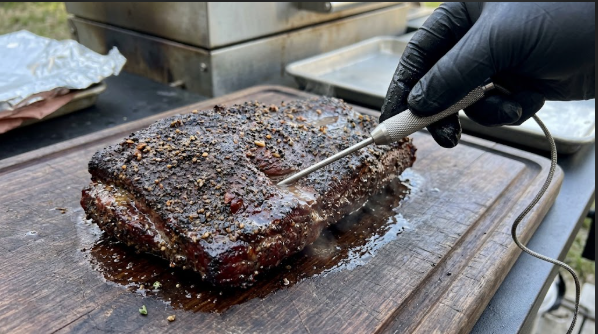
Rest the brisket for at least 20-30 minutes, tented loosely with foil. Resting lets juices settle back into the meat, so you lose less liquid on the cutting board. That matters when you are trying to stretch every pound.
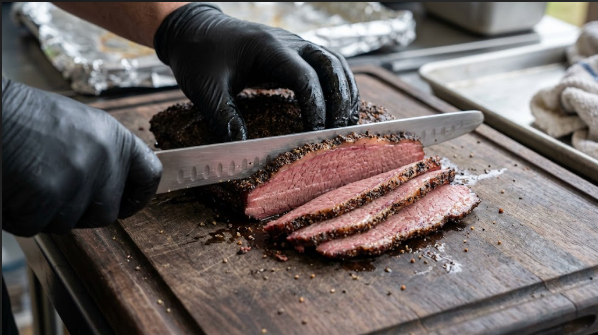
Slice against the grain, which runs in different directions in the flat and point. Cut the brisket in half where the two muscles meet, then slice each piece across the grain in ¼-inch (6 mm) slices. Thin slices are more tender and look like more food on the plate.
A long, sharp slicing blade makes a noticeable difference. See our picks for the best knives for cutting meat if yours is dull.
Food Safety Notes
Corned beef is raw, cured beef, so it must be cooked before eating. The USDA’s safe minimum internal temperature for whole cuts of beef is 145°F (63°C) with a 3-minute rest. For tenderness, you will cook well past that, to 195-203°F (91-95°C).
Keep raw brisket cold. Per the FoodSafety.gov cold storage chart, an uncooked corned beef in its pouch with pickling juices keeps about 5-7 days in the refrigerator . Check the “use by” date on the package too.
If you are thawing a frozen brisket, use the refrigerator, cold water, or the microwave. The USDA’s safe thawing methods explain each one. Never leave it on the counter.
When serving a party, do not let cooked meat sit out for more than 2 hours, or 1 hour if the room is above 90°F (32°C). Keep hot food above 140°F (60°C) in a warming tray or slow cooker.
Storing, Freezing, and Reheating Leftovers
Refrigerate leftovers within 2 hours of cooking. The USDA’s leftovers guidance says cooked meat is good for 3-4 days in the refrigerator. Store slices in a shallow container with a little of the cooking liquid to keep them moist.
For longer storage, freeze portions in freezer bags with the air pressed out. Cooked corned beef holds its quality best for 2-3 months , though it stays safe indefinitely at 0°F (-18°C). Thaw it in the refrigerator overnight.
Reheat to 165°F (74°C), the USDA’s recommended temperature for leftovers . A covered pan with a splash of broth works better than a microwave for slices.
What to Serve With Corned Beef (and How Much)
Sides stretch the meat, so they help your portion math. For each adult, plan on:
- Potatoes: 1 medium or about 6 oz (170 g)
- Cabbage: 1 wedge, roughly 4 oz (113 g)
- Carrots: 1 medium or 3 oz (85 g)
- Bread: 1 slice or roll; try warm cornbread for something different
- Mustard or horseradish sauce: about 1 tablespoon
With a full plate of sides, ½ lb raw corned beef is plenty. If you serve only potatoes and a salad, move up to ⅔ lb.
Common Portion-Planning Mistakes
- Using cooked weight when shopping. The package is raw weight; plan for 35% loss.
- Forgetting the point cut shrinks more. Buy 10% extra if you choose it.
- Counting small kids as full eaters. Two kids equal one adult.
- Skipping the leftover plan. If you want hash or Reubens, add ¼ lb per person.
- Rushing the rest. Slicing too soon leaks juice and cuts your yield.
Frequently Asked Questions
How many pounds of corned beef do I need for 8 people?
Buy 4 lb (1.8 kg) raw for a standard dinner, or 6 lb (2.7 kg) if you want hearty portions or leftovers. That works out to ½ to ¾ lb per person. Two 3 lb flats are an easy way to get there.
Is 1 lb of corned beef enough for 2 people?
Yes, for a normal dinner. One pound raw gives about 10 oz (285 g) of cooked meat, which is 5 oz each. If you want leftovers or big appetites, buy 1.5 lb (0.7 kg) instead.
How much does corned beef shrink when cooked?
Expect to lose about 35-40% of the raw weight. A 4 lb brisket yields roughly 2.5 lb (1.1 kg) of trimmed meat. The point cut loses more than the flat because it has more fat that renders away.
How much corned beef per person for sandwiches?
Plan on ⅔ lb (0.3 kg) raw per sandwich, which gives about 4-5 oz (113-140 g) cooked. For a deli-sliced purchase, ¼ to ⅓ lb (0.11-0.15 kg) per sandwich is plenty.
How many people does a 3 lb corned beef feed?
A 3 lb (1.4 kg) raw brisket feeds about 6 people at ½ lb each, or 4 people with hearty portions and a little left over. It yields roughly 1.9 lb (0.85 kg) of cooked meat.
How long do corned beef leftovers last?
Cooked corned beef lasts 3-4 days in the refrigerator when stored in a sealed container within 2 hours of cooking. Freeze slices for 2-3 months of best quality. Reheat leftovers to 165°F (74°C) before serving.
Conclusion
Now you know how much corned beef per person to buy: ½ lb (0.23 kg) raw for a normal dinner, ¾ lb (0.34 kg) for big eaters and leftovers, and about ⅓ lb for a buffet. Remember that the brisket will lose roughly a third of its weight, and the point cut loses a bit more than the flat.
Pick your method, hold a low and steady temperature, and pull the meat when a probe slides in easily around 195-203°F (91-95°C). Rest it, slice it thin against the grain, and your corned beef per person math will come out right every time.
Laura Smith

I'm Laura, I like all the kind of delicious grilled foods which makes me hungry all the time I see them. That's why I built this blog to share with you all of my Grilling experiences, recipes, and all the tips about foods that I've learned from food experts.