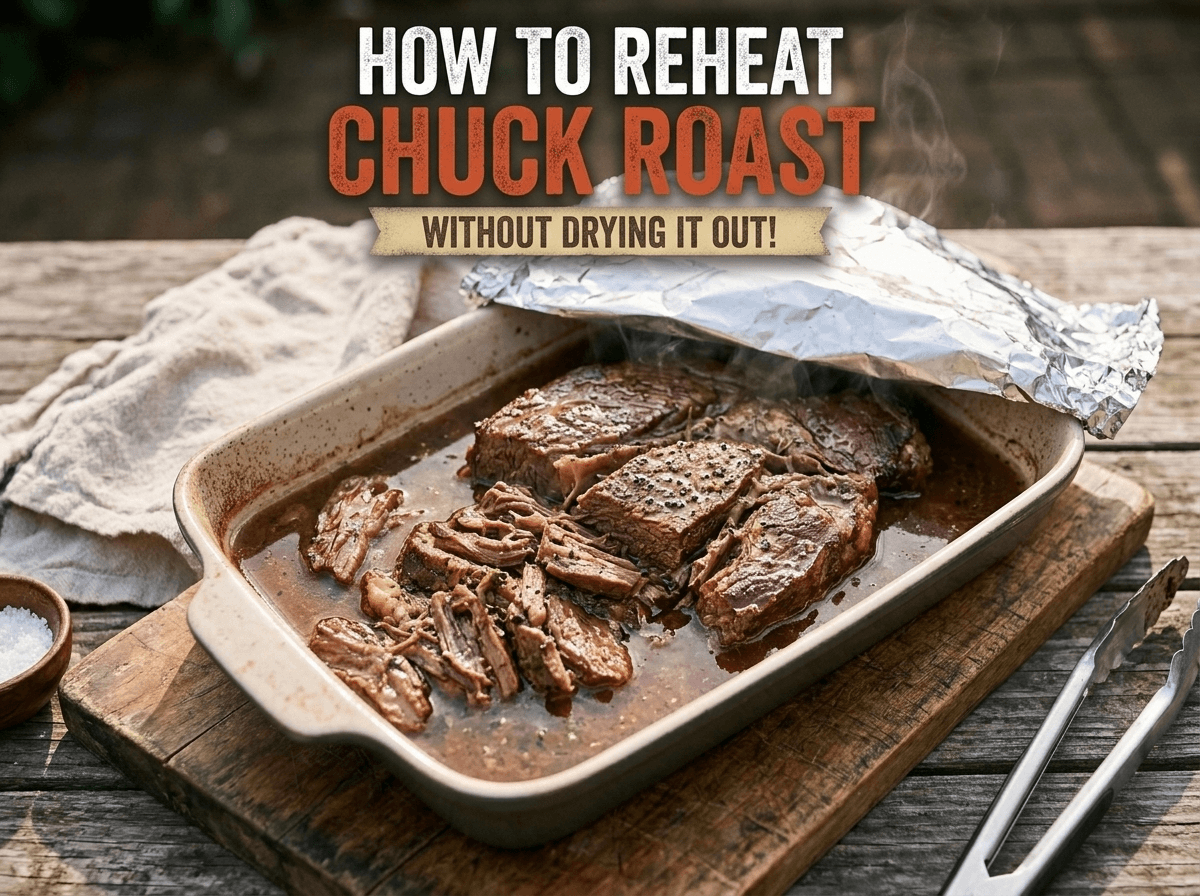
A great chuck roast is juicy, rich, and fork-tender on day one. The next day, it can turn into gray, stringy leftovers if you reheat it the wrong way. Learning how to reheat chuck roast without drying it out saves you from that sad lunch.
The trick is simple: add moisture, cover the meat, and use gentle, steady heat. This guide covers the oven, stovetop, microwave, and more. It also shows how to store leftovers so they’re ready to reheat well. Whether your roast came off a smoker or out of a Dutch oven, these steps work.
Quick Answer
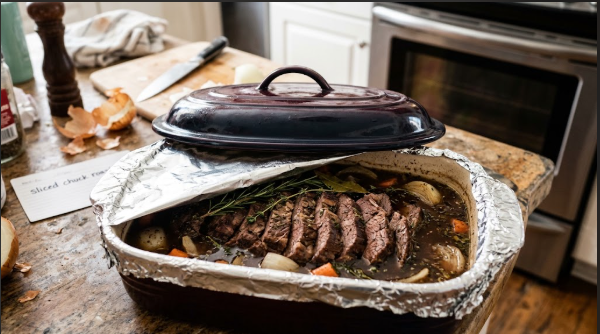
To reheat chuck roast without drying it out, place the meat in a baking dish with ½ cup of beef broth per pound, cover tightly with foil, and warm it in a 325°F (163°C) oven. Heat until it reaches 165°F (74°C) inside, usually 20 to 45 minutes depending on size.
What Makes Reheated Chuck Roast Dry Out (and Why It Matters)
Chuck roast comes from the shoulder of the cow. It’s a hard-working muscle full of connective tissue. When you cook it low and slow, that tissue breaks down into gelatin. The gelatin is what makes a good chuck roast feel silky and juicy.
Once the roast cools in the fridge, that gelatin sets up. Now the meat is cold, firm, and holds less free moisture than it did fresh. If you blast it with dry heat, the surface loses water fast. The muscle fibers tighten and squeeze out what little juice remains.
That’s why leftover roast often turns tough, even though it was tender the first time. The fix is to give the meat back some moisture and heat it gently. A little liquid and a lid do most of the work.
Reheating properly matters for two other reasons:
- Food safety. Leftovers need to reach a safe temperature all the way through.
- Flavor. A roast that took hours to cook deserves better than a rubbery second meal.
What You Need
You don’t need special gear. Most of this is already in your kitchen.
- An oven-safe dish with a lid or foil. A baking dish, Dutch oven, or roasting pan works.
- Liquid. Beef broth, the original cooking juices, or au jus. Water works in a pinch, but it adds no flavor.
- Aluminum foil or a tight lid to trap steam.
- An instant-read thermometer. This is the only way to know the center is hot enough.
- Optional extras: butter, a splash of Worcestershire sauce, fresh herbs, or a little barbecue sauce.
- A sharp knife for slicing. If your current one tears the meat, our guide to the best knives for cutting meat can help you pick a better blade.
Step-by-Step: How to Reheat Chuck Roast in the Oven
The oven is the best all-around method. It heats evenly, handles large pieces, and keeps meat moist when you add liquid. Use this for whole chunks, thick slices, or a big batch.
Before you start
- If the roast is frozen, thaw it in the refrigerator first. Plan on about 24 hours for every 4 to 5 lb (1.8 to 2.3 kg) of meat.
- Save any juices that gelled in the storage container. That jellied liquid is pure flavor.
The method
- Preheat the oven to 325°F (163°C). The USDA says to reheat leftovers in the oven at no lower than this temperature.
- Prep the meat. Leave large pieces whole or cut them into thick slices, about ½ to ¾ inch (1.2 to 2 cm). Thick slices dry out less than thin ones.
- Add liquid to the dish. Pour in about ½ cup (120 ml) of beef broth or juices for every 1 lb (0.45 kg) of meat. Spoon in any gelled juices from the container.
- Arrange the meat in a single layer. Overlapping slices are fine as long as they sit in the liquid.
- Add a pat of butter (optional). One tablespoon on top adds richness.
- Cover tightly with foil. Crimp the edges so steam can’t escape. This is the most important step.
- Heat in the oven. Sliced roast usually takes 20 to 30 minutes. A large chunk of 2 to 3 lb (0.9 to 1.4 kg) takes 40 to 60 minutes.
- Check the temperature. Slide an instant-read thermometer into the thickest part. You want at least 165°F (74°C), the USDA’s recommended temperature for reheating leftovers.
- Rest for 5 minutes. Keep the foil on so the juices settle back into the meat.
- Serve with the pan juices. Spoon the liquid over the top.
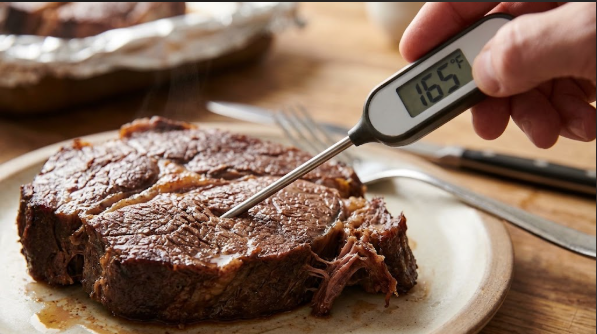
Pitmaster Tip: Don’t chase 200°F again. Pitmasters pull chuck roast at 195-205°F (90-96°C) on the first cook so the collagen breaks down. Your leftover is already tender, so you only need to reach 165°F (74°C). Going higher without enough liquid can dry the roast out.
Other Ways to Reheat Chuck Roast
Not everyone wants to fire up the oven for one plate. Here are the other options, from best to worst.
Stovetop (best for slices and shredded beef)
A skillet is quick and gives you control. It’s great for sandwiches or tacos.
- Add ¼ cup (60 ml) of broth to a skillet over medium-low heat.
- Lay in the sliced or shredded beef.
- Cover with a lid.
- Heat for 5 to 8 minutes, turning once, until the meat reaches 165°F (74°C).
- Uncover for the last minute if you want the liquid to cook down into a glaze.
Keep the heat low. High heat evaporates the liquid before the meat warms through.
Toaster oven
A toaster oven works the same way as a regular oven, just on a smaller scale. Use a small foil-covered dish at 325°F (163°C). It’s a smart choice for one or two servings and uses less energy. If you’re shopping for one, see our roundup of the best toaster ovens.
Microwave (fast, but you must be careful)
The microwave works for a quick lunch if you follow a few rules.
- Place sliced meat on a microwave-safe plate.
- Add a tablespoon or two of broth or water.
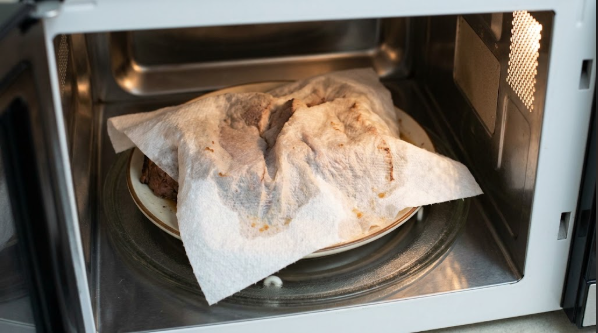
- Cover with a damp paper towel or a vented lid.
- Heat at 50% power in 60-second bursts, stirring or flipping between each one.
- Check that the center hits 165°F (74°C).
Full power creates hot spots and tough, rubbery edges. Lower power takes longer, but it’s more even. A model with an inverter or sensor setting helps, which is one of the features covered in our guide to the best over-the-range microwaves.
Pellet grill or smoker
If your grill is already running, you can reheat there. Set it to 325°F (163°C), place the meat in a covered foil pan with broth, and heat until it hits 165°F (74°C). It’s a nice way to refresh smoked chuck roast. A beginner-friendly cooker is covered in our list of the best pellet grills for beginners. Skip this method for a small amount, since heating a whole grill for one plate isn’t worth it.
Slow cooker (use with care)
A slow cooker is great for holding a roast warm, but the USDA doesn’t recommend using one to reheat cold leftovers. It can take too long to get food through the unsafe temperature range. Reheat the meat to 165°F (74°C) in the oven, on the stove, or in the microwave first. Then move it to the slow cooker on “warm” if you’re serving later.
Air fryer (only if you want crisp edges)
The air fryer is not ideal because it moves dry, hot air around the meat. If you use one, spritz the meat with broth, wrap it loosely in foil, and heat at 325°F (163°C) for 8 to 10 minutes. Open the foil for the last 2 minutes if you want browned edges. Expect a drier result than the oven.
Time and Temperature Table
Times are estimates. Always confirm with a thermometer.
| Method | Temp / Setting | Approx. Time | Best For | Moisture Level |
| Oven, covered with broth | 325°F (163°C) | 20-30 min (slices); 40-60 min (2-3 lb chunk) | Large batches, whole pieces | Excellent |
| Toaster oven, covered | 325°F (163°C) | 15-25 min | 1-2 servings | Very good |
| Stovetop skillet, lid on | Medium-low | 5-8 min | Slices, shredded beef | Very good |
| Pellet grill or smoker, foil pan | 325°F (163°C) | 25-45 min | Smoked roast, cookouts | Very good |
| Microwave, damp towel | 50% power, 60-sec bursts | 2-4 min | Single plate | Good |
| Air fryer, foil wrap | 325°F (163°C) | 8-10 min | Crisp edges | Fair |
| Safe target, all methods | 165°F (74°C) in the thickest part |
How to Tell When Reheated Chuck Roast Is Ready
Use your senses plus a thermometer.
- Temperature: At least 165°F (74°C) in the center. This is the one non-negotiable number.
- Steam: You’ll see steam rising when you lift the foil.
- Feel: The meat should feel warm throughout, not hot outside and cold inside.
- Look: It should look glossy and moist, with the juices bubbling lightly around the edges.
- Texture: A fork should slide in easily, and shredded pieces should pull apart without resistance.
If it’s warm on the outside but still cool in the middle, cover it and heat it for 5 to 10 more minutes. Add a splash more broth if the dish looks dry.
Pro Tips for Juicier Leftover Chuck Roast
These small habits make a big difference.
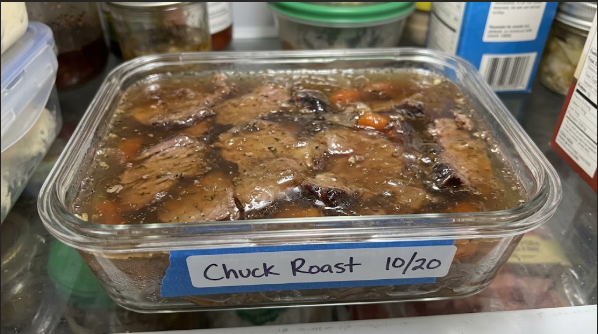
Store the meat with its juices. When you put leftovers away, pour the cooking juices over the meat in the container. They’ll gel in the fridge and melt right back into the roast during reheating.
Reheat it in big pieces. A large chunk has less surface area, so it loses less moisture. Slice or shred it after heating when you can. Cold roast also slices more cleanly than hot, so you can cut it first for neat, even slices and reheat in broth.
Slice against the grain. Cutting across the muscle fibers makes each bite feel more tender. This is especially important for chuck, which has long, visible fibers.
Use a little fat. A tablespoon of butter or the rendered fat from the original cook adds richness. It’s a good way to replace what the roast lost overnight.
Finish with something bright. A squeeze of lemon, a spoon of horseradish, or chopped parsley wakes up the flavor of reheated beef.
Turn the liquid into a sauce. After the meat is out, simmer the pan juices on the stove for 3 to 5 minutes. Reduce them by about one-third and spoon them over the top. Thicken with a teaspoon of cornstarch mixed with cold water if you want gravy.
Use leftovers in new dishes. Chuck roast makes great sandwiches, tacos, quesadillas, hash, and beef-and-noodle soup. If you want the original from-scratch method, check our pot roast recipe. For a different oven-roasted beef idea, see how to make perfect roast beef.
Common Mistakes and How to Fix Them
Common Mistake: Reheating the roast uncovered with no liquid. This is the number one cause of dry leftovers. Without a lid and moisture, the oven pulls water straight out of the meat. Always cover and add broth.
| Mistake | Why it hurts | Fix |
| Heating on high | Squeezes out moisture and toughens fibers | Use 325°F (163°C) or low stovetop heat |
| Skipping the liquid | Meat dries out quickly | Add ½ cup (120 ml) broth per lb (0.45 kg) |
| Leaving it uncovered | Steam escapes | Seal tightly with foil or a lid |
| Slicing very thin before reheating | Thin slices overcook quickly | Keep slices ½ to ¾ inch (1.2 to 2 cm) thick |
| Microwaving at full power | Creates hot spots and rubbery edges | Use 50% power and a damp towel |
| Guessing doneness | Underheated meat is unsafe, overheated meat is dry | Use a thermometer and stop at 165°F (74°C) |
| Reheating the whole batch over and over | Each cycle dries out the meat further | Reheat only what you’ll eat |
| Throwing away the juices | Loses the best moisture source | Store the juices with the meat |
Food Safety Notes
Leftover beef is safe when you handle it correctly. Follow these basics.
- Chill quickly. Refrigerate leftovers within 2 hours of cooking, or within 1 hour if the air temperature is above 90°F (32°C).
- Use within 3 to 4 days. According to USDA guidance on leftovers, cooked beef keeps for 3 to 4 days in the fridge.
- Reheat to 165°F (74°C). This applies to all leftovers, even though a freshly cooked whole beef roast has a lower minimum of 145°F (63°C) plus a 3-minute rest, per the USDA’s safe minimum temperature chart.
- Thaw safely. Use the refrigerator, cold water, or the microwave. The USDA’s thawing guidance says never to thaw on the counter.
- Freeze for longer storage. Food kept at 0°F (-18°C) stays safe indefinitely, though quality is best within about 2 to 3 months.
- Skip low-temperature reheating. Methods that hold meat well under 165°F don’t follow USDA guidance for leftovers.
Reheat only the portion you plan to eat, and don’t cycle the same piece in and out of the fridge repeatedly.
What to Serve With Reheated Chuck Roast
Reheated chuck roast pairs with classic comfort sides.
- Mashed potatoes or buttered egg noodles to catch the juices
- Roasted carrots, green beans, or Brussels sprouts
- A skillet of homemade cornbread
- Crusty bread for dipping into the au jus
- Creamy horseradish sauce on the side
FAQ
What is the best way to reheat chuck roast?
The oven is the best method. Cover the meat with foil in a baking dish with a splash of broth at 325°F (163°C). The steam keeps it moist, and the gentle heat warms it evenly. Check that it reaches 165°F (74°C) in the center.
Can you reheat chuck roast in the microwave without drying it?
Yes, if you add a little broth, cover the meat with a damp paper towel, and use 50% power. Heat in short bursts and stir or flip between rounds. This avoids the hot spots and rubbery edges that full power creates.
How do you reheat sliced chuck roast?
Place the slices in a skillet or baking dish with ¼ to ½ cup of broth and cover. Use medium-low heat on the stove for 5 to 8 minutes, or 325°F (163°C) in the oven for 20 to 30 minutes. Stop when slices reach 165°F (74°C).
How long does leftover chuck roast last in the fridge?
Cooked beef lasts 3 to 4 days in a refrigerator set at 40°F (4°C) or below, per USDA guidance. Store it in an airtight container within 2 hours of cooking. If you won’t eat it in that time, freeze it in portions.
Can you freeze leftover chuck roast?
Yes. Freeze it with some of its juices in a freezer bag or airtight container, pressing out extra air. Quality is best within 2 to 3 months. Thaw it in the refrigerator, then reheat it in the oven with broth until it reaches 165°F (74°C).
Why does reheated roast get tough?
Heat squeezes water out of muscle fibers, and the surface dries out first. High heat, no liquid, and no cover speed that up. Reheating gently under foil with broth keeps moisture in the meat and softens the chilled gelatin.
Conclusion
Knowing how to reheat chuck roast without drying it out comes down to three habits. Add liquid, cover the meat, and use steady, moderate heat. Check for 165°F (74°C) with a thermometer, and you’ll get juicy, safe leftovers every time.
Store the juices with your roast, reheat only what you’ll eat, and let the oven do the work. Tomorrow’s dinner can taste as good as the first night’s.
Laura Smith

I'm Laura, I like all the kind of delicious grilled foods which makes me hungry all the time I see them. That's why I built this blog to share with you all of my Grilling experiences, recipes, and all the tips about foods that I've learned from food experts.