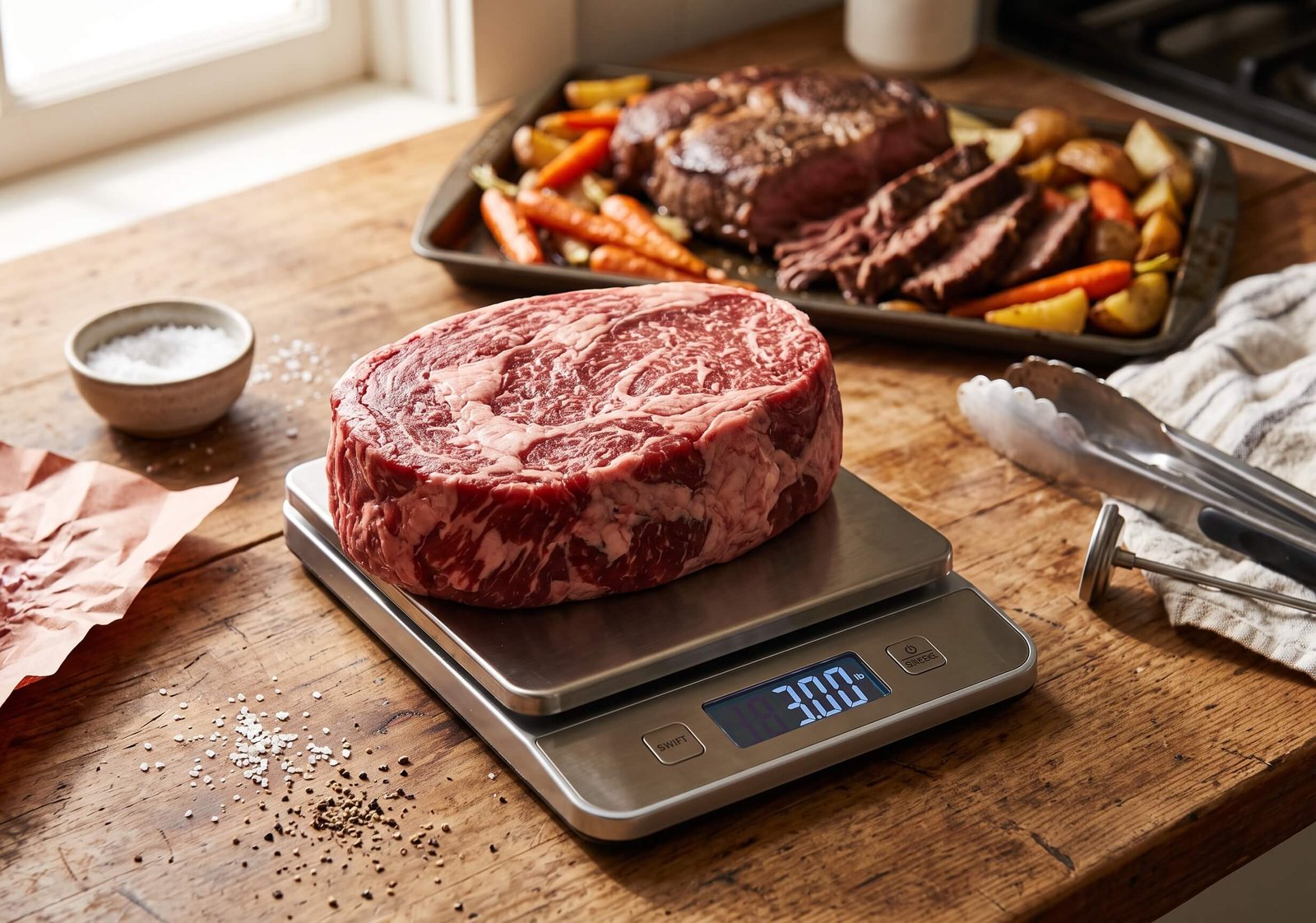
You are standing at the meat counter with a hungry crowd waiting at home, and you need to know how much chuck roast per person to buy. Buy too little and people leave the table hungry. Buy too much and you are eating pot roast sandwiches all week.
The tricky part is that chuck roast shrinks a lot as it cooks. The weight you buy is not the weight that lands on the plate. This guide gives you the math, a headcount chart, and the cooking details that affect your yield.
Quick Answer
Plan on 1/2 pound (0.23 kg) of raw boneless chuck roast per person for a normal dinner with sides. Go up to 3/4 pound (0.34 kg) for big appetites or sandwiches, and 1 pound (0.45 kg) if you want leftovers. Bone-in roasts need about 25% more.
Why Chuck Roast Shrinks When You Cook It
Chuck comes from the shoulder of the cow. It is full of muscle, fat, and connective tissue, which is why it needs a long, slow cook. As the roast heats up, the muscle fibers squeeze out moisture, and the fat melts and drips off. The collagen turns into gelatin, which is what makes the meat so tender.
All of that adds up to real weight loss. In my experience, a chuck roast loses roughly 30-35% of its weight during a long cook. If you trim a thick fat cap or big chunks of fat before cooking, you lose a bit more.
So a 1 lb (0.45 kg) raw chuck roast gives you about 10-11 oz (280-310 g) of cooked, edible meat. Treat that as a working estimate, not a lab result. Your exact number depends on the roast and how far you cook it.
Raw Weight vs. Cooked Weight
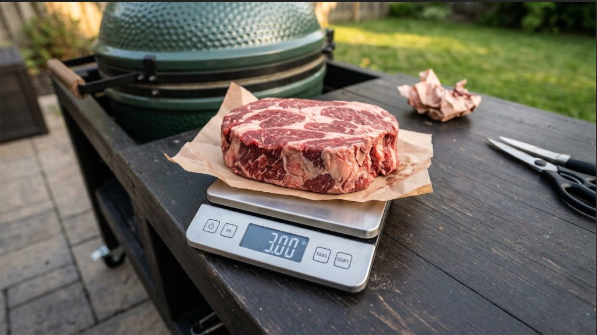
Most serving guides are written in cooked weight, but you shop in raw weight. Keep these numbers in mind:
- A typical adult serving of cooked beef is 4-6 oz (113-170 g).
- A 1 lb raw chuck roast yields about 10-11 oz (280-310 g) cooked.
- So 1/2 lb (8 oz) raw gives you about 5 oz (140 g) cooked, which is a solid dinner portion.
That is where the 1/2 pound rule comes from. It is not a guess. It is the cooked serving size worked backward through the shrinkage.
How Much Chuck Roast per Person: The Basic Math
Here is the formula I use for chuck roast per person. Start with your headcount, pick a portion size, and multiply.
| Appetite / Meal Type | Raw Boneless Chuck Roast per Person | Approx. Cooked Meat |
| Light (kids, lots of sides, appetizer) | 1/3 lb (0.15 kg) | 3-4 oz (85-115 g) |
| Standard dinner with 2-3 sides | 1/2 lb (0.23 kg) | about 5 oz (140 g) |
| Hearty (big eaters, sandwiches, tacos) | 3/4 lb (0.34 kg) | 7-8 oz (200-225 g) |
| Planned leftovers | 1 lb (0.45 kg) | 10-11 oz (280-310 g) |
Then adjust for who is at the table.
- Teenagers and hungry adults: Use 3/4 lb.
- Kids under 10: Count two kids as one adult.
- Big buffet with many sides: Use 1/3 lb.
- Pulled beef on buns: Use 1/2 to 3/4 lb, depending on bun size and toppings.
For a quick headcount of 4, a 2 lb (0.9 kg) roast covers a standard dinner. If those four are big eaters, buy a 3 lb (1.4 kg) roast.
Chuck Roast per Person Chart (By Headcount)
This chart is the one to screenshot. It shows the raw weight to buy at the standard and hearty portion sizes.
| Number of People | Standard (1/2 lb each) | Hearty (3/4 lb each) |
| 2 | 1 lb (0.45 kg) | 1.5 lb (0.7 kg) |
| 4 | 2 lb (0.9 kg) | 3 lb (1.4 kg) |
| 6 | 3 lb (1.4 kg) | 4.5 lb (2.0 kg) |
| 8 | 4 lb (1.8 kg) | 6 lb (2.7 kg) |
| 10 | 5 lb (2.3 kg) | 7.5 lb (3.4 kg) |
| 12 | 6 lb (2.7 kg) | 9 lb (4.1 kg) |
| 20 | 10 lb (4.5 kg) | 15 lb (6.8 kg) |
Most grocery store chuck roasts run 2-5 lb (0.9-2.3 kg). If the roast you want is a little over or under, buy the bigger one. A little extra beef is a better problem than a shortage.
How Much Chuck Roast per Person for Different Dishes
The dish changes how much meat people eat. Here is how I think about each one.
Classic Pot Roast
Pot roast sits on the plate next to potatoes, carrots, and gravy, so people eat a little less meat. Use 1/2 lb (0.23 kg) raw per person. If you want a dinner like the one in our Golden Corral pot roast recipe, the standard portion works well.
Pulled Beef or Shredded Beef Sandwiches
Sandwiches are where people eat the most. A good pulled beef sandwich holds 4-5 oz (113-140 g) of meat, and many people go back for seconds. Plan on 3/4 lb (0.34 kg) raw per person if the sandwich is the whole meal.
Tacos, Nachos, and Rice Bowls
The meat is spread across tortillas, rice, or beans, so you need less. Use 1/3 to 1/2 lb (0.15-0.23 kg) per person.
Big Parties and Cookouts
When chuck roast is one of several mains, drop to 1/3 lb (0.15 kg) per person. If you are planning a larger event, our tips for hosting a summer BBQ party on a budget can help you plan the rest of the menu.
Bone-In vs. Boneless Chuck Roast
Bones and gristle take up weight you cannot eat. If your roast has a bone, like a 7-bone roast, add about 25% to the numbers above.
- Boneless chuck roast: Use 1/2 lb per person.
- Bone-in chuck roast: Use 5/8 to 3/4 lb (0.28-0.34 kg) per person.
Bone-in roasts do have a flavor upside, and the bone adds a little richness to the cooking juices. Just buy a bit more meat to make up for it.
Common Mistake: Buying by the Pound Without Checking the Trim
A roast wrapped in a thick fat cap or loaded with big seams of fat and gristle will give you less edible meat than the label suggests. Look for a roast with even marbling and a thin fat layer. If you see big chunks of waste, buy 10-15% more or pick a leaner roast.
Choosing the Right Chuck Roast at the Store
A good chuck roast makes your portion math work better, because more of the roast ends up on the plate.
Look for these things at the counter:
- Fine marbling. Thin white lines of fat running through the meat melt as it cooks and keep it juicy.
- Even thickness. A roast that is 2-3 inches (5-7.5 cm) thick cooks more evenly than a lumpy one.
- Bright red color. Avoid meat that looks gray or has a lot of liquid pooled in the package.
- A size that fits your cooker. A 3-4 lb (1.4-1.8 kg) roast fits easily on most grills and in most Dutch ovens.
If you have a good butcher, ask for a center-cut roast. You will get a more uniform shape and a more predictable yield. Beyond that, a sharp knife makes trimming much easier, and our guide to the best butcher knives covers solid options.
How to Cook Chuck Roast So You Get the Yield You Planned For
How you cook the roast changes how much meat you end up with. A roast pulled too late dries out and shrinks more. One pulled too early is tough and chewy. Here is the smoker method I use, since it gives the best flavor and a reliable yield.
What You Need
- 3-4 lb (1.4-1.8 kg) boneless chuck roast
- 2 tbsp kosher salt and 1 tbsp coarse black pepper (or your favorite beef rub)
- Oak, hickory, or pecan wood or pellets
- A probe thermometer or instant-read thermometer
- Butcher paper or heavy foil
- A cooler for resting
If you are new to smokers, our roundup of the best pellet grills for beginners can help you choose one. If you cook with an offset, our guide to using lump charcoal in an offset smoker shows how to hold steady heat.
Step-by-Step Method
- Trim lightly. Remove any hard, thick fat and loose silver skin, but leave a thin layer of fat. Trimming too much costs you juiciness.
- Season. Rub the roast with salt and pepper on every side. Let it sit for 30-60 minutes while the smoker heats up.
- Heat the smoker to 250°F (121°C). Oak and hickory give a strong beefy flavor. Pecan is milder.
- Smoke unwrapped for about 3 hours. The roast should hit around 160-170°F (71-77°C) and form a dark bark.
- Wrap it. Wrap the roast tightly in butcher paper or foil to push through the stall. This also helps keep moisture in the meat.
- Cook until probe tender. Keep cooking until the internal temperature reaches 200-205°F (93-96°C). Your thermometer probe should slide in like it is going into soft butter.
- Rest 30-60 minutes. Keep it wrapped and set it in a cooler or a warm spot.
- Slice or shred. Cut against the grain for slices, or pull it apart for sandwiches.
Pitmaster Tip: Weigh It Cooked, Too
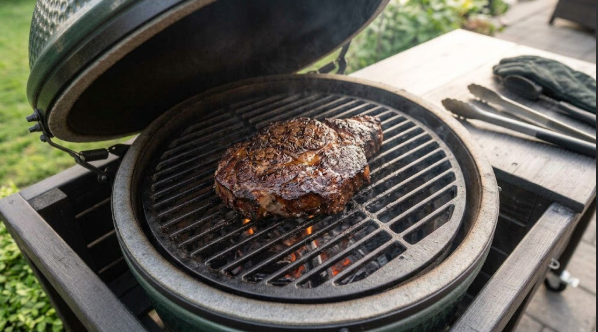
The first time you cook a chuck roast, weigh it before cooking and again after it rests and is trimmed. Write down the yield. Once you know your own cooker and method lose, say, 32%, you can plan every future cookout with your own numbers instead of a general rule.
Time and Temperature Table
Times vary a lot with the roast and cooker, so use temperature, not the clock, to decide when it is done.
| Method | Cooker Temp | Approx. Time for 3 lb (1.4 kg) | Pull Temp |
| Smoker / pellet grill | 250°F (121°C) | 5-7 hours | 200-205°F (93-96°C) |
| Oven (covered Dutch oven) | 300°F (150°C) | 3-4 hours | 195-205°F (90-96°C) |
| Slow cooker | Low | 8-10 hours | Fork tender |
| Pressure cooker | High pressure | 60-90 minutes plus release | Fork tender |
These times are estimates from typical home cooks. Thicker roasts take longer, and weather, wind, and your cooker will shift the numbers.
How to Tell When Chuck Roast Is Done
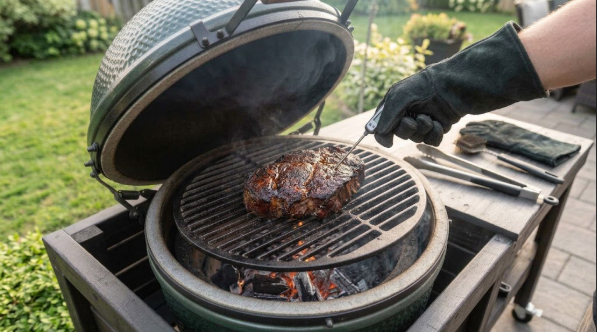
Chuck roast is a tough cut, so “done” does not mean the same thing as it does for a steak. The meat is safe much earlier, but it is not tender until the collagen has melted.
Check for these signs:
- Temperature: 195-205°F (90-96°C) internal, where the collagen breaks down.
- Probe feel: The thermometer slides in with almost no resistance.
- Fork test: A fork twists in and the meat starts to separate.
- Look: The bark is dark and set, and the roast sags slightly when you lift it.
If it still feels tight, put it back on for another 30 minutes and check again. Tough chuck roast is almost always an undercooked chuck roast.
Resting, Slicing, and Serving
Resting matters more than most people think. Pull the roast, keep it wrapped, and let it rest for 30-60 minutes. During that time the juices settle back into the meat, and the internal temperature drifts down to a comfortable level.
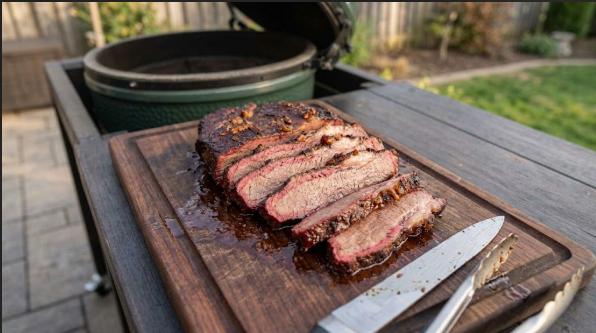
When it is time to cut, use a long, sharp slicing knife. Our guide to the best knives for cutting meat covers good picks. Slice against the grain into 1/4 inch (6 mm) slices, or shred with two forks for pulled beef.
Weigh your servings if you are curious. A 5 oz (140 g) pile of cooked beef is about the size of a deck of cards, which is a good reference for a standard portion.
Food Safety Notes
Chuck roast tastes best when cooked to 200°F or more, but safety comes first. The USDA’s safe minimum internal temperature for whole cuts of beef is 145°F (63°C) with a 3-minute rest. Cooking to 195-205°F is a tenderness target, not a safety requirement. Every method above goes well past the safe minimum.
Keep these rules in mind from start to finish:
- Thaw in the fridge. The USDA’s guidance on safe thawing methods recommends the refrigerator, cold water, or the microwave. Plan on roughly 24 hours in the fridge for every 5 lb (2.3 kg) of meat.
- Avoid the danger zone. Bacteria multiply fast between 40°F and 140°F, a range the USDA calls the danger zone. Do not leave cooked beef out for more than 2 hours, or 1 hour when it is above 90°F (32°C).
- Use a clean thermometer and clean utensils. Do not put cooked meat back on a plate that held raw meat.
Storing, Freezing, and Reheating Leftovers
If you planned for leftovers, you need a plan for them. Chuck roast reheats well, and many people say it tastes even better the next day.
- Refrigerate within 2 hours. Cut the meat into smaller portions and store it in shallow containers.
- Fridge life: The USDA says cooked leftovers are good for about 3-4 days at 40°F (4°C) or below, per its leftovers and food safety guidance.
- Freezer: Wrap tightly or use freezer bags with the air pressed out. Cooked beef keeps its best quality for roughly 2-3 months at 0°F (-18°C).
- Reheat to 165°F (74°C). Add a splash of beef broth and warm the meat in a covered pan or oven at 300°F (150°C) so it stays moist.
If you often cook beef roasts at home, our guide to making perfect roast beef in the oven is another good one to keep handy for planning portions.
How Much Chuck Roast per Person When Feeding a Crowd
Once you pass 10 people, the numbers shift a little. Larger groups usually have more sides and more variety, so people eat less meat each, and your math can go down.
For a crowd, use these quick guidelines:
- 10-15 people with several sides: Use 1/3 to 1/2 lb (0.15-0.23 kg) per person.
- 20+ people with other mains: Use 1/3 lb (0.15 kg) per person.
- Pulled beef sandwich bar: Stay at 1/2 to 3/4 lb (0.23-0.34 kg) per person.
For very large cooks, use more than one roast. Two 4 lb (1.8 kg) roasts cook more evenly than one 8 lb (3.6 kg) roast, and they finish sooner. Cook them side by side and the timeline stays manageable.
Pitmaster Tip: Cook One Roast Ahead
Chuck roast holds well. Cook it a day ahead, chill it, and reheat it in its own juices on party day. The flavor gets better, and you skip the all-day cooking stress.
What to Serve With Chuck Roast
The sides you pick change how much meat you need. Heavy sides like mashed potatoes, mac and cheese, and cornbread fill people up, so you can aim for the lower end of the range. For more ideas, see our list of what goes with meatloaf, since the same hearty comfort sides pair well with a chuck roast dinner.
Good pairings include:
- Creamy mashed potatoes or roasted potatoes
- Roasted carrots, green beans, or Brussels sprouts
- Buttered egg noodles
- Soft dinner rolls or cornbread
- Coleslaw or a crisp green salad for balance
Troubleshooting: Common Problems
The roast came out tough. It was not cooked long enough. Keep cooking until the thermometer slides in easily, usually 200-205°F.
The roast came out dry. It may have cooked too hot, been trimmed too lean, or skipped the wrap. Cook at 250°F (121°C), keep some fat on, and rest it before slicing.
There was not enough meat. Next time, use your own yield numbers from the weigh-in tip above and bump the portion to 3/4 lb per person.
There was way too much. Freeze the extra in 1-2 cup portions for tacos, soups, and sandwiches.
FAQ
How many pounds of chuck roast do I need for 6 people?
For six people at a standard dinner, buy 3 lb (1.4 kg) of boneless chuck roast. If they are big eaters or you are making sandwiches, buy 4.5 lb (2.0 kg). Bone-in roasts need about a pound more.
How much does a chuck roast shrink when cooked?
Expect a chuck roast to lose about 30-35% of its weight as fat renders and moisture cooks out. A 3 lb (1.4 kg) raw roast typically gives you around 2 lb (0.9 kg) of cooked meat. Heavier trimming and longer cooks increase the loss.
Is a 3 lb chuck roast enough for 4 people?
Yes, in most cases. A 3 lb (1.4 kg) roast yields about 2 lb (0.9 kg) cooked, which is 8 oz (225 g) per person for four. That covers hearty eaters and may leave you a small amount of leftovers.
How much chuck roast do I need for sandwiches?
Plan on 3/4 lb (0.34 kg) of raw chuck roast per person for pulled beef sandwiches. That gives you about 7-8 oz (200-225 g) cooked, enough for a generously stacked sandwich or a smaller one with seconds.
How long does cooked chuck roast last in the fridge?
Cooked chuck roast keeps for about 3-4 days in the refrigerator at 40°F (4°C) or below. Store it in shallow, covered containers within 2 hours of cooking. Reheat leftovers to 165°F (74°C) before serving.
Can you freeze cooked chuck roast?
Yes. Wrap it tightly or use freezer bags and press out the air. It stays safe indefinitely at 0°F (-18°C), but the best quality lasts about 2-3 months. Thaw it in the refrigerator before reheating.
Conclusion
The simple answer to how much chuck roast per person is 1/2 pound (0.23 kg) of raw boneless meat for a standard dinner. Bump it to 3/4 pound (0.34 kg) for sandwiches and big appetites, and add about 25% for bone-in roasts. Drop to 1/3 pound (0.15 kg) when the roast is one of several mains.
Remember that a chuck roast shrinks by about a third, so the weight you buy is not the weight you serve. Weigh your first cook, write down your yield, and your future cookouts get easier. Now you can head to the counter, pick your roast, and fire up the cooker with confidence.
Laura Smith

I'm Laura, I like all the kind of delicious grilled foods which makes me hungry all the time I see them. That's why I built this blog to share with you all of my Grilling experiences, recipes, and all the tips about foods that I've learned from food experts.