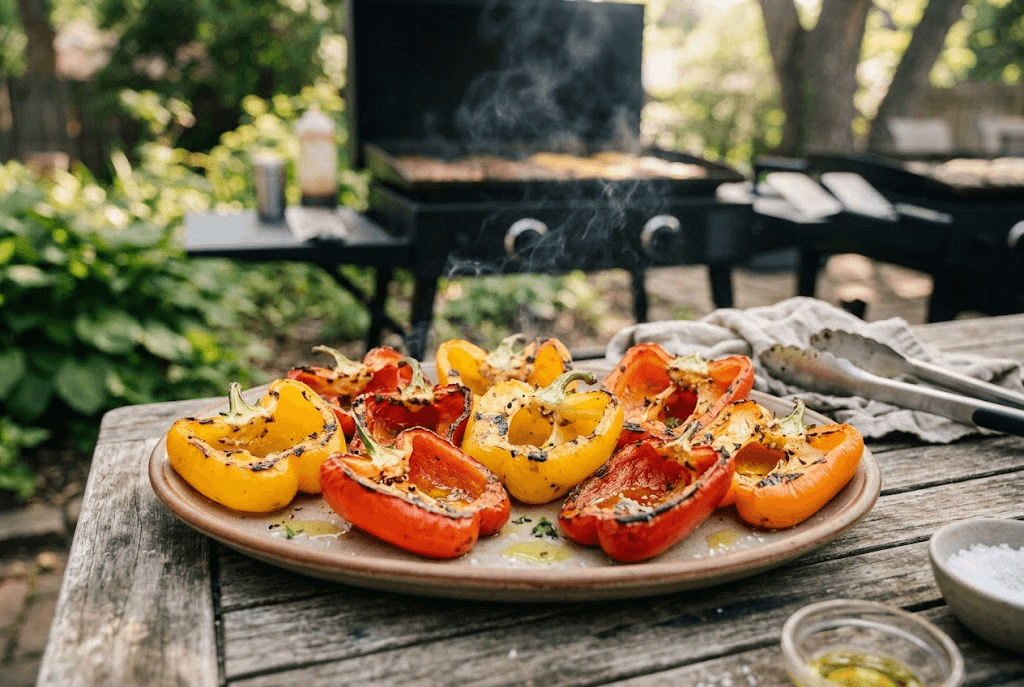
Grilled bell peppers are one of the easiest and most rewarding things you can put over a fire. In about 12 minutes, a plain pepper turns sweet, smoky, and soft, with charred edges that taste far better than anything from a skillet. You only need a hot grill, a little oil, and good timing.
This guide shows you exactly how to grill bell peppers on gas, charcoal, and pellet grills. You will get temperatures, times, cut styles, seasoning ideas, and fixes for common problems. Whether you want them as a side dish, on a sandwich, or in fajitas, you will have a method that works.
Quick Answer: How to Make Grilled Bell Peppers
Quick Answer: Cut bell peppers into large halves or wide strips, toss with oil and salt, and grill over direct heat at 400-450°F (205-230°C) for 8-12 minutes, turning once. They are done when the skin has char spots and the flesh is tender. There is no USDA pull temperature, so judge by texture.
Why This Grilled Bell Peppers Recipe Works
Bell peppers are mostly water, so they need strong heat to char before they turn mushy. High direct heat browns the outside fast while the inside softens. That mix of smoky edges and juicy centers is what makes grilled bell peppers special.
The method also keeps things simple. Big pieces do not fall through the grates, a light oil coat prevents sticking, and a short rest lets the peppers finish gently. You also have a clear guide for each cut, so you can match the cook to your meal.
- Large pieces: easier to flip and harder to lose
- High heat: char in minutes, not a soggy simmer
- Light oil: helps browning and keeps the skin from sticking
- Short rest: peppers keep softening off the heat
Ingredients and Equipment for Grilled Bell Peppers
This serves 4 as a side dish. It scales up easily, since peppers cook at the same rate whether you grill two or twelve.
Ingredients
- 4 large bell peppers, about 1.5-2 lb (0.7-0.9 kg) total (red, yellow, orange, or a mix)
- 2 tablespoons olive oil or avocado oil
- ½ teaspoon kosher salt
- ¼ teaspoon black pepper
- ½ teaspoon garlic powder
- ½ teaspoon smoked paprika (optional)
- Fresh parsley, basil, or a squeeze of lemon to finish (optional)
Equipment
- Gas, charcoal, or pellet grill with a clean, hot grate
- Tongs and a grill brush
- Sharp chef’s knife and cutting board
- Large bowl for tossing
- Grill basket or skewers (optional)
- Instant-read thermometer for the grill meat you serve alongside
A sharp knife makes cutting peppers much cleaner and safer. If yours is dull, take a look at our guide to the best knives for cutting meat, since many of those blades handle vegetables well too.
Substitutions
| Ingredient | Substitute | Notes |
| Olive oil | Avocado oil | Higher smoke point for very hot grills |
| Smoked paprika | Chili powder or cumin | Gives a fajita-style flavor |
| Garlic powder | Fresh minced garlic added after grilling | Fresh garlic burns on the grate |
| Kosher salt | Seasoned salt | Cut the amount in half, since it is saltier |
| Fresh herbs | Dried oregano | Use about ⅓ the amount |
Choosing and Prepping Bell Peppers
Good grilled peppers start at the store. Look for firm, glossy peppers that feel heavy for their size, with smooth skin and no soft spots. Wrinkled skin means they are old and will turn limp on the grill.
Which Color Is Best?
Red, orange, and yellow peppers are riper and sweeter, so they caramelize better. Green bell peppers are less ripe and taste more grassy and slightly bitter, though they are great in fajitas and sausage and pepper sandwiches. A mix of colors looks great on the plate and gives you a range of flavors.
Wash and Cut
Rinse the peppers under cool running water and dry them well, following FDA guidance on handling fresh produce safely. Dry skin browns and chars faster than wet skin. Use a clean cutting board that has not touched raw meat.
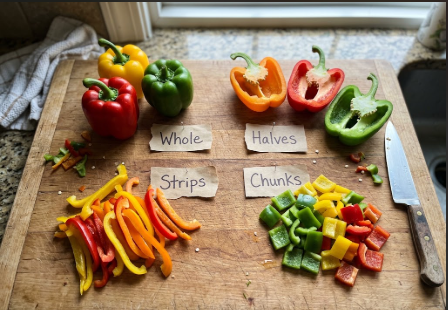
Choose a cut based on how you plan to serve them:
- Halves: Cut top to bottom, remove the stem, seeds, and white ribs. Best for stuffing and for neat grill marks.
- Wide strips: Cut each half into 3 or 4 strips about 1 inch (2.5 cm) wide. Best for sandwiches, fajitas, and salads.
- Whole peppers: Leave intact and char all sides. Best for roasted peppers you will peel.
- Skewered chunks: Cut into 1.5-inch (4 cm) squares. Best for kebabs with meat or onions.
Season Before You Grill
Toss the cut peppers in a bowl with the oil first, then add the salt, pepper, garlic powder, and paprika. Oil first helps the spices stick instead of clumping. Let them sit for 10 minutes while the grill heats.
Pitmaster Tip: Salt draws water out of peppers. If you season more than 15-20 minutes ahead, wipe the surface dry before they hit the grate, or you will lose char and gain steam.
How to Grill Bell Peppers: Step-by-Step
Follow these steps on a gas, charcoal, or pellet grill. Details for each grill type come later in the variations section.
- Heat the grill. Preheat to 400-450°F (205-230°C) for 10-15 minutes. If you are lighting charcoal, our guide on how to start a grill walks through chimneys and lighting safely.
- Set up two zones. Keep one side hot (direct heat) and the other side medium or off (indirect heat). This gives you a safe spot if flare-ups happen.
- Clean and oil the grates. Brush off old residue, then wipe a folded paper towel dipped in oil across the grate with tongs. Do not spray oil on a lit grill.
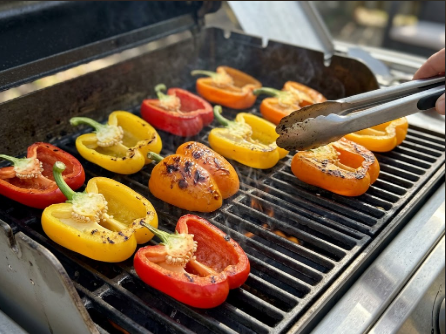
- Place the peppers. Lay halves skin-side down, or put strips perpendicular to the grate bars. Close the lid.
- Cook the first side. Grill 4-6 minutes for halves and 3-4 minutes for strips, until you see dark char marks and the edges start to soften.
- Flip once. Turn with tongs and grill another 4-6 minutes (halves) or 3-5 minutes (strips). Move any that char too fast to the cooler zone.
- Check for doneness. The peppers should be tender when poked with a fork or tongs, with blistered, charred spots but not black all over.
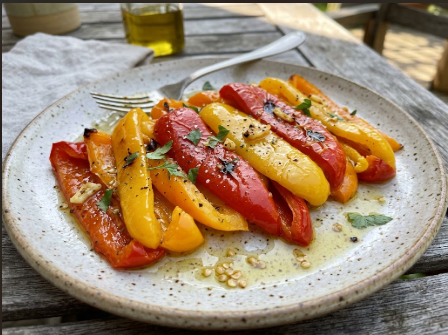
- Rest and finish. Move to a plate, rest 3-5 minutes, then add herbs, lemon, or a drizzle of olive oil.
How to Roast and Peel Whole Grilled Bell Peppers
If you want soft, silky peppers for sandwiches, pasta, or dips, grill them whole. Place them directly over high heat and turn every 3-4 minutes until the skin is blistered and mostly black, about 15-20 minutes total.
Transfer the hot peppers to a bowl and cover tightly with a lid or plastic wrap for 10-15 minutes. The steam loosens the skin. Peel off the skin with your fingers, pull out the stem and seeds, and tear the flesh into strips. Do not rinse them, because rinsing washes away smoky flavor.
Common Mistake: Treating a blackened pepper as a burnt pepper. For whole roasted peppers, a fully charred skin is the goal. You are peeling that skin away. For halves and strips you plan to eat as is, stop at spotted char, not solid black.
Time and Temperature Table for Grilled Bell Peppers
There is no USDA minimum internal temperature for vegetables, since the USDA safe minimum chart focuses on meats, poultry, seafood, eggs, and leftovers. For peppers, use time, color, and tenderness. The numbers below are practical starting points, and your grill may run hotter or cooler.
| Cut | Grill temp | Total time | Doneness signs |
| Halves (skin-side down first) | 400-450°F (205-230°C) | 8-12 min | Char spots, tender when pierced |
| Wide strips | 400-450°F (205-230°C) | 6-8 min | Soft with blistered edges |
| Skewered chunks | 400°F (205°C) | 8-10 min | Browned corners, slightly firm |
| Whole, for roasting | 450-500°F (230-260°C) | 15-20 min | Skin mostly black and loose |
| In a grill basket | 400°F (205°C) | 10-12 min | Toss every 3 min; tender-crisp |
| Indirect, with smoke | 300-325°F (150-165°C) | 25-35 min | Soft, with a light smoky flavor |
How to Tell When Grilled Bell Peppers Are Done
Use your eyes, your tongs, and your fork. A finished pepper has char marks you can see, and the skin looks slightly wrinkled and glossy. The color deepens, especially on red and orange peppers.
Touch matters too. Press a strip with tongs. If it bends easily and feels soft with a bit of spring, it is ready. If it still feels stiff and squeaky, it needs a couple more minutes.
For a crisp-tender texture, pull the peppers earlier. For a soft, sweet texture, grill an extra 2-3 minutes with the lid closed. If you plan to slide them into a sandwich or pasta, softer is better. If they are a salad topper, keep a little bite.
Resting, Slicing, and Serving Grilled Bell Peppers
Resting lets the steam finish softening the flesh and lets juices settle. Give your peppers 3-5 minutes on a plate. Then slice halves into strips, or leave them whole for plating.
Simple Finishing Touches
- A squeeze of lemon or lime for brightness
- A drizzle of balsamic glaze for a sweet, tangy finish
- Fresh basil, parsley, or cilantro
- Crumbled feta or goat cheese
- A pinch of flaky salt
- Red pepper flakes for heat
Serve them warm or at room temperature. They taste great either way, which makes them an easy side for a cookout where food sits out. Keep in mind that cooked food should not sit out longer than 2 hours, or 1 hour when it is above 90°F (32°C), per USDA guidance on leftovers and food safety .
If you are planning a big cookout, our tips for hosting a summer BBQ party on a budget cover food planning and timing.
What to Serve With Grilled Bell Peppers
Grilled bell peppers pair with almost anything. Here are some of the best matches:
- Steak and chicken: Serve peppers next to grilled ribeye, flank steak, or chicken thighs. The sweetness balances salty, charred meat.
- Sausages: Italian sausage and peppers on a roll is a classic. Grill the sausage to 160°F (71°C) for pork, per the USDA chart .
- Fajitas: Slice strips and pile into tortillas with grilled onions and steak or chicken.
- Pasta and grain bowls: Toss strips into pasta salad, quinoa bowls, or rice.
- Sandwiches and burgers: Layer roasted peppers on burgers, paninis, or sub rolls.
- Eggs and breakfast: Chop leftovers into omelets or breakfast tacos.
If you love stuffed pepper flavors, check what goes well on the side in our guide on what to serve with stuffed peppers.
Storing, Freezing, and Reheating Leftover Grilled Bell Peppers
Cool the peppers quickly and refrigerate them within 2 hours of cooking (1 hour if it is over 90°F or 32°C outside). Store in a shallow airtight container so they chill fast. Leftover cooked vegetables are generally good for 3-4 days in the fridge.
Freezing
You can freeze grilled bell peppers for up to about 3 months, although they will lose their texture and get softer once thawed. Frozen peppers work best in cooked dishes like soups, sauces, casseroles, and egg bakes, not as a crisp side. Spread them on a tray to freeze first, then bag them to prevent clumping.
Reheating
Reheat leftovers to 165°F (74°C), per the USDA’s recommendation for leftovers . A hot skillet, a toaster oven at 375°F (190°C) for 5-8 minutes, or the microwave all work. If you do not have one, our roundup of the best toaster oven options is a good starting point.
Safety Note: Do not store roasted peppers in oil at room temperature, and do not keep homemade peppers in oil for long periods. Oil-packed vegetables can create conditions where harmful bacteria grow. Keep them refrigerated and use them within a few days .
Variations: Pellet Grill, Charcoal, Gas, and Oven Backup
Gas Grill
Gas is the easiest option. Preheat on high for 10 minutes, then lower to medium-high (about 400-450°F or 205-230°C). Use one side hot and the other lower, and close the lid between flips for even cooking. If your grill has a side burner, you can warm a sauce or sauté onions while the peppers cook. Here is more on what a side burner is used for.
Charcoal Grill or Offset
Charcoal gives the best smoky flavor. Bank lit coals to one side, let them ash over for 15-20 minutes, and cook the peppers over the hot side. Lump charcoal burns hotter and cleaner than briquettes, which is useful for fast char. Learn how it behaves in using lump charcoal in an offset smoker.
Add a small chunk of apple or cherry wood for a mild, sweet smoke. Avoid heavy woods like hickory or mesquite on delicate vegetables, because they can taste harsh and bitter.
Pellet Grill
Set the pellet grill to 400-450°F (205-230°C), or as high as it goes. Because pellet grills cook with indirect heat, you will get less char and a softer pepper, closer to a roast. Expect 15-20 minutes for halves. For extra char, finish them for a minute or two on a hot cast iron pan or a sear zone.
If you are shopping for one, see our picks of the best pellet grills for beginners. Use apple, cherry, or pecan pellets for gentle smoke.
Oven Backup
No grill? Roast halves cut-side down on a sheet pan at 450°F (230°C) for 20-25 minutes. For more char, finish under the broiler for 2-4 minutes, watching closely. Add a pinch of smoked paprika to mimic smoky flavor.
Troubleshooting Grilled Bell Peppers
| Problem | Likely cause | Fix |
| Peppers are mushy | Grill too cool, or cooked too long | Raise heat to 450°F (230°C); pull 2 minutes earlier |
| Peppers are bitter | Burnt skin or green peppers | Peel burnt patches; use red or yellow peppers |
| Peppers stick to the grate | Dirty grate or no oil | Brush clean, oil the grate and the peppers |
| Peppers fall through | Pieces too small | Cut larger or use a basket or skewers |
| No char marks | Wet surface or low heat | Pat dry; preheat longer |
| Peppers are raw inside | Heat too high, too short | Move to the cooler zone and close the lid for 3-5 min |
| Smoky, acrid taste | Flare-ups or excess oil | Move away from flames; use less oil |
Pitmaster Tip: Keep a small spray bottle of water handy only for flare-ups on charcoal, and aim at the coals, not the food. For gas, simply move the peppers to the cool zone and close the lid for a minute.
Recipe Card: Grilled Bell Peppers
Serves: 4 | Prep time: 10 minutes | Cook time: 8-12 minutes | Rest: 3-5 minutes | Total: about 25 minutes
Ingredients:
- 4 large bell peppers, about 1.5-2 lb (0.7-0.9 kg)
- 2 tbsp olive or avocado oil
- ½ tsp kosher salt
- ¼ tsp black pepper
- ½ tsp garlic powder
- ½ tsp smoked paprika (optional)
- Fresh herbs or lemon to finish
Short steps:
- Preheat the grill to 400-450°F (205-230°C) with two heat zones.
- Wash, dry, and cut peppers into halves or wide strips; remove seeds and ribs.
- Toss with oil, then salt, pepper, garlic powder, and paprika.
- Grill 4-6 minutes per side over direct heat, flipping once.
- Rest 3-5 minutes, then finish with herbs, lemon, or balsamic glaze.
- Refrigerate leftovers within 2 hours and use within 3-4 days.
FAQ
How long do you grill bell peppers?
Grill bell peppers 8-12 minutes for halves and 6-8 minutes for strips at 400-450°F (205-230°C), flipping once. Whole peppers for roasting take 15-20 minutes. Look for char spots and tender flesh rather than relying only on the clock, since grill temperatures vary.
Do you need to oil bell peppers before grilling?
Yes, a light coat of oil helps. It prevents sticking, helps the peppers brown, and carries spices onto the surface. Use about 1-2 teaspoons per pepper, and toss to coat thinly. Too much oil can cause flare-ups, so avoid dripping or pooling.
Should you cut peppers before grilling?
It depends on your goal. Cut peppers into halves or wide strips for side dishes, fajitas, and stuffing. Leave them whole if you plan to roast and peel them. Large cuts are the easiest to flip and will not fall through the grates.
Do you have to peel grilled bell peppers?
No. If you grill halves or strips to a light char, the skin is edible and tasty. Peel only when you roast them whole and blacken the skin, because that burnt skin turns bitter and papery. Steam them in a covered bowl to make peeling easy.
Can you grill bell peppers in foil?
Yes, but you will get steamed peppers instead of charred ones. Place strips with a little oil and seasoning in a foil packet and grill 12-15 minutes over medium-high heat. This works for camping or when you want soft peppers, but you will miss the smoky char.
How long do grilled peppers last in the fridge?
Store cooked peppers in an airtight container and refrigerate within 2 hours of cooking. They are generally good for 3-4 days . Reheat to 165°F (74°C) before serving. If they smell sour or feel slimy, throw them out.
Conclusion: Make Grilled Bell Peppers Part of Your Cookout
Grilled bell peppers are simple, cheap, and packed with flavor. Hot, direct heat, large cuts, and a light coat of oil are all you need for char, sweetness, and tender centers. Match the cut to your meal, watch for blistered spots, and rest the peppers briefly before serving.
Once you get the timing down, you can grill them on any cooker, from a gas grill to a pellet smoker. Try a mix of red, yellow, and orange next time, and add them to whatever else you have on the fire. Your plate will look better, and your cookout will taste better.
Laura Smith

I'm Laura, I like all the kind of delicious grilled foods which makes me hungry all the time I see them. That's why I built this blog to share with you all of my Grilling experiences, recipes, and all the tips about foods that I've learned from food experts.