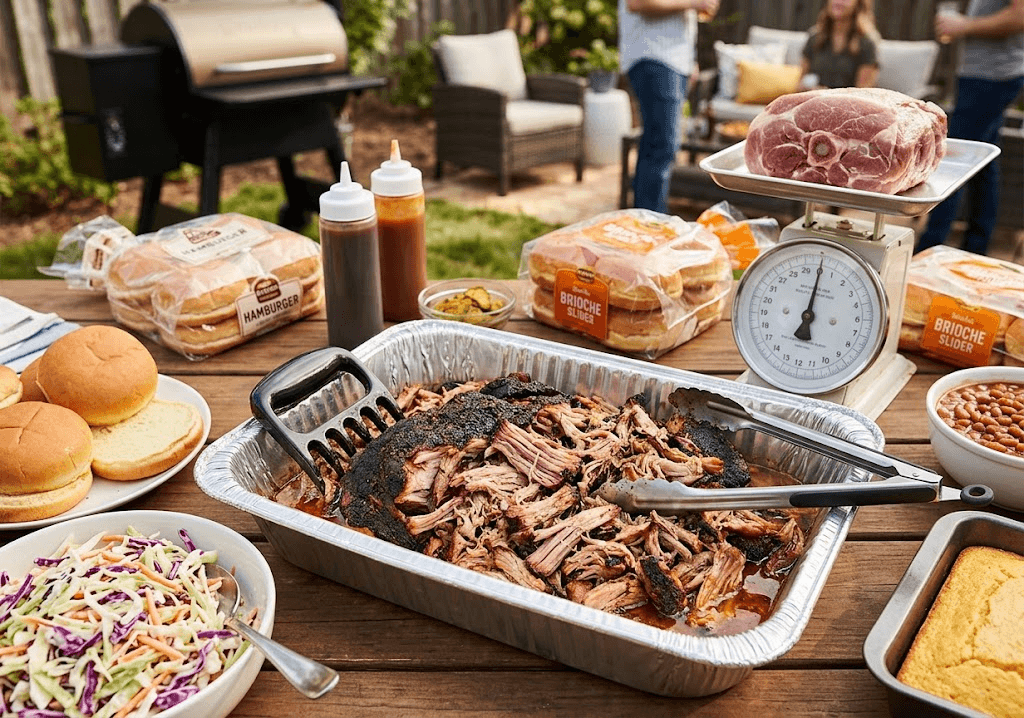
Working out how much pulled pork per person is the first job of any good cookout, and it is the one people miss most often. Buy too little and you watch hungry guests stare at an empty pan. Buy too much and you are eating pork for a week.
The good news is that this is easy math once you know three things: how big each serving is, how much weight the meat loses on the smoker, and what else is on the table. Below you will find simple numbers that work for 4 people or 100, plus the cooking targets that make those numbers hold up.
Quick Answer: Plan on ⅓ lb (150 g) of cooked pulled pork per adult, or ¼ lb (113 g) if it is only for sandwiches. That means buying about ¾ lb (340 g) of raw bone-in pork butt per person, because the meat loses roughly half its weight during smoking.
How Much Pulled Pork per Person: The Basic Math
Start with the cooked weight, because that is what lands on the plate. A fair serving for one adult is ⅓ lb (5 oz, 150 g) of pulled pork when it comes with a bun and a couple of sides. That is enough to feel full without leaving a pile on the plate.
Then work backward to the raw weight you need to buy. A bone-in pork butt (also called a Boston butt, the upper part of the pork shoulder) loses fat, bone, moisture, and rendered juices as it cooks. In practice, you end up with about 50 to 60 percent of the raw weight as edible pulled meat.
I plan on the low end, 50 percent, so nobody runs short. The formula looks like this:
- Cooked pork needed = number of guests × serving size
- Raw pork to buy = cooked pork needed ÷ 0.5
For 10 adults at ⅓ lb each, you need about 3.3 lb (1.5 kg) cooked. Divide by 0.5 and you land on roughly 6.7 lb (3 kg) raw. Most cooks round that up to a single 8 lb (3.6 kg) butt, which gives you a small cushion for seconds.
Raw Weight vs. Cooked Weight: Why Yield Matters
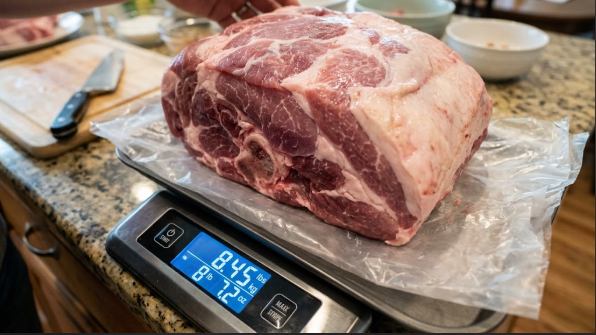
Yield is the part that trips people up. A 9 lb (4 kg) butt does not give you 9 lb of pulled pork. After a long smoke, you will usually have around 4.5 to 5.5 lb (2 to 2.5 kg) of usable meat.
Here is where the weight goes:
- The bone. A bone-in butt carries a shoulder blade bone that can weigh a pound or more.
- Rendered fat. The thick fat cap and the fat running through the meat melt into the pan.
- Moisture. Long cooks at low heat drive off a lot of water.
- Trim. Hard fat chunks and any gristle get pulled out when you shred.
Different cuts and cooks change the numbers. A boneless butt has no bone weight, so it yields closer to 55 to 65 percent. A butt that is trimmed heavily before cooking will yield a little less meat from the same starting weight, but the meat is leaner.
Common Mistake: Buying ⅓ lb of raw pork per person. That only gives you about 2 oz (55 g) of pulled pork once it is cooked, which is a snack, not a meal. Always plan from cooked weight first, then convert to raw.
Weigh your pork before it goes on the smoker and again after you pull it. After two or three cooks you will know your own yield, and you can adjust the formula to match your smoker and your trimming habits.
Pulled Pork Serving Size Chart
Use this table as your quick reference. The raw weights assume a bone-in pork butt at about 50 percent yield.
| Appetite level | Cooked per person | Raw bone-in per person | Best for |
| Light (sandwich only) | ¼ lb (113 g) | ½ lb (227 g) | Sliders, lunch buffets, multi-meat spreads |
| Standard (sandwich + sides) | ⅓ lb (150 g) | ¾ lb (340 g) | Most backyard cookouts and family dinners |
| Hearty (plate or big eaters) | ½ lb (227 g) | 1 lb (454 g) | Hungry crowds, teenagers, pulled pork as the only meat |
| Kids (under 12) | 2 to 3 oz (55 to 85 g) | 3 to 6 oz (85 to 170 g) | Slider buns, small plates |
If you are not sure which level fits your group, go with standard. It covers most gatherings, and the leftovers are easy to use up.
How Much Pulled Pork per Person for a Crowd
Scaling up gets tricky because you are buying whole butts, which usually weigh 7 to 10 lb (3.2 to 4.5 kg). This table uses the standard ⅓ lb cooked serving, converts at 50 percent yield, and assumes an average 8 lb butt.
| Guests | Cooked pork needed | Raw bone-in to buy | Butts (about 8 lb each) |
| 4 | 1.3 lb (0.6 kg) | 2.7 lb (1.2 kg) | 1 small butt, or half of one |
| 10 | 3.3 lb (1.5 kg) | 6.7 lb (3 kg) | 1 |
| 20 | 6.7 lb (3 kg) | 13.3 lb (6 kg) | 2 |
| 30 | 10 lb (4.5 kg) | 20 lb (9 kg) | 3 |
| 50 | 16.7 lb (7.6 kg) | 33.3 lb (15 kg) | 4 to 5 |
| 100 | 33.3 lb (15 kg) | 66.7 lb (30 kg) | 8 to 9 |
Round up whenever you land close to the line. Running out of pork is much worse than having a pan of leftovers, and pulled pork freezes well.
Planning a bigger event on a budget? Our guide to how to host a summer BBQ party at home covers the rest of the menu and the cost side, and pulled pork is one of the cheapest ways to feed a crowd.
For 30 or more guests, think about cooking in two batches or using two cookers. A single smoker can usually hold only two or three large butts at once without crowding, and crowded meat cooks unevenly.
What Changes Your Numbers
The charts above are a solid starting point. A few real-world factors will push your number up or down, so check each one before you shop.
Sandwiches vs. Plates
A pulled pork sandwich on a regular bun carries about ¼ lb (113 g) of meat. Pile it higher, add coleslaw, and it goes up to ⅓ lb. A loaded plate with no bun can easily reach ½ lb (227 g), because people fill the space the bread would have taken.
If you are serving sliders, plan on 2 oz (55 g) of pork per slider and figure on two sliders per adult. That works out to about ¼ lb per person, so the light row of the chart applies.
Adults vs. Kids
Children eat much less meat than adults. Count each child under 12 as roughly half an adult, and count teenagers as a full adult or a little more. If your guest list has a lot of teens, use the hearty row instead.
Other Meats on the Menu
This is the biggest swing factor. When pulled pork is the only main, use the standard or hearty amount. When you add brisket, chicken, or ribs, guests take smaller bites of each.
- Two meats: plan on about ¼ lb (113 g) cooked pulled pork per person
- Three or more meats: plan on 3 to 4 oz (85 to 113 g) per person
If ribs are part of your spread, the pellet grill ribs method pairs well with a pork butt, since both cook in the same temperature range and can share the cooker.
Sides and Buns
Heavy sides fill people up. Mac and cheese, baked beans, and potato salad all cut into meat appetite. A table with four or five hearty sides can push you toward the light row. A meal with just a bun and chips pushes you toward the hearty row.
A pan of homemade corn bread is a classic fit, since it soaks up the juices and sauce. Just remember that every bit of bread on the table takes a little meat out of the equation.
Leftovers
Decide ahead of time whether you want leftovers. Many cooks plan on 20 to 25 percent extra on purpose, because pulled pork makes great tacos, quesadillas, nachos, and breakfast hash the next day. If you do not want any extra, trust the standard row and skip the buffer.
How Much Pulled Pork per Person by Cut
Most recipes use a bone-in pork butt, but you have options. Each one changes how much you need to buy.
| Cut | Typical size | Approx. yield | Notes |
| Bone-in pork butt | 7 to 10 lb (3.2 to 4.5 kg) | 50 to 55% | Best flavor and moisture, most forgiving |
| Boneless pork butt | 4 to 8 lb (1.8 to 3.6 kg) | 55 to 65% | Often netted or split, cooks a bit faster |
| Whole pork shoulder (butt plus picnic) | 14 to 20 lb (6.4 to 9 kg) | 50 to 55% | Good for large groups, needs a big cooker |
| Picnic shoulder | 6 to 10 lb (2.7 to 4.5 kg) | 45 to 50% | Lower part of the shoulder, more skin and bone |
For a first cook, stick with the bone-in butt. The bone helps hold the shape, the fat cap bastes the meat, and the extra marbling is why it pulls so easily. Look for a butt with a thick, white fat cap and good pink color, and avoid any with a gray or dull surface.
The yield numbers above are planning estimates from general cooking experience, and they vary with trim and cooker. Weigh your own pork before and after, and keep a note for next time.
How to Cook Pulled Pork So the Numbers Work
Under-cooked or dry pork does not shred well, and you end up with chunks you cannot serve as pulled pork. Cooking it properly also protects your yield, because overcooked and dried-out meat shrinks more than it should. Here is a reliable method.
What You Need
- A smoker, pellet grill, or charcoal grill set up for indirect heat
- A bone-in pork butt (see the chart above for sizing)
- Yellow mustard or oil as a binder, and your favorite pork rub
- Hickory, apple, oak, or cherry wood for smoke
- A leave-in probe thermometer and an instant-read thermometer
- Butcher paper or heavy-duty foil, and a cooler for resting
Step-by-Step Method
- Trim lightly. Leave about ¼ inch (6 mm) of fat on the cap. Remove any thick, hard chunks of fat, since they will not render. A sharp butcher knife makes this quick and clean.
- Season. Rub the butt with a thin coat of mustard or oil, then coat all sides with rub. Let it sit for 30 minutes at room temperature, or wrap it and refrigerate overnight.
- Set the cooker to 225 to 250°F (107 to 121°C). Add your wood. If you are burning lump charcoal in an offset, keep the fire small and clean so you get thin, pale smoke rather than thick white smoke.
- Smoke fat-side up. Place the pork on the grate with the probe in the thickest part, away from the bone. Close the lid and leave it alone for the first few hours.
- Expect the stall. Around 150 to 170°F (65 to 77°C) internal, the temperature stops climbing for an hour or more. This is normal, because moisture evaporating from the surface cools the meat.
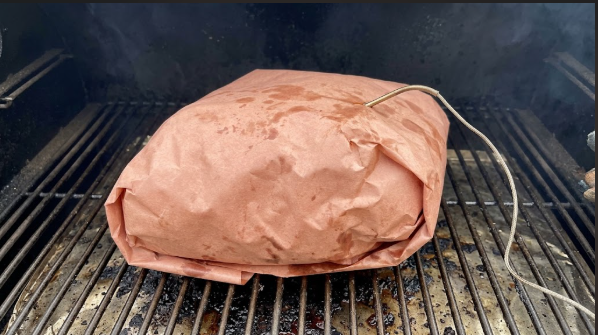
- Wrap if you like. When the bark (the dark, crusty outer layer) is set and a deep mahogany color, wrap the butt tightly in butcher paper or foil. Foil is faster and gives softer bark, and paper keeps more crust.
- Cook to tender. Keep going until the probe slides in like it is pushing into soft butter, usually at 200 to 205°F (93 to 96°C) internal.
- Rest for at least one hour. Keep it wrapped and hold it in a dry cooler with towels for 1 to 3 hours. This lets the juices settle and makes shredding easy.
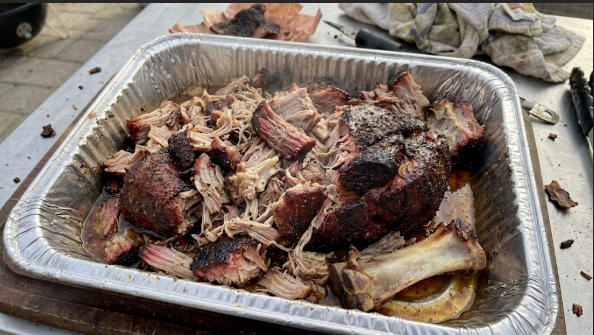
- Pull and mix. Remove the bone, which should slide out clean. Shred the meat with forks or meat claws, and mix the juices back in.
If you do not own a smoker yet, a pellet grill is the easiest way to hold steady heat for 10 hours or more. Our roundup of beginner-friendly pellet grills can help you choose one. Prefer a traditional setup? A budget affordable offset smoker is another option, though it takes more fire management.
Pitmaster Tip: Always cook one pound more raw pork than your math says, and hold the pulled pork in a warm cooler or a covered pan. Extra pork is cheap insurance, and a rested butt stays hot and juicy for hours while you finish sides and set up the buffet.
Pulled Pork Time and Temperature Table
Timing depends on your cooker, the weather, and the size of the butt, so use these numbers as a guide and rely on the probe, not the clock.
| Stage | Cooker temp | Internal temp | Typical time |
| Smoke (bark builds) | 225 to 250°F (107 to 121°C) | 0 to 150°F (up to 65°C) | 4 to 6 hours |
| The stall | 225 to 250°F (107 to 121°C) | 150 to 170°F (65 to 77°C) | 1 to 3 hours |
| Wrapped push | 225 to 250°F (107 to 121°C) | 170 to 203°F (77 to 95°C) | 3 to 5 hours |
| Probe-tender and done | N/A | 200 to 205°F (93 to 96°C) | Pull when probe slides in easily |
| Rest | Warm cooler | Drops slowly, stays above 140°F (60°C) | 1 to 3 hours |
A good rule of thumb is 1.5 to 2 hours per pound (3.3 to 4.4 hours per kg) at 225°F (107°C). That puts an 8 lb (3.6 kg) butt at roughly 12 to 16 hours, and about 9 to 12 hours at 250°F (121°C). Add rest time on top of that.
Because of that long window, start early. For a 6 p.m. dinner, many cooks put a large butt on the smoker the night before, around midnight, then wrap in the morning and hold in the cooler.
How to Tell When Pulled Pork Is Done
Temperature gets you close, but feel tells you for sure. Pulled pork is ready when the probe goes in with almost no resistance, the bone wiggles loose, and the meat looks jiggly under the wrapping.
Pitmasters pull the butt at 200 to 205°F (93 to 96°C) for tenderness, because collagen and connective tissue need that heat to break down. That is much higher than the USDA minimum. The USDA’s safe minimum internal temperature for pork roasts is 145°F (63°C) with a 3-minute rest, so a properly cooked pulled pork is well past the safe point long before it is tender.
If the probe still feels tight at 195°F (90°C), give it another 30 to 45 minutes. Pulled pork that is pulled early shreds poorly, and you will end up with chewy chunks instead of soft strands.
Food Safety Notes for Large Batches
Cooking for a crowd means holding food longer, and that is where mistakes happen. Keep these rules in mind.
- Stay out of the danger zone. Bacteria multiply fast between 40°F and 140°F (4°C and 60°C), and the USDA warns that frozen meat on the counter can enter that range even while the center is still frozen.
- Thaw in the fridge. A frozen butt needs about 24 hours per 5 lb (2.3 kg) in a refrigerator at 40°F (4°C) or below. Cold-water and microwave thawing are also safe, but cook right away after either one.
- Hold hot food hot. Keep pulled pork at 140°F (60°C) or higher on the buffet, using chafing dishes, slow cookers on warm, or a covered pan in a warm oven.
- Watch the clock. Refrigerate leftovers within 2 hours of cooking, or within 1 hour if it is above 90°F (32°C) outside, per USDA leftover guidance.
Wash hands and boards after handling raw pork, and never put cooked meat on a surface that held raw meat.
Storing, Freezing, and Reheating Leftovers
Pulled pork keeps well, which is one reason it is such a smart choice for parties. Cool it fast by spreading it into shallow containers, then refrigerate.
| Storage method | How long | Tips |
| Refrigerator (40°F / 4°C or below) | 3 to 4 days | Store in shallow, airtight containers with a splash of juice |
| Freezer (0°F / -18°C) | 3 to 4 months for best quality | Portion into freezer bags, press out air, label with date |
The fridge and freezer times come from university extension guidance based on USDA rules. Frozen pork stays safe longer than four months, but quality drops.
To reheat, bring the pork to 165°F (74°C) as measured with a food thermometer. Add a few spoonfuls of broth, apple juice, or leftover cooking liquid, cover, and heat gently in the oven at 300°F (149°C), in a covered pan on the stove, or in the microwave. Covering the pork keeps it from drying out.
Freeze in meal-sized portions so you only thaw what you need. A flat bag of pulled pork thaws in the refrigerator overnight and reheats in minutes.
Related Tips for Planning Your Pulled Pork Meal
A few small habits make the whole day smoother.
- Buy early. Large butts sell out before holiday weekends, so shop several days ahead and keep them cold.
- Shop by weight, not by count. Two butts rarely weigh the same, so weigh them to check your total.
- Offer two sauces. A tangy vinegar sauce and a sweeter tomato-based sauce let guests choose, and they stretch the meat further.
- Add a crunch. Coleslaw on top of the sandwich adds bulk and cuts richness.
- Use the right tools. A set of meat claws or a pair of forks speeds up shredding. For slicing leftover chunks, take a look at the best knives for cutting meat.
- Keep the juices. Save the liquid from the wrap and stir it back into the shredded meat. This one step does more for moisture than any sauce.
FAQ
How much pulled pork do I need for 20 people?
Plan on about 13 lb (6 kg) of raw bone-in pork butt, which is two 7 to 8 lb butts. That gives you roughly 6.5 lb (3 kg) of cooked meat, or ⅓ lb per person. Add one extra pound if you want leftovers or have hungry guests.
How many pounds of pulled pork per person for sandwiches?
For sandwiches alone, plan on ¼ lb (113 g) of cooked pulled pork per person. If you are buying raw bone-in pork butt, that works out to about ½ lb (227 g) per guest. Go up to ⅓ lb cooked if the sandwiches are loaded with toppings.
How much does a pork butt shrink when cooked?
A bone-in pork butt typically loses about 40 to 50 percent of its raw weight after smoking. The loss comes from the bone, rendered fat, and moisture. Boneless butts shrink a little less. For safe planning, assume you will keep about half the raw weight as edible pulled pork.
How long does it take to smoke an 8 lb pork butt?
At 225°F (107°C), an 8 lb (3.6 kg) pork butt usually takes 12 to 16 hours. At 250°F (121°C), expect about 9 to 12 hours. Plan for an extra 1 to 3 hours of resting time, and use the probe to judge doneness rather than the clock.
Is it better to buy bone-in or boneless pork butt?
Bone-in butts have more flavor, stay juicier, and are easier to test for doneness, because the bone slides out clean when the pork is tender. Boneless cuts yield slightly more meat per pound and cook a bit faster. For beginners, bone-in is the more forgiving choice.
How long can pulled pork sit out at a party?
Cooked pork should not sit out for more than 2 hours, or 1 hour if it is above 90°F (32°C). Keep it at 140°F (60°C) or hotter in chafing dishes or warming trays, and refrigerate leftovers promptly in shallow containers so they cool quickly.
Conclusion
Getting how much pulled pork per person right comes down to a few simple numbers. Plan on ⅓ lb (150 g) cooked per adult, buy about ¾ lb (340 g) raw bone-in butt per guest, and round up when you are on the fence. Adjust down for sandwiches or multi-meat menus, and up for big eaters and teenagers.
Cook low and slow at 225 to 250°F (107 to 121°C), pull at 200 to 205°F (93 to 96°C), and rest the butt for at least an hour. Hold it hot, refrigerate leftovers within two hours, and you will have a pan of tender pork that feeds your crowd and gives you a head start on tomorrow’s tacos.
Laura Smith

I'm Laura, I like all the kind of delicious grilled foods which makes me hungry all the time I see them. That's why I built this blog to share with you all of my Grilling experiences, recipes, and all the tips about foods that I've learned from food experts.