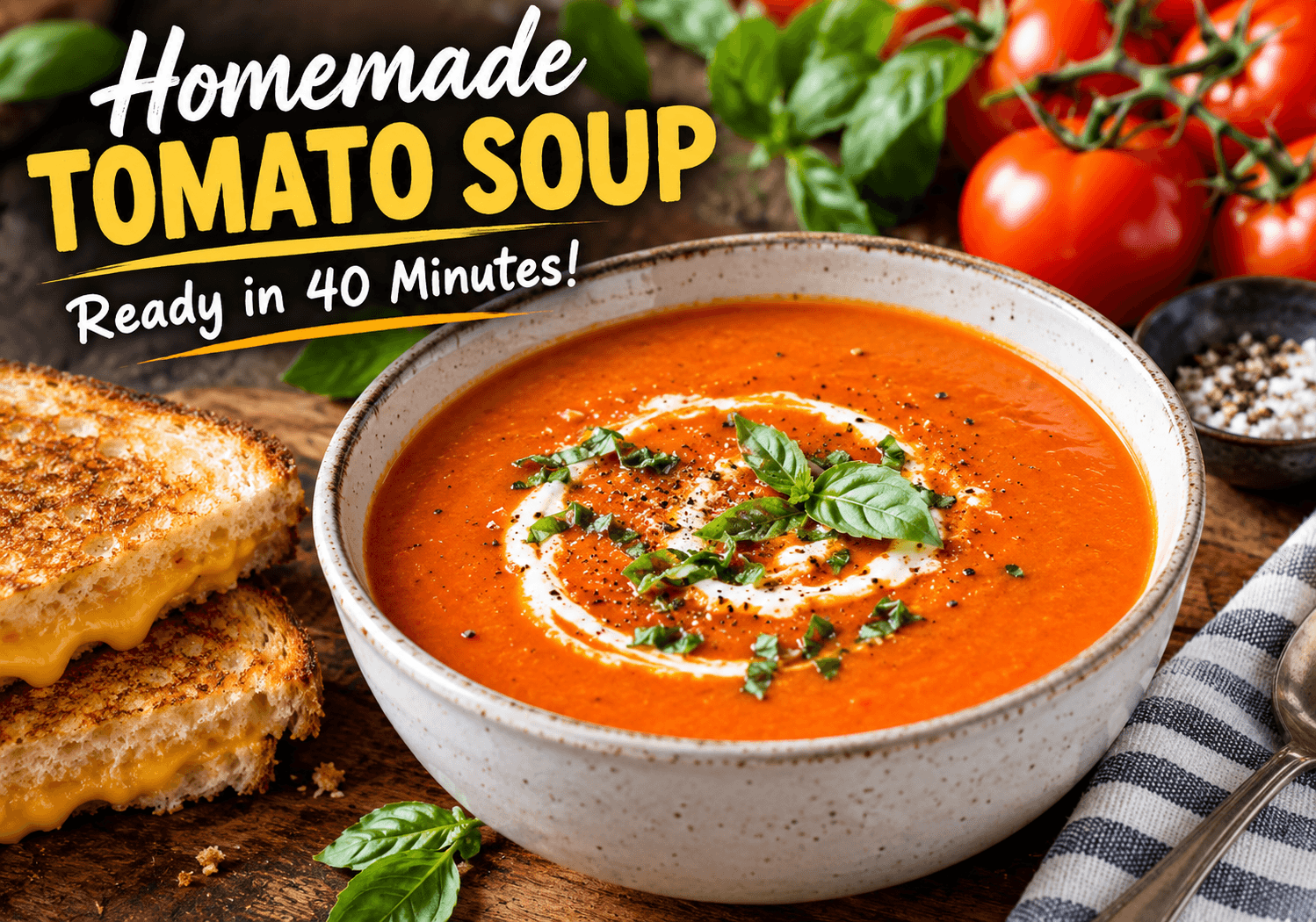
Homemade tomato soup is one of the few recipes where a short list of pantry ingredients turns into something that tastes slow-cooked. You brown an onion, bloom some tomato paste, simmer tomatoes in broth, and blend. The result is smooth, bright, and deeply tomato-flavored, without the metallic tang of a can of condensed soup.
This guide gives you a base recipe that works with canned or fresh tomatoes. You will learn how to balance acidity, get a velvety texture, and finish the pot with cream or without it. You will also get safe storage, freezer, and reheating tips.
Quick Answer: For homemade tomato soup, sauté onion and garlic in butter, stir in tomato paste, add two 28 oz (794 g) cans of tomatoes and 2 cups (480 ml) broth, and simmer gently for 20 minutes. Blend until smooth and stir in cream. Total time is about 40 minutes. Reheat leftovers to 165°F (74°C).
Why This Homemade Tomato Soup Recipe Works
Great tomato soup depends on three things: concentrated flavor, balanced acidity, and a smooth texture. Each step in this recipe targets one of them.
Cooking the tomato paste in butter for 2 minutes turns it from raw and sharp to sweet and savory. That small step adds more depth than an extra 30 minutes of simmering. Onion and a little carrot add natural sweetness, so you need less sugar to tame the acid.
Blending finishes the job. A good blender or immersion blender breaks down skins, seeds, and fibers into a velvety soup with no graininess. And because the base is so simple, you can change it easily. Want a lighter bowl? Skip the cream and use our tips below, or browse our healthy soup recipes for more ideas.
Ingredients and Equipment for Homemade Tomato Soup
This makes 6 servings, about 8 cups (1.9 L).
For the soup
- 3 tbsp (42 g) unsalted butter, or 3 tbsp (45 ml) olive oil
- 1 large yellow onion, about 10 oz (280 g), diced
- 1 small carrot, finely diced (optional, for sweetness)
- 4 garlic cloves, minced
- 3 tbsp (48 g) tomato paste
- Two 28 oz (794 g) cans whole peeled tomatoes, San Marzano-style if you can find them
- 2 cups (480 ml) low-sodium vegetable or chicken broth
- 1 tsp salt, plus more to taste
- 1/2 tsp black pepper
- 1 tsp dried basil, or 1/4 cup (10 g) fresh basil leaves
- 1/4 tsp red pepper flakes (optional)
- 1 tsp sugar, added only if needed
- 1/2 cup (120 ml) heavy cream, warmed (optional)
Equipment
- Dutch oven or heavy 5 to 6 quart (4.7 to 5.7 L) pot
- Immersion blender, or a countertop blender
- Wooden spoon and ladle
- Fine-mesh strainer (optional, for an extra-smooth finish)
Easy Substitutions
| If you don’t have | Use this instead | Notes |
| Butter | Olive oil | Slightly lighter flavor; also makes it dairy-free |
| Heavy cream | Half-and-half, or full-fat coconut milk | Coconut adds a mild sweetness |
| Cream (for a lighter bowl) | 1/2 cup cooked white beans or 1 small peeled potato, blended in | Adds body with no dairy |
| Broth | Water plus an extra 1/2 tsp salt | Flavor is a bit less rich |
| Fresh basil | 1 tsp dried basil | Add dried basil early; add fresh basil at the end |
| Canned tomatoes | 4 lb (1.8 kg) ripe Roma tomatoes, roasted | See the fresh tomato section |
Choosing and Prepping Tomatoes for Homemade Tomato Soup
Canned Tomatoes
Canned whole peeled tomatoes are the most reliable choice for homemade tomato soup. They are picked and packed at peak ripeness, so they taste better than pale supermarket tomatoes out of season. Look for cans with whole tomatoes in juice or puree, and skip those packed with a lot of added seasonings.
Crush the tomatoes by hand right in the pot, or give the can a quick pulse with an immersion blender. This makes blending faster and gives you a more even soup.
Fresh Tomatoes
Fresh tomatoes shine in late summer. Choose ripe Roma or plum tomatoes, which have meaty flesh and fewer seeds. Beefsteak and garden tomatoes work too, but they hold more water, so the soup may need a longer simmer.
Roast them first for the best flavor. Halve 4 lb (1.8 kg) of tomatoes, toss them with 2 tbsp (30 ml) olive oil and 1/2 tsp salt, and roast cut side up at 425°F (220°C) for 35 to 45 minutes. The edges should be charred and the juices thick and jammy.
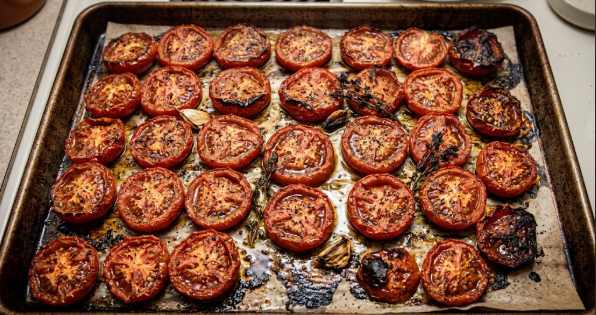
If you cook outdoors, roast the tomatoes on a pellet grill or covered grill at 400°F (200°C) for 40 to 50 minutes. Use a mild wood such as apple or alder, and avoid heavy smoke woods like mesquite, which overwhelm the tomato.
Do You Have to Peel Them?
No, not if you plan to blend the soup. Roasted skins soften and blend into the soup. For a restaurant-smooth texture, press the blended soup through a fine-mesh strainer, or run the cooked tomatoes through a food mill first.
Pitmaster Tip: Always cook your tomato paste. Stir it into the hot butter and onions and cook it for 2 minutes, until it darkens from bright red to a brick color and smells sweet. This quick caramelizing step is the biggest flavor upgrade in the whole recipe.
Step-by-Step: How to Make Homemade Tomato Soup
- Melt the butter. Heat the Dutch oven over medium heat (about 300°F / 150°C surface temperature) and melt the butter until it foams.
- Cook the onion and carrot. Add the onion, carrot, and 1/2 tsp of the salt. Cook for 6 to 8 minutes, stirring often, until soft and translucent but not browned.
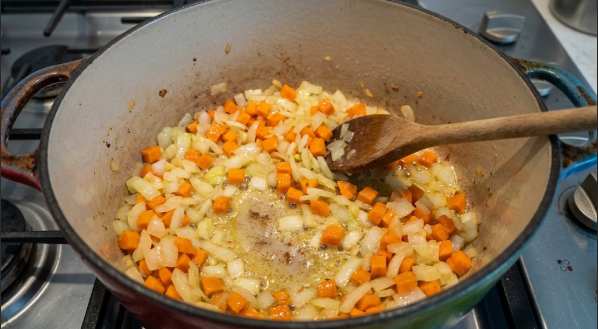
- Add garlic and spices. Stir in the garlic, red pepper flakes, and dried basil if using. Cook for 30 to 60 seconds, just until fragrant.
- Bloom the tomato paste. Add the paste and cook for 2 minutes, stirring constantly, until it turns a deeper brick red.
- Add tomatoes and broth. Pour in the canned tomatoes with their juices, or add your roasted tomatoes and any pan juices. Add the broth, remaining salt, and pepper. Crush any whole tomatoes with the back of the spoon.
- Simmer gently. Bring to a bubble, then lower the heat to maintain a gentle simmer. Cook uncovered for 20 minutes, stirring now and then.
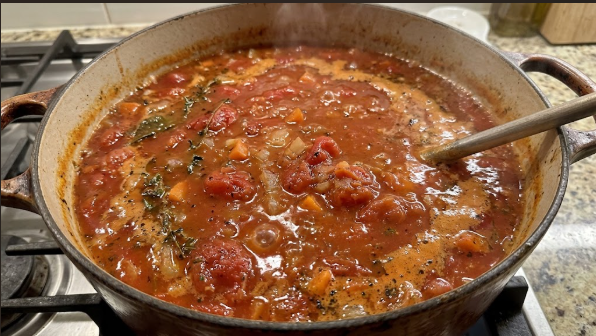
- Blend until smooth. Remove the pot from the heat. Blend with an immersion blender for 1 to 2 minutes, or work in batches with a countertop blender (see the safety note below).
- Finish and season. Stir in the warmed cream and the fresh basil. Taste, then add salt, pepper, and sugar only if it tastes sharp. Let it warm through for 2 minutes without boiling.
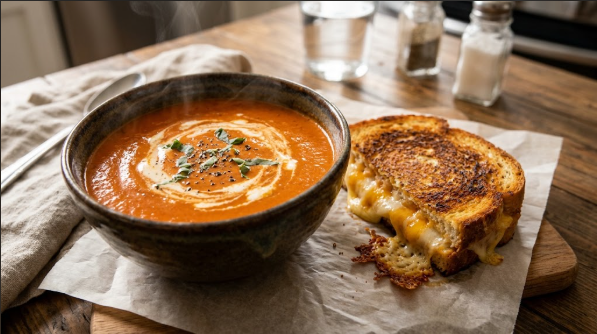
- Serve. Ladle into warm bowls and top with a swirl of cream, black pepper, and basil.
Common Mistake: Blending hot soup in a sealed blender. Steam builds pressure and can blow the lid off, causing burns. Fill the blender no more than halfway, remove the center cap of the lid, cover the opening with a folded towel, and start on low. An immersion blender avoids the problem entirely.
Time and Temperature Table for Homemade Tomato Soup
| Method | Temperature | Time | Notes |
| Stovetop, canned tomatoes | Medium, then gentle simmer | 20 to 25 min simmer | About 40 min total; the fastest option |
| Stovetop, fresh tomatoes (unroasted) | Gentle simmer | 35 to 45 min simmer | Lighter flavor; may need extra paste |
| Oven-roasted fresh tomatoes, then simmer | 425°F (220°C) roast | 35 to 45 min roast, plus 15 min simmer | Best flavor for fresh tomatoes |
| Pellet grill or grill-roasted tomatoes | 400°F (200°C) | 40 to 50 min roast, plus 15 min simmer | Light smoky flavor |
| Slow cooker | Low | 6 to 8 hours | Sear the onions and paste first, then blend at the end |
| Slow cooker | High | 3 to 4 hours | Same method as above |
| Reheating leftovers | Medium-low | 5 to 8 min | Stir often; heat to 165°F (74°C) |
For safe leftovers, USDA says to reheat leftovers to 165°F (74°C) . Use a food thermometer in the center of the pot to check, and stir before you take the reading.
How to Tell When Homemade Tomato Soup Is Done
There is no safe-temperature test for the soup itself; it is done when the flavor and texture are right. Look for a deep red-orange color rather than a pale pink. Pale soup means the tomatoes were undercooked or the paste was not browned.
The texture should coat the back of a spoon and leave a clear line when you draw your finger through it. If it looks thin, simmer it uncovered for another 5 to 10 minutes. If it is too thick, stir in broth 1/4 cup (60 ml) at a time.
Taste last. Good tomato soup tastes sweet, savory, and bright all at once. If it is too sharp, add 1/2 tsp sugar or a pinch of baking soda (about 1/8 tsp). If it tastes flat, add 1/4 tsp salt or a squeeze of lemon juice.
Resting, Garnishing, and Serving
Let the soup sit off the heat for 5 minutes before serving. It thickens slightly, and the flavors settle. Serve in warm bowls so the soup stays hot longer.
For garnish, try any of these:
- A swirl of cream or olive oil
- Torn fresh basil
- Crunchy croutons or toasted pumpkin seeds
- A spoonful of pesto
- Shaved Parmesan and cracked black pepper
- A drizzle of chili oil for heat
What to Serve With Homemade Tomato Soup
Tomato soup and grilled cheese is the classic pairing for a reason. The crisp, buttery sandwich balances the soup’s acidity. For a campfire or grill-side twist, try our grilled bread as a smoky dipper.
If you want a heartier spread, set out a second soup for a mix-and-match supper. A creamy potato soup recipe is a nice partner, and both freeze well.
Other easy sides include:
- A crisp green salad with lemon vinaigrette
- Toasted baguette slices rubbed with garlic
- Cheese quesadillas or a toasted panini
- Crackers and sharp cheddar
- A simple pasta salad or roasted vegetables
Storing, Freezing, and Reheating Homemade Tomato Soup
Refrigerating
Cool the soup quickly. USDA says to refrigerate cooked food within 2 hours, or within 1 hour if it is above 90°F (32°C). Divide a big pot into shallow containers so it chills fast.
Leftovers keep for 3 to 4 days in the fridge at 40°F (4°C) or below. If the soup has cream, treat it the same way.
Freezing
Homemade tomato soup freezes well, especially without the cream. Cool it completely, then ladle into freezer bags or containers, leaving 1 inch (2.5 cm) of space for expansion. Lay bags flat to freeze for easy stacking.
USDA notes food kept at 0°F (-18°C) stays safe, but quality declines over time]. For the best flavor, use frozen soup within about 3 months. Add the cream when you reheat.
Reheating
Thaw frozen soup overnight in the fridge. Reheat on the stove over medium-low heat for 5 to 8 minutes, stirring often, until it reaches 165°F (74°C). In the microwave, use a covered bowl, stir every 60 seconds, and check the temperature in several spots.
If the soup has thickened in the fridge, thin it with 1/4 cup (60 ml) broth or water. Keep the heat gentle once cream is in, because a hard boil can make dairy break and look grainy.
Variations: Slow Cooker, Roasted, Vegan, and More
Slow Cooker Version
Sauté the onion, carrot, garlic, and tomato paste on the stove first, then move everything to the slow cooker with the tomatoes and broth. Cook on low for 6 to 8 hours or on high for 3 to 4 hours, then blend and add cream. For more hands-off meals, see our crockpot soup recipes.
Roasted or Grill-Roasted
Roasting the tomatoes at 425°F (220°C) in the oven, or at 400°F (200°C) on a pellet grill, gives the deepest flavor. Add a head of garlic wrapped in foil and roasted alongside for an extra-sweet, mellow finish. Use apple or alder pellets for a light smoke.
Vegan and Dairy-Free
Use olive oil instead of butter, vegetable broth, and full-fat coconut milk or blended cashews in place of cream. Or skip the dairy altogether and blend in 1/2 cup (about 90 g) of cooked white beans for body. Our easy vegan recipes and vegetarian recipes collections have more meatless meals to build a menu around.
Flavor Twists
- Tomato basil: Double the fresh basil and finish with a spoon of pesto.
- Spicy: Add 1/2 tsp smoked paprika and 1/2 tsp red pepper flakes.
- Parmesan rind: Drop a 2 inch (5 cm) rind into the pot while it simmers, then remove it before blending.
- Tomato bisque style: Add 1 tbsp (15 ml) dry sherry after the paste, and finish with extra cream.
Troubleshooting Homemade Tomato Soup
| Problem | Likely cause | Fix |
| Too acidic or sharp | Underripe tomatoes, or raw paste | Add 1/2 tsp sugar or a pinch of baking soda; add a little more butter |
| Bland or flat | Too little salt, or short simmer | Add 1/4 tsp salt at a time; simmer 10 more minutes |
| Too thin | Watery tomatoes or too much broth | Simmer uncovered 5 to 10 minutes; blend in beans or potato |
| Too thick | Over-reduced | Stir in broth 1/4 cup (60 ml) at a time |
| Grainy texture | Skins and seeds not fully blended, or cream boiled | Blend longer or strain; keep the heat low after adding cream |
| Curdled cream | Cold cream hit boiling soup | Warm the cream first and stir it in off the boil |
| Burnt taste | Paste or garlic scorched | Lower the heat and stir; start over if the pot is scorched |
| Orange, pale color | Too much cream or too little browning | Cook the paste until brick red; add cream a little at a time |
Recipe Card: Homemade Tomato Soup
Servings: 6 (about 8 cups / 1.9 L) Prep time: 10 minutes Cook time: 30 minutes Total time: about 40 minutes
Ingredients: 3 tbsp (42 g) butter; 1 large onion; 1 small carrot; 4 garlic cloves; 3 tbsp (48 g) tomato paste; two 28 oz (794 g) cans whole tomatoes; 2 cups (480 ml) broth; 1 tsp salt; 1/2 tsp pepper; 1 tsp dried basil or 1/4 cup fresh; 1/2 cup (120 ml) cream (optional).
Quick steps:
- Cook onion and carrot in butter for 6 to 8 minutes.
- Add garlic, then tomato paste; cook 2 minutes.
- Add tomatoes and broth; simmer 20 minutes.
- Blend until smooth.
- Stir in warmed cream and basil; season to taste.
- Serve hot. Reheat leftovers to 165°F (74°C).
FAQ
How do you make homemade tomato soup from scratch?
Sauté onion and garlic in butter, cook tomato paste for 2 minutes, then add canned or roasted tomatoes and broth. Simmer 20 minutes, blend until smooth, and stir in cream and basil. Season with salt, pepper, and a pinch of sugar only if the soup tastes sharp.
Is it better to use fresh or canned tomatoes?
Canned tomatoes are the better choice for most of the year because they are ripe and consistent. Use fresh tomatoes in late summer, and roast them first at 425°F (220°C) for 35 to 45 minutes to concentrate flavor. Off-season fresh tomatoes often taste watery and pale.
How do you make tomato soup less acidic?
Cook the tomato paste until it darkens, add a diced carrot, and finish with a little butter or cream. If it still tastes sharp, stir in 1/2 tsp sugar or a pinch of baking soda (about 1/8 tsp). Taste after each addition, because a small amount goes a long way.
How do you make it creamy without cream?
Blend in 1/2 cup of cooked white beans or one small peeled potato, or use full-fat coconut milk. Olive oil also adds richness. Blending thoroughly matters most, since a very smooth puree feels creamy even with no dairy at all.
Can you freeze homemade tomato soup?
Yes. Cool the soup quickly, then freeze it in airtight containers with 1 inch (2.5 cm) of headspace. For best quality, eat it within about 3 months. Thaw in the fridge overnight, and add the cream while reheating to 165°F (74°C).
How long does it last in the fridge?
Homemade tomato soup lasts 3 to 4 days in the refrigerator at 40°F (4°C) or below when stored in an airtight container. Refrigerate it within 2 hours of cooking. Reheat only what you plan to eat, and bring it to 165°F (74°C).
Conclusion
Homemade tomato soup takes about 40 minutes and a handful of pantry staples, and it beats anything from a can. Brown the paste, simmer gently, blend until silky, and balance the acidity with care. Those small steps are what give it that deep, restaurant-style flavor.
Make a double batch and freeze half for a busy night. When you are ready for your next bowl, explore our easy soup recipes for more weeknight favorites.
Laura Smith

I'm Laura, I like all the kind of delicious grilled foods which makes me hungry all the time I see them. That's why I built this blog to share with you all of my Grilling experiences, recipes, and all the tips about foods that I've learned from food experts.