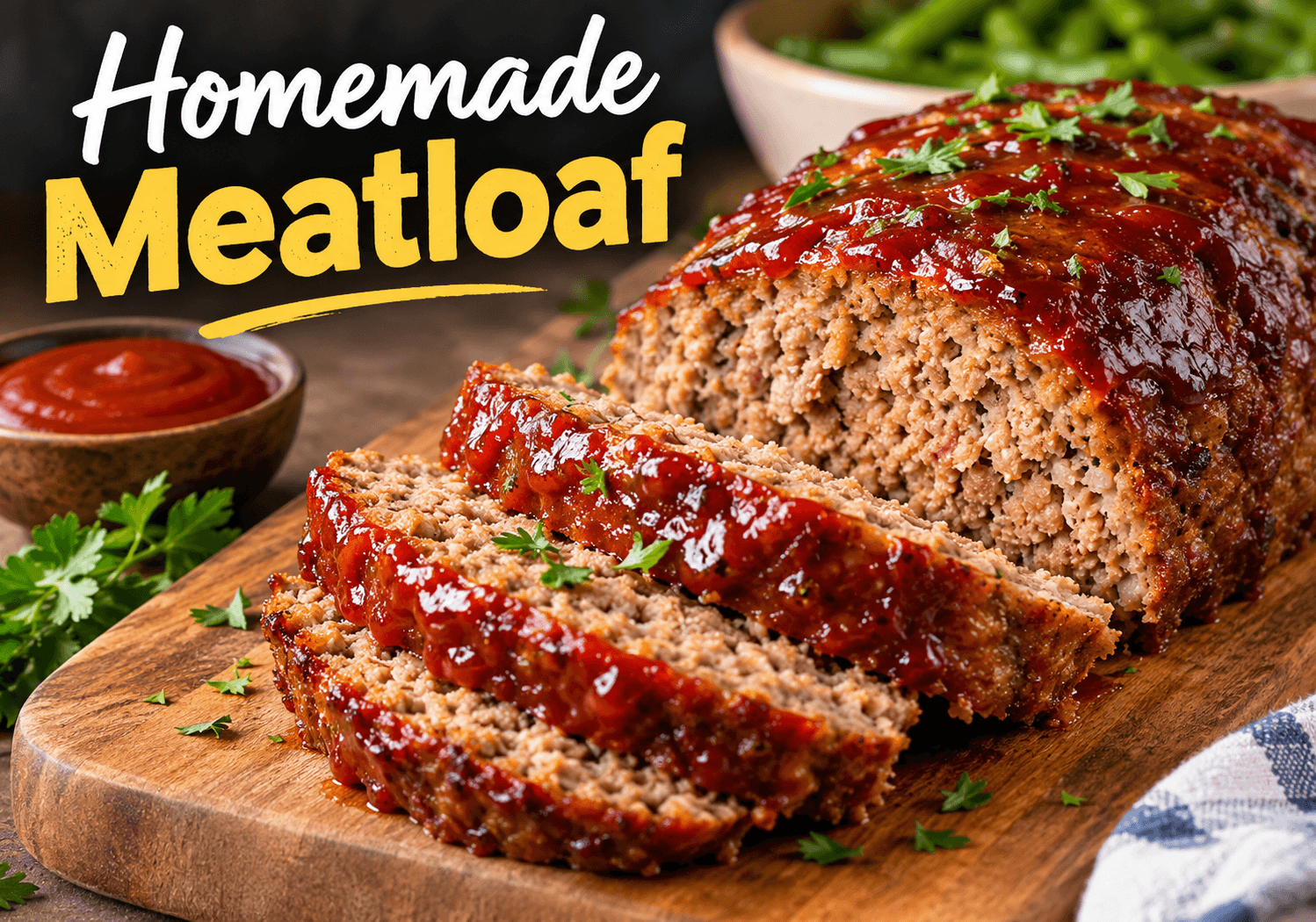
Homemade meatloaf is one of those dinners that sounds simple and still goes wrong in a dozen ways. It comes out dense, dry, greasy, or crumbly. The fix is not a secret ingredient. It is a handful of small choices about the meat, the binder, the pan, and the pull temperature.
This homemade meatloaf recipe uses 80/20 ground chuck, a milk-and-panko panade, sautéed onions, and a sweet-tangy glaze that goes on in two coats. It bakes at 350°F (175°C) until the center hits 160°F (71°C). I’ll also show you how to cook it on a pellet grill for a light smoke.
Below you’ll find exact amounts, timing, fixes for common problems, and storage and reheating guidance.
Quick Answer: Mix 2 lb (0.9 kg) 80/20 ground chuck with a milk-and-panko panade, eggs, sautéed onion, and seasoning. Shape a loaf, bake at 350°F (175°C) for 60-70 minutes, glazing in the last 15. Pull at 160°F (71°C), then rest 10 minutes before slicing.
Why This Homemade Meatloaf Recipe Works
Good meatloaf comes down to moisture, fat, and a gentle hand. Each piece of this recipe handles one of those.
- A panade holds moisture. Soaking breadcrumbs in milk makes a paste that keeps the meat proteins from squeezing tight as they cook. This is the single biggest fix for dry meatloaf.
- 80/20 beef has enough fat. Lean ground beef (90/10 or leaner) bakes up dry and crumbly. Ground chuck at 80/20 stays tender without turning greasy when you bake it on a rack or sheet pan.
- Sautéed onions add flavor, not crunch. Raw onion releases water and stays firm. Cooking it first gives you sweetness and a softer bite.
- A two-coat glaze builds a real crust. Half the glaze goes on early and the rest near the end, so it caramelizes instead of burning.
- A thermometer takes out the guessing. You pull at a number, not a timer.
Ingredients and Equipment
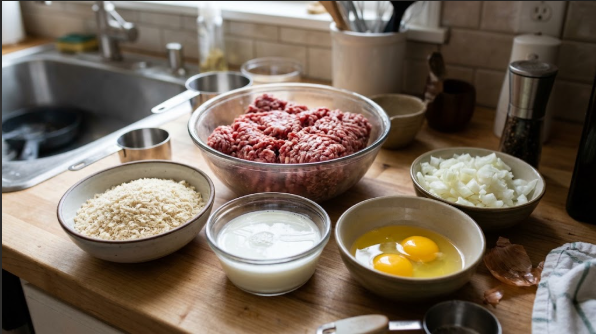
This makes one loaf of about 2 pounds (0.9 kg), which serves 6-8 people.
For the meatloaf
- 2 lb (0.9 kg) 80/20 ground chuck
- ¾ cup (45 g) plain panko breadcrumbs
- ½ cup (120 ml) whole milk
- 2 large eggs
- 1 tablespoon olive oil or butter
- 1 medium yellow onion, finely diced (about 1 cup)
- 3 cloves garlic, minced
- 2 tablespoons Worcestershire sauce
- ¼ cup (60 ml) ketchup
- 1½ teaspoons kosher salt
- 1 teaspoon black pepper
- 1 teaspoon smoked paprika
- ½ teaspoon dried thyme
- 2 tablespoons chopped fresh parsley (optional)
For the glaze
- ½ cup (120 ml) ketchup
- 2 tablespoons brown sugar
- 1 tablespoon apple cider vinegar
- 1 teaspoon Worcestershire sauce
Equipment
- Rimmed sheet pan or 9×5-inch (23×13 cm) loaf pan
- Wire rack (optional, but helpful)
- Instant-read thermometer
- Large mixing bowl
- Small skillet for the onions
- Parchment paper or foil
Substitutions
- No panko? Use ¾ cup crushed saltines or 1 cup fresh white bread crumbs. Plain dry breadcrumbs also work, but use ½ cup.
- No whole milk? Use 2% milk or buttermilk. Skip skim, which makes a thinner panade.
- Want a softer, more old-school texture? Replace 1 lb (0.45 kg) of the beef with ground pork. The extra fat makes the loaf richer.
- Using ground turkey? Choose dark meat or 93/7 and add 1 extra tablespoon of olive oil. It dries out faster than beef, so watch the thermometer.
- No Worcestershire? Use 1 tablespoon soy sauce plus 1 teaspoon of vinegar.
Choosing and Prepping the Meat
Start with fresh ground chuck labeled 80/20. If you only see 85/15, that works too. Anything leaner is the main reason homemade meatloaf tastes like a dry brick.
Keep the meat cold until you mix. Warm fat smears, and smeared fat makes a denser loaf. If the beef has been sitting out, put it back in the fridge for 15 minutes.
Handle ground beef with the usual care. The USDA notes that ground beef should reach 160°F, and it recommends washing your hands and surfaces after you touch raw meat (see the USDA’s ground beef and food safety guidance).
Pitmaster Tip: Dice the onion small, about ¼ inch (6 mm). Large pieces create weak spots, and your slices can split along them.
Step-by-Step Instructions
1. Heat the oven and prep the pan
Set the oven to 350°F (175°C) with a rack in the center. Line a rimmed sheet pan with parchment or foil. If you have a wire rack that fits inside, set it on top and line the pan underneath to catch drips.
2. Cook the onion and garlic
Heat the oil in a skillet over medium heat. Add the diced onion and a pinch of salt. Cook for 5-6 minutes, stirring, until soft and translucent but not browned. Add the garlic for the last 30 seconds. Let it cool for 10 minutes so it doesn’t start cooking the eggs.
3. Make the panade
In a large bowl, stir the panko and milk together. Let it sit for 5 minutes until it looks like a thick, wet paste. Don’t skip this wait. It lets the crumbs absorb the milk fully, which is what keeps the meat tender.
4. Add the wet ingredients and seasoning
Whisk the eggs, Worcestershire, ¼ cup ketchup, salt, pepper, paprika, and thyme into the panade. Stir in the cooled onions and garlic.
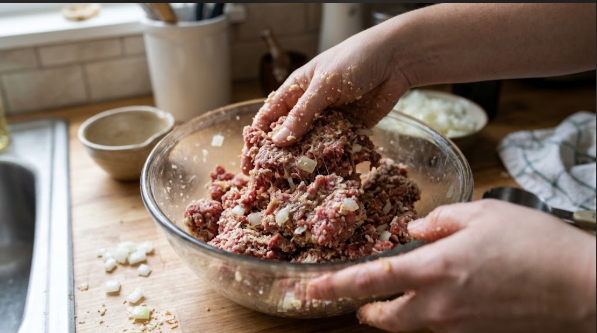
5. Mix in the beef gently
Add the cold ground chuck. Use your hands (or a fork) to fold everything together just until it comes together, about 45 seconds to 1 minute. Stop when you don’t see dry patches.
Common Mistake: Overmixing. Working the meat like bread dough makes the proteins bind tightly, and the result is a springy, rubbery loaf. Mix less than you think you should.
6. Shape the loaf
Turn the mixture out onto the lined pan and pat it into a loaf about 9 inches (23 cm) long, 5 inches (13 cm) wide, and 2½ inches (6 cm) high. Keep the top slightly rounded and the sides smooth. A free-form loaf on a sheet pan gives you more browned surface than a loaf pan does.
7. Add the first coat of glaze
Stir the glaze ingredients together. Spread about one-third over the top and sides of the loaf.
8. Bake
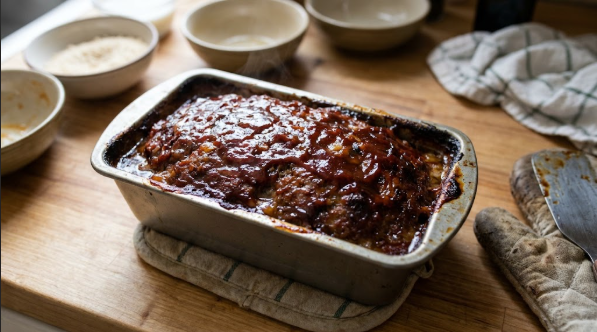
Bake for 45 minutes, then brush on the rest of the glaze. Return it to the oven for 15-25 minutes more, until a thermometer in the thickest part reads 160°F (71°C).
9. Rest and slice
Pull the loaf and let it rest on the pan for 10 minutes. The juices settle back in, and the slices hold together instead of crumbling. Cut slices about ¾ inch (2 cm) thick with a serrated or sharp chef’s knife.
Time and Temperature Table
| Method | Temperature | Time (2 lb loaf) | Pull temp |
| Oven, sheet pan | 350°F (175°C) | 60-70 min | 160°F (71°C) |
| Oven, 9×5 loaf pan | 350°F (175°C) | 65-75 min | 160°F (71°C) |
| Pellet grill | 325°F (165°C) | 70-85 min | 160°F (71°C) |
| Charcoal, indirect | 325-350°F (165-175°C) | 60-75 min | 160°F (71°C) |
| Mini loaves (muffin tin) | 375°F (190°C) | 20-25 min | 160°F (71°C) |
Times vary by loaf thickness and oven. Use them as a guide and trust the thermometer.
How to Tell When Meatloaf Is Done
The number that matters is 160°F (71°C) in the center. That’s the USDA’s safe minimum internal temperature for ground beef . If you use ground turkey or chicken in the mix, the target goes up to 165°F (74°C).
Don’t judge by color alone. Ground beef can look brown before it’s done, or stay pink after it is. Slide the probe in from the end and aim for the thickest part, away from the pan.
Other signs:
- The glaze is dark and slightly tacky, with caramelized edges.
- The loaf has pulled in slightly from the sides of the pan.
- The juices that collect on the pan are clear to light brown, not pink or red.
- The top feels firm but gives a little under a light press.
If you pull at 160°F, carryover heat may take it up another 3-5°F (about 2-3°C) while it rests. That’s normal and keeps the texture tender.
Resting, Slicing, and Serving
Ten minutes of rest is the minimum. Slice too early and the juices run onto the cutting board, leaving drier slices.
Use a sharp knife and a gentle sawing motion rather than pressing down. Wipe the blade between cuts if the glaze builds up. Serve warm, with a spoonful of extra glaze or a little pan juice on top.
If you’re feeding a crowd, slice the whole loaf and fan the pieces on a warm platter. They hold heat better that way and the glaze looks better.
What to Serve With Homemade Meatloaf
Meatloaf is a comfort-food dinner, so the sides lean soft, buttery, or crisp.
- Mashed potatoes are the classic. The gravy or pan juices go on both.
- Roasted or glazed vegetables. Try grilled carrots for a sweet, charred side.
- Crispy greens. Cast iron Brussels sprouts add a bitter, browned contrast to the sweet glaze.
- Casseroles. A green bean casserole fits the meal and travels well to potlucks.
- Cold sides. A scoop of macaroni salad works well in warm weather.
- Sweet potatoes. This make-ahead sweet potato casserole balances the tangy glaze.
- Dinner rolls or buttered egg noodles soak up the juices.
Storing, Freezing, and Reheating Leftovers
Refrigerating
Refrigerate leftovers within 2 hours of cooking (1 hour if the room is above 90°F/32°C). Cut the loaf into slices or chunks and store in airtight containers. According to the USDA’s leftovers guidance , cooked leftovers are best used within 3-4 days.
Freezing
You can freeze cooked meatloaf slices or the whole cooled loaf. Wrap tightly in plastic wrap and then foil, or seal in a freezer bag with the air pressed out. Per the USDA’s freezing guidance
You can also freeze the unbaked loaf. Shape it, wrap it tightly, and freeze it. Thaw in the refrigerator overnight before baking, and add 5-10 minutes to the cook time.
Reheating
Reheat leftovers to 165°F (74°C), as the USDA recommends for leftovers. Slices do best covered in a 325°F (165°C) oven with a splash of broth or water for 15-20 minutes. Use the microwave for single portions, covered, in 30-second bursts. The same low-and-covered idea applies in our guide to reheating chuck roast without drying it out.
For a great next-day meal, sear a thick slice in a hot skillet with butter until both sides are crisp, then build a sandwich with mayo, mustard, or more glaze.
Variations
Pellet grill (smoky version)
Set the grill to 325°F (165°C). Use a mild wood like oak, cherry, or a pellet blend, since heavy hickory can overpower the meat. Place the loaf on a sheet pan or perforated pan directly on the grate. Glaze at the 45-minute mark and cook to 160°F (71°C). Expect 70-85 minutes.
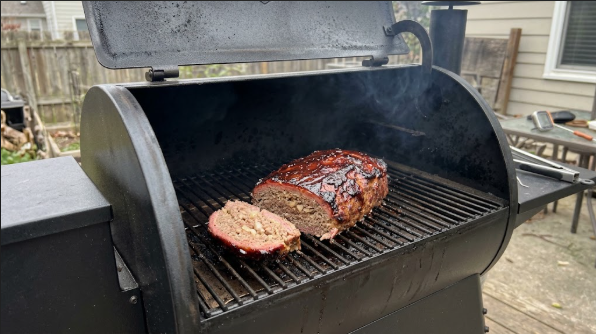
Offset or charcoal grill
Set up for indirect heat at 325-350°F (165-175°C), with coals on one side and the loaf on the other. Add one small chunk of oak or apple wood. Rotate the pan once halfway through for even browning.
Oven backup
The oven method above is the baseline and works with any pan. If the top browns too fast, tent it loosely with foil for the last 15 minutes.
Flavor variations
- Bacon-wrapped: Lay 6-8 slices of bacon across the top and tuck the ends underneath. Skip the first glaze and add the full glaze at the 45-minute mark.
- Cheesy: Fold 1 cup (115 g) shredded cheddar into the mix.
- Mushroom: Finely chop 8 oz (225 g) mushrooms, cook until dry, and mix in. This adds moisture and savory flavor.
- Spicy: Add 1 teaspoon chili flakes and 2 tablespoons hot sauce to the glaze.
- Lower-carb: Replace the panko with ½ cup crushed pork rinds or almond flour. For more ideas, see our keto ground beef recipes.
Troubleshooting Homemade Meatloaf
| Problem | Likely cause | Fix |
| Dry or crumbly | Lean beef, overbaked, no panade | Use 80/20 beef, add the panade, and pull at 160°F |
| Dense or rubbery | Overmixed meat | Mix just until combined |
| Falls apart when sliced | Not enough binder, sliced too hot | Use both eggs and panade; rest 10 minutes |
| Greasy bottom | Fat pooled around the loaf | Bake on a wire rack or drain fat halfway through |
| Raw center, dark top | Oven too hot or loaf too thick | Bake at 350°F and keep the loaf about 2½ inches (6 cm) thick |
| Burnt glaze | Sugar added too early | Add the second coat at 45 minutes |
| Bland | Under-seasoned | Salt properly and add Worcestershire |
Fat pooling is common, so don’t be alarmed if you see liquid on the pan. Tilt it and spoon some off, or blot the loaf’s edges with a paper towel before glazing.
If you like a one-dish dinner with ground beef, our ground beef casserole is a good next recipe. For more weeknight ideas, browse our easy ground beef recipes or the healthy ground beef recipes.
Recipe Card: Homemade Meatloaf
Servings: 6-8 | Prep time: 20 minutes | Cook time: 60-70 minutes | Rest: 10 minutes | Total: about 1 hour 40 minutes
Ingredients: 2 lb (0.9 kg) 80/20 ground chuck, ¾ cup (45 g) panko, ½ cup (120 ml) whole milk, 2 eggs, 1 diced onion, 3 cloves garlic, 2 tbsp Worcestershire, ¼ cup ketchup, 1½ tsp kosher salt, 1 tsp pepper, 1 tsp smoked paprika, ½ tsp thyme. Glaze: ½ cup ketchup, 2 tbsp brown sugar, 1 tbsp apple cider vinegar, 1 tsp Worcestershire.
Steps:
- Heat the oven to 350°F (175°C). Line a sheet pan.
- Sauté onion and garlic for 5-6 minutes; cool.
- Mix panko and milk; rest 5 minutes.
- Stir in eggs, seasonings, and onions.
- Fold in cold beef gently.
- Shape a 9×5-inch loaf; brush with one-third of the glaze.
- Bake 45 minutes, add the remaining glaze, and bake 15-25 minutes more to 160°F (71°C).
- Rest 10 minutes, then slice.
FAQ
What temperature is meatloaf done?
Meatloaf made with ground beef is done at 160°F (71°C) in the center, measured with an instant-read thermometer. If the mix includes ground turkey or chicken, cook it to 165°F (74°C). Check the thickest part, away from the pan, and rest the loaf 10 minutes before slicing.
How do you keep homemade meatloaf from drying out?
Use 80/20 ground chuck, add a milk-soaked panade, and mix gently. Then pull the loaf at 160°F instead of cooking it by the clock. A glaze and a 10-minute rest also help. Lean beef and overbaking are the two most common causes of dryness.
Why does meatloaf fall apart?
Falling apart usually means too little binder or slicing too soon. Use both the eggs and the panade, mix until the meat is just sticky, and rest the loaf for 10 minutes. Too much liquid, such as raw vegetables that release water, can also weaken the structure.
Should you cover meatloaf with foil while baking?
Not for the whole bake. Uncovered meatloaf browns and forms a glazed crust. If the top darkens before the center reaches 160°F, tent it loosely with foil for the final 15 minutes. This protects the glaze without trapping steam.
Can you freeze meatloaf?
Yes. Freeze it cooked or unbaked, wrapped tightly in plastic and foil or sealed in a freezer bag. Thaw in the refrigerator, not on the counter. Reheat cooked meatloaf to 165°F (74°C). Quality is best within a few months, though frozen food stays safe at 0°F (-18°C).
Can you make meatloaf on a pellet grill?
Yes. Set the grill to 325°F (165°C), use a mild wood like oak or cherry, and place the loaf on a sheet pan. Glaze after 45 minutes and cook to 160°F (71°C), usually 70-85 minutes. The result has a light smoky flavor.
Conclusion
A great homemade meatloaf is a handful of good habits: 80/20 beef, a milk-and-panko panade, softened onions, a light hand when mixing, and a thermometer. Bake at 350°F (175°C), glaze in two coats, pull at 160°F (71°C), and rest for 10 minutes.
Make this homemade meatloaf once as written, then change it to suit your table. Try the pellet grill version for a little smoke, or fold in cheese or mushrooms. Leftovers make an excellent sandwich the next day.
Laura Smith

I'm Laura, I like all the kind of delicious grilled foods which makes me hungry all the time I see them. That's why I built this blog to share with you all of my Grilling experiences, recipes, and all the tips about foods that I've learned from food experts.