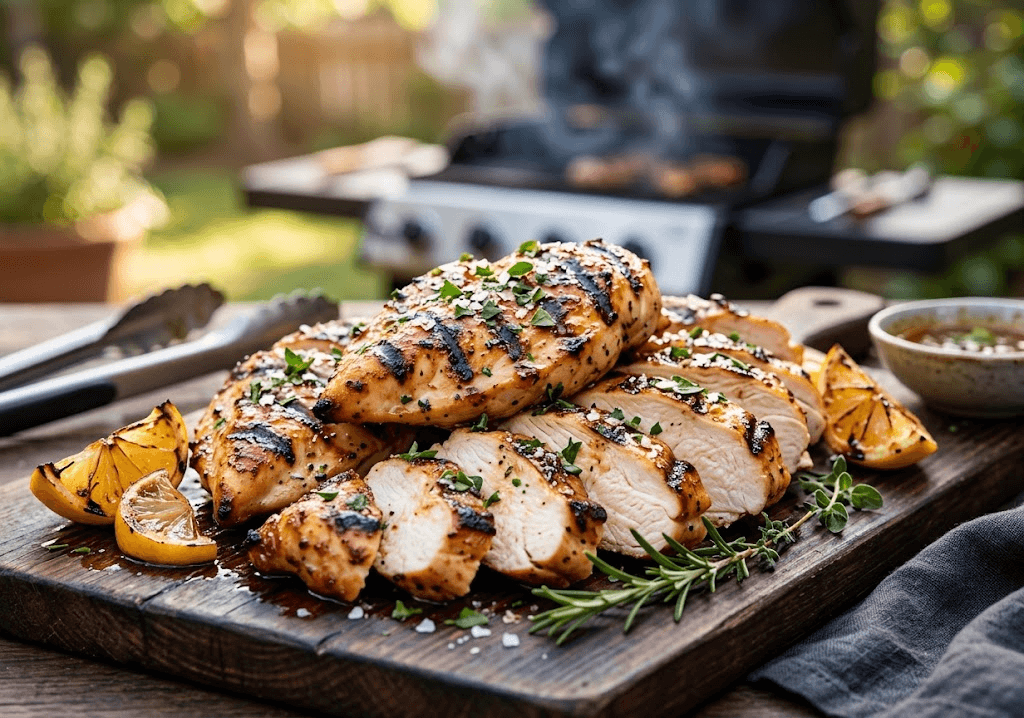
Plain chicken breast is lean, so it dries out fast over fire. That’s why you need the best chicken breast marinade for the grill: one that adds flavor, helps the surface brown, and gives you a little more room for error.
This recipe uses olive oil, lemon, Dijon, honey, garlic, and a few pantry spices. It takes 10 minutes to mix. The chicken needs 2 to 6 hours in the fridge, then about 12 minutes on a hot grill.
I’ll walk through why each ingredient is in there, how to prep the chicken, and exactly when to pull it off the heat. You’ll also get a time and temperature table, troubleshooting, and storage tips. By the end, you’ll know how to make grilled chicken breast that slices clean and stays moist.
⚡ Quick Answer
The best chicken breast marinade for the grill balances oil, acid, salt, and sweetness. Mix olive oil, lemon juice, Dijon, honey, soy sauce, garlic, and smoked paprika. Marinate 2 to 6 hours in the fridge. Grill at 450°F (232°C) about 5 to 7 minutes per side. Rest 5 minutes and confirm 165°F (74°C).
Why This Recipe Works
Good marinades do four jobs, and this one covers all of them.
- Fat (olive oil) carries fat-soluble flavors from the garlic and spices into the meat. It also keeps the surface from sticking to the grates.
- Acid (lemon juice) brightens the flavor and slightly softens the outer layer. Too much or too long turns the meat chalky, so I keep the amount moderate and the time window short.
- Salt (soy sauce and kosher salt) does the heavy lifting for juiciness. Salt helps the muscle hold onto moisture as it cooks.
- Sugar (honey) caramelizes over high heat. That’s where the golden-brown color and those dark grill marks come from.
Dijon mustard acts as an emulsifier. It keeps the oil and lemon from separating, so the marinade clings to the chicken instead of pooling in the bag.
This is also a forgiving, all-purpose chicken marinade for grilling. It works on breasts, thighs, and tenderloins, and it plays well with most side dishes.
Ingredients and Equipment
This recipe makes enough marinade for about 2 lb (0.9 kg) of boneless, skinless chicken breasts. That’s roughly 4 breasts at 8 oz (225 g) each.
Marinade Ingredients
| Ingredient | Amount | Substitution |
| Extra-virgin olive oil | ¼ cup (60 ml) | Avocado oil or any neutral oil |
| Fresh lemon juice | ¼ cup (60 ml) | Lime juice or orange juice (milder) |
| Dijon mustard | 2 Tbsp | Yellow mustard (use 1 Tbsp) |
| Honey | 2 Tbsp | Maple syrup or brown sugar |
| Soy sauce | 1 Tbsp | Worcestershire sauce or coconut aminos |
| Garlic, minced | 4 cloves | 1 tsp garlic powder |
| Smoked paprika | 1 tsp | Regular paprika plus a pinch of cumin |
| Dried oregano | 1 tsp | Dried thyme or Italian seasoning |
| Kosher salt | 1 tsp | ¾ tsp fine salt |
| Black pepper | ½ tsp | White pepper |
Equipment
- A gas or charcoal grill (a pellet grill works too)
- Zip-top bag or shallow glass dish
- Meat mallet or rolling pin
- Instant-read thermometer
- Long tongs and a clean grill brush
- A cutting board with a juice groove
A good thermometer matters more than any other tool here. Guessing by feel is how most people end up with dry chicken.
Choosing and Prepping the Chicken
Start with chicken breasts of similar size. If one is 12 oz (340 g) and another is 6 oz (170 g), the small one will be done long before the big one.
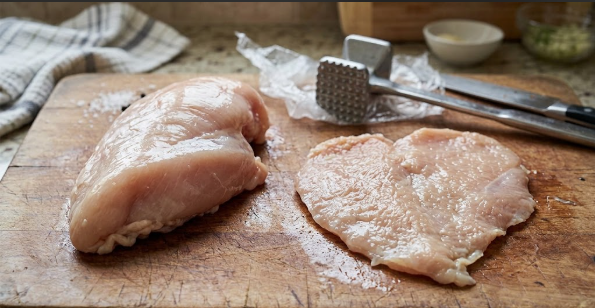
Most grocery breasts are thick on one end and thin on the other. That uneven shape is the number one reason for dry edges and raw centers. The fix takes about a minute per breast.
Pound to an even thickness
- Place the breast inside a zip-top bag or between two sheets of plastic wrap.
- Pound the thick end with the flat side of a mallet until the whole breast is about ¾ inch (2 cm) thick.
- Pat the surface lightly with paper towels before it goes into the marinade.
If you’d rather not pound, slice each thick breast horizontally into two thinner cutlets. Use a sharp blade; a good knife for cutting meat makes this much easier and safer.
Skip the rinse
Don’t rinse raw chicken. Washing it can spread bacteria around your sink and counters, and cooking is what kills germs. The USDA advises against washing raw poultry .
Step-by-Step Instructions
Prep time: 15 minutes | Marinating time: 2 to 6 hours | Grill time: 10 to 14 minutes
- Mix the marinade. Whisk the olive oil, lemon juice, Dijon, honey, soy sauce, garlic, smoked paprika, oregano, salt, and pepper in a bowl until it looks slightly creamy.
- Bag the chicken. Put the pounded chicken in a zip-top bag and pour in the marinade. Press out the air, seal, and massage the bag so every piece is coated.
- Refrigerate. Lay the bag flat on a plate or tray in the fridge. Marinate for at least 2 hours and no more than 6 for the best texture. Never marinate on the counter.
- Preheat the grill. About 15 minutes before cooking, set up a two-zone fire. Aim for roughly 450°F (232°C) on the hot side. Scrub the grates clean, then oil them lightly with a paper towel and tongs. If you need a refresher on lighting things, see how to start a grill.
- Remove and drain. Take the chicken out of the bag and let the extra marinade drip off. Don’t wipe it completely clean. A thin coat is good; a heavy coat of honey will burn.
- Discard the leftover marinade. Throw it out. Don’t brush it on cooked chicken (more on that in the safety notes).
- Sear on direct heat. Lay the breasts on the hot side with the lid closed. Grill 5 to 7 minutes until the first side has defined grill marks and releases easily from the grates.
- Flip once. Turn the chicken and grill another 4 to 6 minutes. If the outside is browning too fast, slide the pieces to the cooler side and close the lid.
- Check the temperature. Slide the thermometer into the thickest part, sideways if you can. See the next section for exact pull temps.
- Rest. Move the chicken to a clean plate or board. Tent loosely with foil and rest 5 to 10 minutes before slicing.
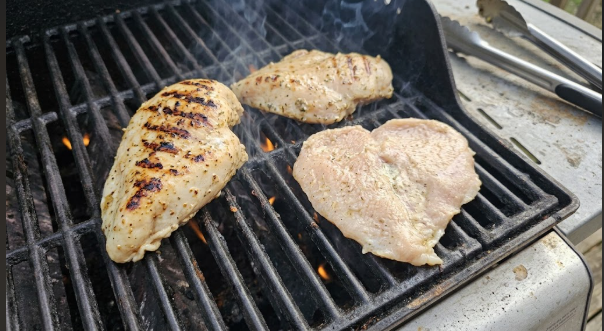
🔥 Pitmaster Tip: Resist the urge to move the chicken around. Honey and sugar in the marinade need uninterrupted contact with hot grates to caramelize. If you lift too early and it sticks, give it another minute. It will release when it’s ready.
⚠️ Common Mistake: Marinating too long in an acidic mix. Past 8 to 12 hours, lemon juice breaks down the surface proteins and leaves the chicken mushy or chalky. Stick to 2 to 6 hours and you’ll never have this problem.
Time and Temperature Table
All times assume boneless, skinless breasts about ¾ to 1 inch (2 to 2.5 cm) thick, with the lid closed.
| Cooker | Setup | Temp | Time per Side | Notes |
| Gas grill | Two-zone, direct | 450°F (232°C) | 5–7 min | Easiest to control |
| Charcoal kettle | Coals on one side | 425–475°F (218–246°C) | 5–7 min | Sear then move to cool side if flaring |
| Pellet grill | Preheat to high or sear setting | 450°F (232°C) | 6–8 min | Mild wood flavor; try apple or cherry |
| Cast iron grill pan (oven backup) | Medium-high | — | 5–6 min | Finish at 400°F (204°C) oven if thick |
| Oven | Sheet pan, wire rack | 425°F (218°C) | 18–25 min total | No grill marks, still juicy |
Thicker breasts (1½ inches / 4 cm) take longer. Either pound them down or give them 8 to 10 minutes per side and finish on the cool side of the grill.
How to Tell When Chicken Is Done
Color and juices are unreliable. A thermometer is the only dependable test.
- USDA minimum safe temperature: 165°F (74°C).
- Pitmaster pull temp: Many cooks pull chicken breast at 160°F (71°C). Carryover heat during the rest typically raises it a few degrees.
- Safest approach for beginners: Pull at 165°F (74°C) and rest. You’ll still get juicy chicken because the marinade and even thickness do most of the work.
Here’s what done looks like and feels like:
- The surface is deep golden with dark char marks and a slightly sticky glaze.
- The meat springs back when pressed, like the fleshy part of your palm below the thumb.
- A slice shows opaque white flesh with clear, not pink, juices.
If you’re unsure, cut into the thickest part. A small slice is better than overcooked chicken or undercooked chicken.
Resting, Slicing, and Serving
Resting gives the juices time to redistribute. Cut right away and a lot of that moisture ends up on the board.
Rest for 5 to 10 minutes. Slice against the grain, using a sharp knife, in ½-inch (1.25 cm) strips. Slicing at a slight angle gives you wider, more attractive pieces.
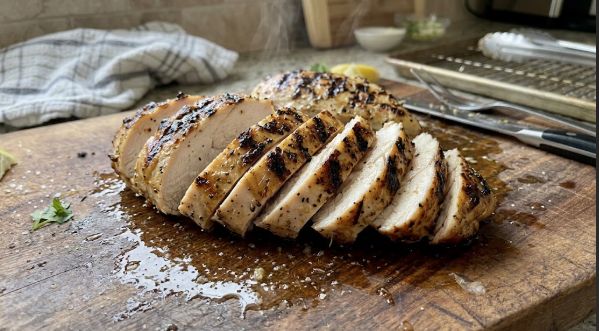
A squeeze of fresh lemon and a pinch of flaky salt at the end make the flavors pop. You can also brush the sliced chicken with a bit of fresh, unused marinade. Reserve it before the raw chicken goes in, or mix a small separate batch.
What to Serve with Grilled Chicken Breast
This chicken is easy to pair with almost anything. A few reliable ideas:
- Vegetables: Grilled zucchini, corn on the cob, asparagus, and bell peppers go on the grate right next to the chicken.
- Starches: Rice pilaf, baked potatoes, and garlic bread soak up the juices.
- Salads: A crisp Caesar, a Greek salad, or a simple arugula and tomato mix.
- Sandwiches: Slice it thin for wraps or sandwiches.
If you’re feeding a crowd, check these tips for hosting a summer BBQ on a budget. They’ll help with planning quantities and timing.
Storing, Freezing, and Reheating Leftovers
Cool leftovers quickly and refrigerate within 2 hours (or within 1 hour if it’s above 90°F / 32°C outside). The USDA says leftovers are safe in the refrigerator for 3 to 4 days .
Refrigerator: Store sliced or whole chicken in an airtight container for up to 3 to 4 days.
Freezer: Wrap tightly or use a freezer bag, squeezing out the air. Cooked chicken stays safe at 0°F (-18°C), but quality is best within about 4 months against FSIS freezing guidance]. Thaw in the refrigerator.
Reheating: Warm leftovers to 165°F (74°C). A skillet with a splash of broth or a covered dish in a 350°F (177°C) oven keeps them moist. Microwaving works if you cover the chicken and use 50% power.
Raw chicken in marinade: You can freeze raw chicken in the marinade. It marinates as it thaws in the fridge. Don’t count the freezer time toward your marinating window.
Leftover chicken is also great chopped into salad. Try it in chicken salad sandwiches for an easy lunch.
Variations
Pellet Grill
Preheat to 450°F (232°C), or use the highest setting. Apple, cherry, or pecan pellets give mild smoke that suits chicken. Hickory is stronger and can overpower the marinade, so go lighter.
Charcoal
Pile lit coals on one side to create a hot zone and a cool zone. Lump charcoal burns hotter and cleaner than briquettes. Sear over the coals, then slide the chicken to the cool side if you get flare-ups from the honey and oil.
Gas Grill with a Side Burner
Use the side burner to warm a small pan of extra marinade for glazing. Learn more about what a side burner is used for. Boil any marinade that touched raw chicken for at least 1 minute (see safety notes) before using it as a sauce.
Oven Backup
No grill? Roast on a wire rack set over a sheet pan at 425°F (218°C) for 18 to 25 minutes. A compact toaster oven can handle one or two breasts. Broil for the last 2 minutes if you want char.
Flavor Swaps
- Spicy: Add 1 to 2 tsp of chili paste or red pepper flakes. If you’re out, there are good chili paste substitutes.
- Herby: Replace oregano with 1 Tbsp fresh chopped rosemary and thyme.
- Asian-inspired: Swap the lemon for rice vinegar, add 1 tsp grated ginger and 1 tsp sesame oil.
- Smoky BBQ: Add 1 Tbsp tomato paste and 1 tsp chili powder.
Safety Notes
- Marinate in the fridge, never at room temperature. USDA recommends marinating poultry in the refrigerator for no more than about 2 days .
- Don’t reuse raw marinade as a sauce unless you boil it first. Safer still: set aside a portion before it touches the chicken.
- Keep cooked and raw separate. Use a clean plate and clean tongs after the chicken is done.
- Wash hands, boards, and tools with hot soapy water after handling raw chicken.
- Use a thermometer. Chicken must reach 165°F (74°C) to be safe.
Troubleshooting
| Problem | Likely Cause | Fix |
| Dry chicken | Overcooked or uneven thickness | Pound to ¾ inch; pull at 160–165°F |
| Burnt outside, raw inside | Heat too high or breast too thick | Use two-zone fire; finish on the cool side |
| Mushy texture | Marinated too long in acid | Keep it to 2–6 hours |
| Sticks to grates | Dirty or dry grates, or flipped too early | Clean and oil grates; wait for it to release |
| Bland flavor | Not enough salt or time | Check salt amount and give it at least 2 hours |
| Flare-ups | Oil dripping onto coals | Shake off excess marinade; move to the cool side |
Recipe Card Summary
Best Chicken Breast Marinade for the Grill
- Servings: 4
- Prep: 15 minutes
- Marinate: 2–6 hours
- Cook: 10–14 minutes
- Rest: 5–10 minutes
- Grill temp: 450°F (232°C), two-zone
- Pull temp: 160°F (71°C) with rest, or 165°F (74°C) directly; USDA minimum 165°F (74°C)
Ingredients: 2 lb (0.9 kg) boneless skinless chicken breasts, ¼ cup olive oil, ¼ cup lemon juice, 2 Tbsp Dijon, 2 Tbsp honey, 1 Tbsp soy sauce, 4 cloves garlic, 1 tsp smoked paprika, 1 tsp oregano, 1 tsp kosher salt, ½ tsp black pepper.
Short steps:
- Pound chicken to ¾ inch (2 cm).
- Whisk marinade; bag with chicken.
- Refrigerate 2–6 hours.
- Heat grill to 450°F (232°C); two zones.
- Grill 5–7 min per side, flip once.
- Check 165°F (74°C); rest 5–10 min; slice.
FAQ
How long should you marinate chicken breast?
Two to six hours is the sweet spot for this recipe. Even 30 minutes adds some flavor, but salt and seasoning need time to work. Avoid going past 12 hours with an acidic marinade, since the texture can turn mushy and chalky.
Can you marinate chicken too long?
Yes. Acid from lemon or vinegar breaks down the surface proteins, making the chicken mushy. For a citrus-based marinade, stay under 8 hours. Marinades with little or no acid, such as yogurt or soy-based mixes, handle longer times better.
What temperature do you grill chicken breast?
Grill at about 450°F (232°C) over direct heat, then move to the cooler side if it browns too fast. Cook until the thickest part reaches 165°F (74°C), the USDA’s safe minimum. Most breasts need 10 to 14 minutes total.
Can you reuse chicken marinade?
Not as-is. Raw chicken juices can contaminate it. If you want to use it as a sauce, bring it to a full boil for at least 1 minute first, or set aside a clean portion before adding the chicken.
Should you pat chicken dry after marinating?
Drain off the excess and lightly pat if the surface is very wet. A thin film of marinade helps with flavor and browning. Too much liquid creates steam and flare-ups, and heavy sugar coating can burn.
Why is my grilled chicken breast tough?
The usual causes are overcooking and uneven thickness. Pound breasts to ¾ inch, use a thermometer, and rest 5 to 10 minutes before slicing. Marinating also helps, as long as you stay under the time limits.
Conclusion
The best chicken breast marinade for the grill isn’t complicated. It’s a balance of oil, acid, salt, and sweetness, applied for a few hours and cooked over a hot, controlled fire.
Pound the breasts to an even thickness, don’t over-marinate, and trust your thermometer. Rest the meat before you slice it. Do those four things and you’ll get juicy, flavorful chicken whether you’re cooking on gas, charcoal, or pellets.
Make a double batch of the marinade next time and keep a second bag of chicken in the freezer for an easy weeknight dinner.
Laura Smith

I'm Laura, I like all the kind of delicious grilled foods which makes me hungry all the time I see them. That's why I built this blog to share with you all of my Grilling experiences, recipes, and all the tips about foods that I've learned from food experts.