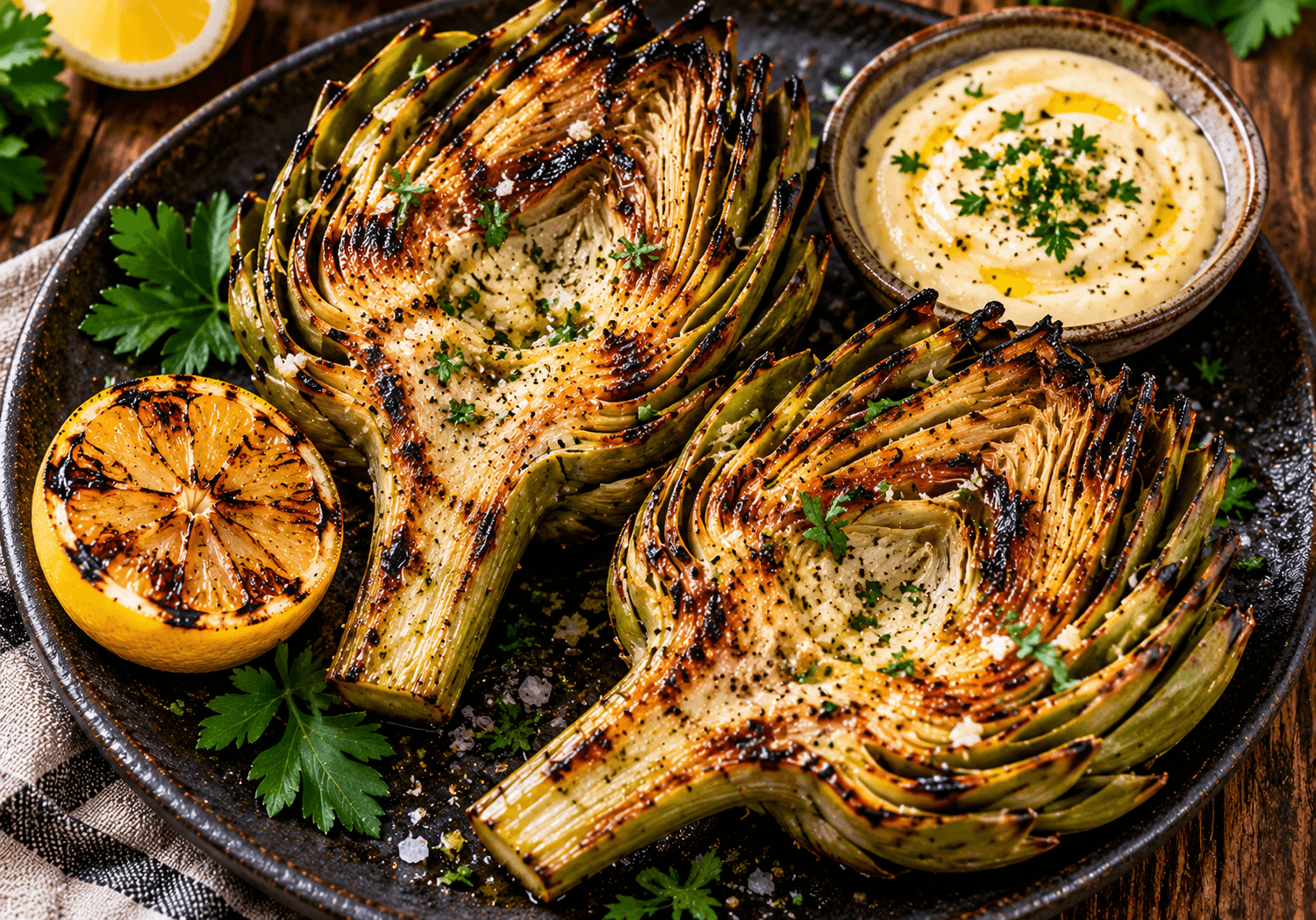
Grilled artichokes look fancy on a platter, but the method behind them is pure backyard cooking. You simmer or steam the artichokes until tender, split them open, brush the cut sides with a lemon-garlic oil, and finish them over live fire for deep char and a light smoky flavor. The grill does not do the heavy lifting — it does the flavor lifting.
I cook artichokes this way every spring when the globe artichokes at the market are at their best, and it has never once failed me. The reason this grilled artichokes recipe works where others fall short is simple: par-cooking. An artichoke needs 25 to 40 minutes of moist heat to become tender, and if you put a raw one on the grates, the outside burns to a crisp long before the heart softens. Steam first, sear second. That is the whole secret.
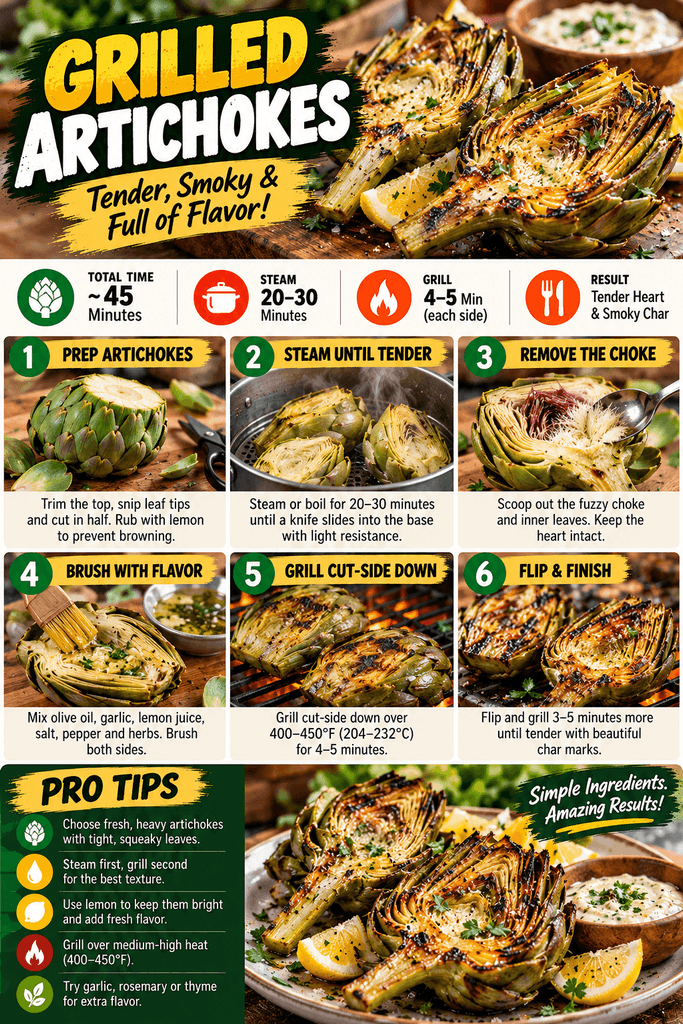
QUICK ANSWER: Steam or boil trimmed artichokes 20–30 minutes until a knife slides into the base with light resistance. Split in half, remove the choke, brush with lemon-garlic oil, and grill cut-side down over direct medium-high heat at 400–450°F (204–232°C) for 4–5 minutes, then flip and grill 3–5 minutes more. Total time: about 45 minutes. Pull when the heart is fork-tender with charred edges.
Why This Grilled Artichokes Recipe Works
Artichokes are a thistle. Every leaf is armored, the base is dense, and the edible heart sits buried behind a layer of fuzzy choke that you cannot eat. Throwing one raw on a grill is a recipe for a burnt exterior and a crunchy, bitter interior.
The two-stage method solves all of it:
- Moist heat first — boiling or steaming penetrates the dense layers and tenderizes the heart evenly.
- Dry heat second — a hot grill caramelizes the cut surface, adds char marks, and layers in smoke flavor that simmered artichokes never get.
- Cut-side down first — searing the flat, exposed face of the artichoke gives you maximum browning right where the eating happens.
- Acid in the oil — lemon juice in the brushing oil keeps the cut flesh bright and adds a fresh finish that balances the smoky char.
You end up with grilled artichokes that pull apart leaf by leaf, with a tender heart at the center worth fighting for.
Ingredients and Equipment
For the artichokes
- 4 large globe artichokes (about 10–12 oz / 280–340 g each) — look for tight, heavy, squeaky leaves
- 2 lemons, one quartered, one halved for the grill
- 2 tablespoons extra virgin olive oil (30 ml)
- 1 teaspoon kosher salt, plus more for the pot
- ½ teaspoon freshly ground black pepper
- 2 garlic cloves, finely grated or minced
- 1 tablespoon chopped fresh rosemary or thyme (optional but excellent)
Substitutions
- No fresh garlic? Use ½ teaspoon garlic powder in the oil instead.
- Out of lemons? A splash of white wine vinegar or apple cider vinegar works in both the pot and the oil.
- Fresh herbs? Dried herbs are fine in the oil — use 1 teaspoon — but fresh really does shine here.
Equipment
- A large pot with a steamer basket or insert (at least 6 quarts / 5.7 liters)
- Chef’s knife and kitchen shears
- Vegetable peeler
- Sturdy metal spoon or melon baller for the choke
- Pastry brush or grill basting brush
- Tongs
- Instant-read thermometer (handy for checking grill temp)
Choosing and Prepping the Artichokes
How to pick them
Grab artichokes that feel heavy for their size with leaves packed tight together. When you squeeze one, fresh leaves squeak against each other. Pass on any with split, dry, or brown-tipped leaves spreading open like a flower — that one is past its prime and will be stringy inside.
Baby artichokes work too, and you can often skip removing the choke entirely on small ones, since it has not developed. For this recipe, standard globe artichokes are what you want for the full leaf-by-leaf eating experience.
How to trim and cut them
[PHOTO: A globe artichoke on a cutting board mid-prep, with the top inch trimmed off and kitchen shears snipping the leaf tips]
- Rinse the artichokes under cold running water and shake them dry. Peel off any small, loose leaves around the base and trim the stem end flush.
- Use a vegetable peeler to strip the tough outer skin from the stem, then leave about 1–2 inches (2.5–5 cm) of stem attached. The peeled stem is tender and tastes like an extension of the heart — do not throw it away.
- Slice ¾ to 1 inch (2–2.5 cm) off the top of each artichoke with a sharp chef’s knife.
- Optional, for looks: snip the sharp tip off each remaining leaf with kitchen shears. This is mostly presentation, but it spares your dinner guests a few pokes.
- Rub every cut surface immediately with a lemon wedge. Artichokes oxidize and brown fast, and the acid keeps them looking fresh.
- Cut each artichoke in half lengthwise, from tip to stem.
Removing the choke
Open each half like a book and you will see the fuzzy purple choke sitting just above the heart. Slide a sturdy spoon or melon baller under it and scoop it out in one or two motions, along with the small inner leaves above it. Be careful not to gouge the heart underneath — that pale, dense surface is the best part of the whole vegetable. Rub the cavity with lemon as you go.
Step-by-Step Instructions
[PHOTO: Artichoke halves cut-side down on the grill grates with visible char marks, grill lid open]
- Set up the pot. Fill a large pot with 1–2 inches (2.5–5 cm) of water, add a generous pinch of salt, a squeeze of lemon, and the steamer basket. Bring it to a boil. No steamer? Submerge the artichokes in well-salted boiling water instead — they will take on a little more water but still grill up beautifully.
- Par-cook the artichokes. Place the halves cut-side down in the steamer, cover, and steam 20–30 minutes depending on size. If boiling whole (before splitting), plan on 25–35 minutes. Test with a paring knife pushed into the base: it should slide in with just a little resistance — think “al dente potato,” not mushy. You want them about 90% cooked, since the grill finishes the job.
- Dry them well. This step matters more than people think. Lift the artichokes out, drain cut-side down on a towel for 5 minutes, and pat dry. A wet artichoke steams on the grill instead of searing.
- Fire up the grill. Set up direct heat at medium-high, targeting 400–450°F (204–232°C) on the grate. On a charcoal grill, that means a full chimney of lit coals spread evenly; on gas, burners on medium-high. If you are new to lighting a charcoal fire, our guide on how to start a grill walks through it step by step.
- Make the brushing oil. Stir the olive oil, grated garlic, chopped herbs, a squeeze of lemon, salt, and pepper in a small bowl.
- Oil and season. Brush the cut side and cavity of each half generously with the lemon-garlic oil. Sprinkle lightly with more kosher salt.
- Grill cut-side down. Lay the halves flat on the grates, cut-side down. Close the lid and grill 4–5 minutes. Resist the urge to peek for the first 3 minutes — the surface needs uninterrupted contact to char.
- Flip and finish. Turn the artichokes over, brush the leaf side with any remaining oil, and grill another 3–5 minutes with the lid closed. The outer leaves should be lightly charred at the tips and the cut faces should carry deep brown grill marks. Toss the lemon halves on the grill during this stage — grilled lemon squeezed over the finished artichokes is a small upgrade that tastes like a big one.
- Rest and serve. Pull the artichokes off and rest 5 minutes. The flesh firms up slightly as it cools, and the flavor settles.
Time and Temperature Table
Table
| Stage | Heat | Time | Doneness Cue |
|---|---|---|---|
| Steam/boil (prep) | Boiling water or steaming | 20–30 min (halves) / 25–35 min (whole) | Knife slides into base with light resistance |
| Dry | — | 5 min | Surfaces patted dry |
| Grill, cut-side down | 400–450°F (204–232°C) direct | 4–5 min | Deep char marks on cut face |
| Grill, leaf-side up | 400–450°F (204–232°C) direct | 3–5 min | Leaf tips charred, heart fork-tender |
| Rest | Off heat | 5 min | — |
| Total | — | ~45–60 min | — |
How to Tell When Grilled Artichokes Are Done
Skip the thermometer here — this is a touch test. The artichoke is ready when:
- A fork slides into the heart with no real pushback, the way it would into a roasted potato.
- An outer leaf pulls free with a gentle tug, and the soft pale meat at its base comes away cleanly between your teeth.
- The cut face is browned to deep mahogany in spots, with some honest char on the leaf edges.
If the leaves are still snapping off like chips, the artichokes went to the grill undercooked. Slide them to the cool side of the grill, close the lid, and give them 5–8 more minutes of indirect heat before serving.
Resting, Slicing, and Serving
Let the grilled artichokes rest 5 minutes on a warm platter — this is short, but it lets the juices redistribute out of the steaming interior so they do not run all over the first person to grab a leaf. Finish with a squeeze of that charred lemon, a pinch of flaky salt, and a drizzle of good olive oil.
Set the platter in the middle of the table with a bowl for discarded leaves and napkins, because eating an artichoke is gloriously hands-on: pull a leaf, dip the fleshy base, scrape it between your teeth, and repeat, working inward. When you reach the purple-tipped inner leaves, you can eat them whole. What remains is the heart — trim off any last fuzz and eat every bit of it, stem included.
What to Serve With Grilled Artichokes
Artichokes pair naturally with grilled proteins and anything with lemon, garlic, or butter. My go-to plates:
- Grilled ribeye or tri-tip — the char on the beef echoes the char on the artichoke. It is a steakhouse-style side without the steakhouse bill.
- Grilled chicken or shrimp skewers — a light protein that will not fight the artichoke’s delicate flavor.
- A crisp green salad with lemon vinaigrette — acid cuts through the olive oil richness.
- Crusty grilled bread — for dragging through the dipping sauce and olive oil left on the platter.
- Smoked or grilled vegetables — asparagus, zucchini, or peppers turn this into a full grilled vegetable spread, the kind of spread worth building an entire summer cookout around.
If you are serving a crowd, artichokes make an impressive first course before the mains come off the fire — and they hold beautifully warm while everything else finishes.
Storing, Freezing, and Reheating Leftovers
Cool leftover grilled artichokes and refrigerate them in a shallow, airtight container within 2 hours of cooking — per the USDA’s guidance on leftovers and food safety, perishable food should not sit in the 40–140°F (4–60°C) danger zone longer than that, or 1 hour if it is above 90°F (32°C) outside.
They keep 3 to 4 days in the refrigerator, matching the cold food storage guidelines from FoodSafety.gov for cooked vegetable dishes and leftovers.
To reheat: The best method is back on the grill or in a 350°F (177°C) oven for 8–10 minutes, which re-crispers the leaves. A microwave works in a pinch — cover and heat in 30-second bursts — but the texture softens. If reheating in any dish mixed with other ingredients, bring everything to 165°F (74°C) internally, the USDA’s recommended safe minimum internal temperature for reheated leftovers.
Freezing: I do not recommend it. Artichoke flesh turns watery and a little stringy after freezing and thawing. This is one vegetable to enjoy fresh or within a few days.
Variations for Every Cooker
Charcoal or kettle grill. My favorite. Lump charcoal gives the cleanest, hottest sear and a whisper of smoke. Bank the coals for a two-zone fire so you have an escape hatch if the leaves char faster than expected. For more on running charcoal well, see our notes on using lump charcoal in an offset smoker — the same clean-burn principles apply at the kettle.
Pellet grill. Set 425°F (218°C) and use a mild wood like oak, pecan, or alder. You will get a gentler char and a more noticeable smoke flavor. Pellet grills make this recipe nearly hands-off once the lid closes. If you are shopping for one, our roundup of the best pellet grills for beginners covers the models that hold steady temps like this well.
Gas grill. Preheat on high for 10–15 minutes, then throttle to medium-high. Gas runs a touch wetter than charcoal, so really dry the artichokes and keep the lid closed as much as possible.
Grill-side boil shortcut. Cooking the artichokes in a pot on the side burner of a gas grill keeps the steam outdoors and everything moving fast — par-cook, drain, and sear without ever going inside.
Oven backup (no grill). Broil the oiled halves cut-side up 4–6 inches from the element for 6–8 minutes until blistered and browned. You lose the smoke, keep most of the caramelization.
Marinated version. Toss the par-cooked halves in a zip bag with the lemon-garlic oil plus a splash of balsamic and refrigerate 1–4 hours before grilling. The flavor runs deeper; just pat the surfaces drier before they hit the grates.
Troubleshooting Common Problems
Table
| Problem | Cause | Fix |
|---|---|---|
| Charred outside, crunchy inside | Grilled raw or under-steamed | Steam longer before grilling; the knife test never lies |
| Gray, steamed-looking surface | Artichokes went on wet / grill not hot enough | Pat completely dry; preheat a full 10–15 min and hold 400°F+ |
| Sticking to the grates | Grates dirty or un-oiled | Scrape and oil grates right before the artichokes go on |
| Bitter or stringy heart | Overmature artichoke, not a cooking error | Buy heavy, tightly closed artichokes; squeaky leaves are the sign |
| Leaves drying out on the grill | Cooked too long over direct heat | Move to indirect side, lid down, and finish gently |
PITMASTER TIP: Dry the par-cooked artichokes cut-side down on a towel for a full 5 minutes, then brush with oil and let them sit 2 more minutes before grilling. That 7-minute window is the difference between grill marks that sear on and a surface that just steams. Also, save the steaming liquid — strained, it makes a surprisingly good base for soups and risotto.
COMMON MISTAKE: Skipping the par-cook and throwing raw artichokes straight on the grill. A raw artichoke needs roughly 40 minutes of heat to tenderize, and direct fire will incinerate the outside in 10. Every grilled artichokes recipe that skips steaming trades tenderness for charcoal. Steam first, always.
Recipe Card Summary
Grilled Artichokes with Lemon-Garlic Oil — Serves 4 (2 halves each) | Prep: 20 min | Par-cook: 20–30 min | Grill: 8–10 min | Total: ~50 min
Ingredients: 4 globe artichokes, 2 lemons, 2 tbsp olive oil, 2 garlic cloves, 1 tbsp chopped rosemary or thyme, 1 tsp kosher salt, ½ tsp black pepper.
Short steps: Trim, halve, and choke the artichokes. Steam 20–30 min until a knife slides in with light resistance. Dry well. Brush cut sides with lemon-garlic oil. Grill cut-side down 4–5 min at 400–450°F (204–232°C), flip, grill 3–5 min more. Rest 5 min. Serve with grilled lemon and dipping sauce.
Dipping sauce (stir together): ½ cup mayonnaise (120 ml), 2 tbsp lemon juice, 1 grated garlic clove, 1 tbsp minced parsley, salt and pepper. Chill 30 minutes for the best flavor — and this sauce, like all good cookout food, fits right into a laid-back backyard spread like the kind we plan in our tips for hosting a summer BBQ on a budget.
FAQ
Do you have to boil artichokes before grilling?
Yes, or steam them — some form of par-cooking is essential. A raw artichoke is simply too dense to tenderize over direct fire before the outside burns. Twenty to thirty minutes of steam, then 8–10 minutes on the grill, gives you tender artichokes with real char. [PHOTO: Close-up of a knife sliding into the base of a steamed artichoke half showing tenderness]
How long do you grill artichokes?
Over direct medium-high heat at 400–450°F (204–232°C), grill par-cooked artichoke halves 4–5 minutes cut-side down and 3–5 minutes after flipping — 8–10 minutes total. The total recipe time is about 45–60 minutes once steaming, trimming, and resting are included.
How do you know when grilled artichokes are done?
Use touch, not temperature. A fork should slide into the heart easily, and an outer leaf should pull away with a gentle tug. Visually, the cut face should carry deep brown grill marks with lightly charred leaf tips. If leaves snap off rigid, finish them over indirect heat for 5–8 minutes.
Can you grill artichokes from a jar or can?
You can, and it is fast: drain and rinse them well, pat dry, oil lightly, and grill over high heat 2–3 minutes per side just for char. The texture is softer and the flavor flatter than fresh grilled artichokes, but it works when fresh artichokes are out of season.
Can you prep artichokes ahead of time?
Yes. Trim, halve, and choke them up to a day ahead — rub cut surfaces with lemon, store submerged in acidulated water in the fridge, and steam just before grilling. You can also fully par-cook them a day ahead, refrigerate, and grill to order, adding a few extra minutes on the grates.
What do you serve with grilled artichokes?
They pair with grilled steak, chicken, shrimp, or other vegetables, plus a lemony salad and crusty bread. For dipping, classic choices are aioli, remoulade, melted butter, or a simple lemon-garlic mayonnaise, and charred lemon squeezed over the top finishes everything.
Conclusion
Grilled artichokes reward a little patience with a lot of flavor: a smoky char over a silky, tender heart, best eaten slowly with your hands and a good dipping sauce. The formula never changes — steam until a knife slides in, dry them thoroughly, sear hard over 400–450°F (204–232°C), rest five minutes. Master that once and you can run this recipe on charcoal, gas, or pellets for the rest of your grilling life.
Fire up the grill, pick four heavy artichokes this week, and put this method to the test. And once the meal is over and the coals are out, cover the grill and let it cool — a good cover, like the ones in our guide to heavy-duty grill covers, keeps your cooker ready for the next round.
Laura Smith

I'm Laura, I like all the kind of delicious grilled foods which makes me hungry all the time I see them. That's why I built this blog to share with you all of my Grilling experiences, recipes, and all the tips about foods that I've learned from food experts.