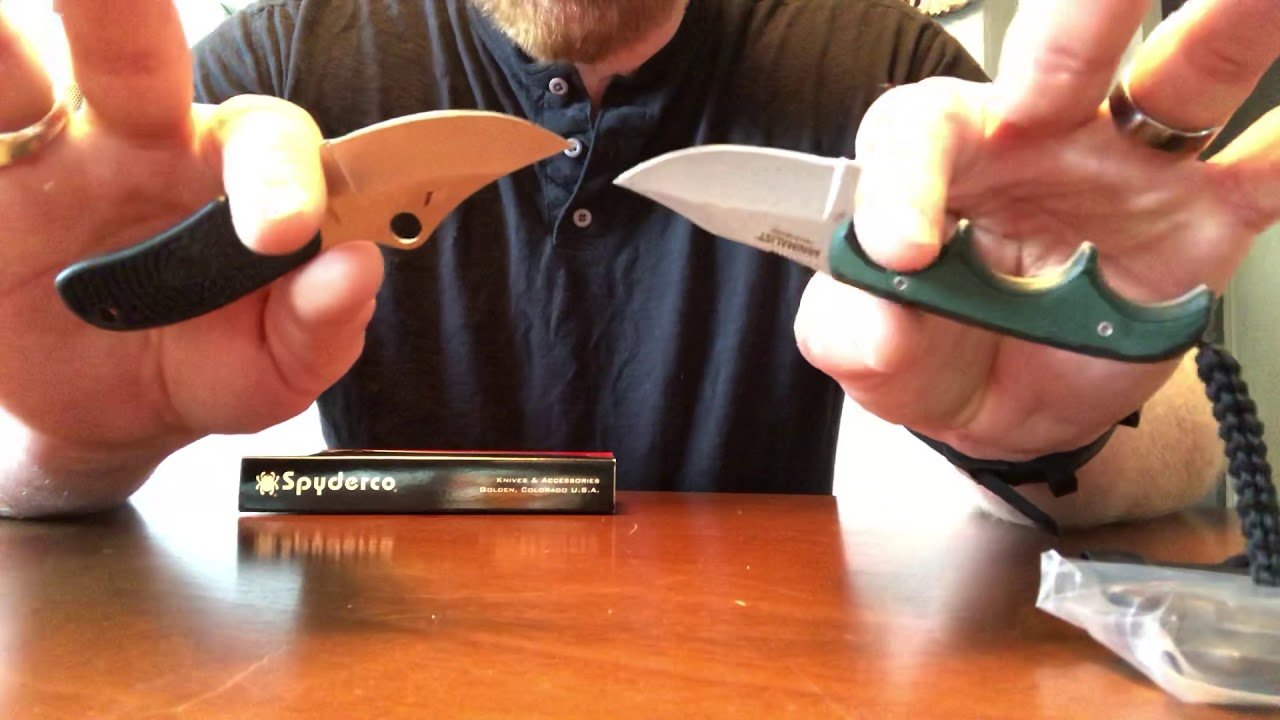
You never notice a missing knife until the exact second you need one. The bag of lump charcoal won’t tear open. The zip tie on your new grill cover won’t budge. The bait bag is soaked, your hands are slippery, and the line on the boat cleat has swollen tight in the salt air. A small fixed blade hanging around your neck turns every one of those moments into a one-second job, and two of the most talked-about little knives for that job are the Spyderco ARK and the CRKT Minimalist.
On paper, they look like twins. Both are tiny neck knives about 5 inches (13 cm) long, and both weigh less than 2 ounces (57 g). In your hand, though, they are built for very different people. The Spyderco ARK vs CRKT Minimalist choice really comes down to one question: do you need a knife that will shrug off rust no matter what, or a grippy, do-it-all blade that costs less than half as much?
Below, we break down seven facts that actually matter: steel, blade shape, grip, sheath and carry, weight, price, and what each knife was designed to do. By the end, you’ll know exactly which one belongs on your boat, at your campsite, beside your grill, or in your everyday carry.
Quick Answer: Choose the Spyderco ARK if you work around saltwater, fish, brine or sweat and want a knife that resists rust almost completely, thanks to its nitrogen-based H-series steel. Choose the CRKT Minimalist if you want an affordable, comfortable everyday utility blade, in several blade shapes, for roughly 35–45. Neither replaces a real kitchen or butcher knife.
[PHOTO: Spyderco ARK and CRKT Minimalist side by side on a weathered cutting board, sheaths beside them]
Spyderco ARK vs CRKT Minimalist: Side-by-Side Specs
| Spec | Spyderco ARK | CRKT Minimalist (Bowie version) |
| Overall length | 4.98 in (126 mm) | 5.13 in (130 mm) |
| Blade length | 2.56 in (65 mm) | 2.13 in (54 mm) |
| Cutting edge | 2.1 in (53 mm) | about 2 in (51 mm) [VERIFY] |
| Blade thickness | 0.08 in (2 mm) | 0.11 in (2.7 mm) |
| Blade steel | H-1 on the original FB35PBK; Spyderco’s current listing shows H-2 [VERIFY on your model] | 5Cr15MoV stainless (some larger Minimalist models use D2) |
| Hardness | Not published by Spyderco | 55–57 HRC (retailer figure) [VERIFY] |
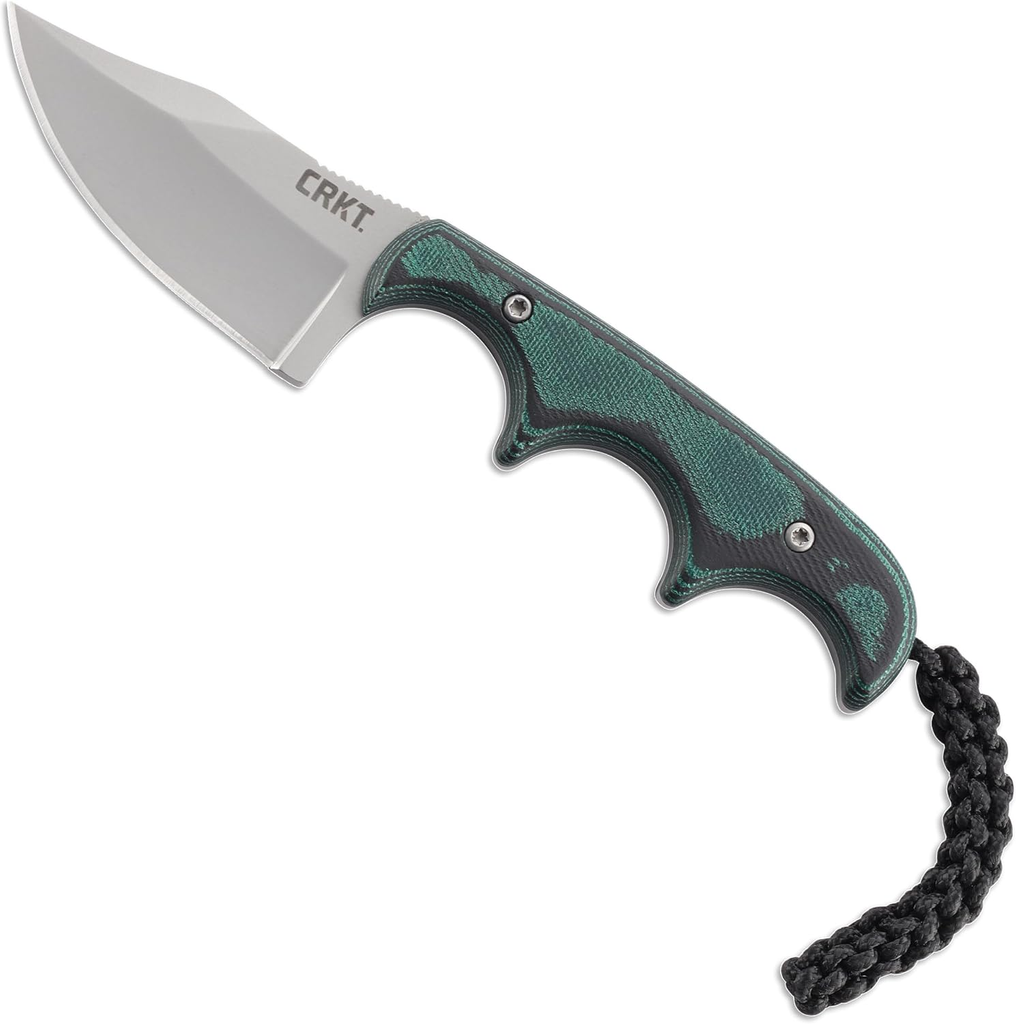
| Handle | Molded FRN (fiberglass-reinforced nylon) | G-10 or Micarta slabs, depending on model |
| Weight (knife only) | 0.9 oz (26 g) | 1.6 oz (45 g) |
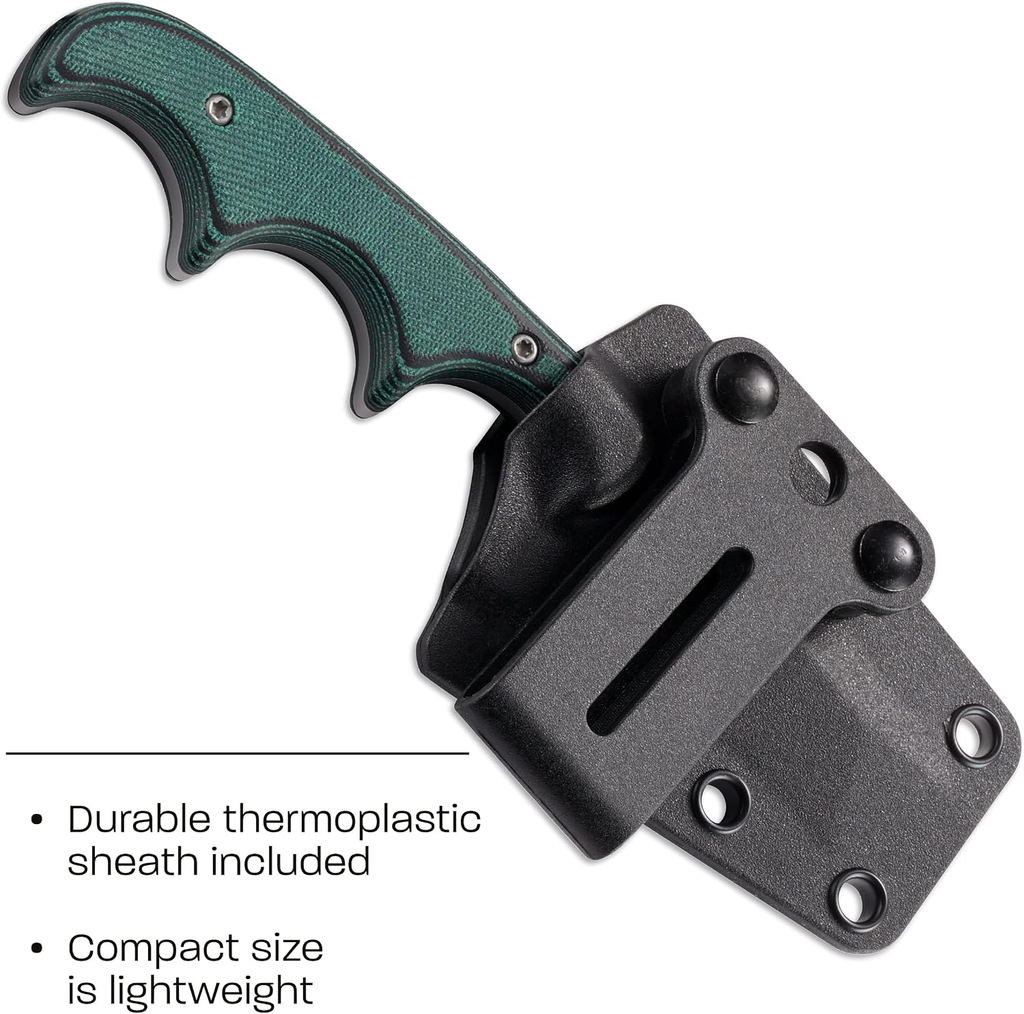
| Sheath | Injection-molded polymer neck sheath, breakaway ball chain | Thermoplastic (Zytel) sheath, neck cord, belt-mount options |
| Blade shapes | Clip point (plain or serrated) | Bowie, drop point, tanto, Wharncliffe, cleaver, Persian and more |
| Made in | Japan | China |
| Typical price | About 90–125 | About 35–45 |
| Designed by | John Shirley and Sam Owens | Alan Folts |
| Where to Buy? | Check Price on Amazon | Check Price on Amazon |
Specs come from the Spyderco ARK product page and the CRKT Minimalist Bowie product page. Minimalist dimensions change slightly from one blade shape to the next, so always check the exact model you’re buying.
7 Facts to Consider Before You Choose
Fact 1: Steel and Rust Resistance Is the Biggest Difference
The ARK’s whole personality comes from its steel. Spyderco uses its H-series steels, which use nitrogen instead of carbon to harden the blade. Spyderco describes this nitrogen-based alloy as extremely corrosion resistant. The original ARK (model FB35PBK) shipped in H-1, and Spyderco’s current product page lists H-2. Both belong to the same rust-resistant family.
In practice, that means you can cut bait, rinse the blade off in the ocean and stuff it back in its sheath without finding orange spots the next morning. Very few knife steels can say that. The trade-off is that H-series plain edges are generally considered softer than mainstream stainless steels. They tend to roll rather than chip, and you’ll touch them up a little more often. That is why many saltwater users swear by the serrated versions.
The Minimalist uses 5Cr15MoV, a budget Chinese stainless steel. Retailers list it at about 55–57 HRC. It’s easy to sharpen at home, takes a keen edge quickly and resists stains reasonably well in everyday use. Leave it wet and salty overnight, though, and you can get spotting.
Pitmaster Tip: Whatever knife you carry near food, brine or saltwater, rinse it in fresh water and dry it before it goes back in the sheath. A wet sheath is where rust starts.
Fact 2: Blade Shape Decides What Each Knife Cuts Best
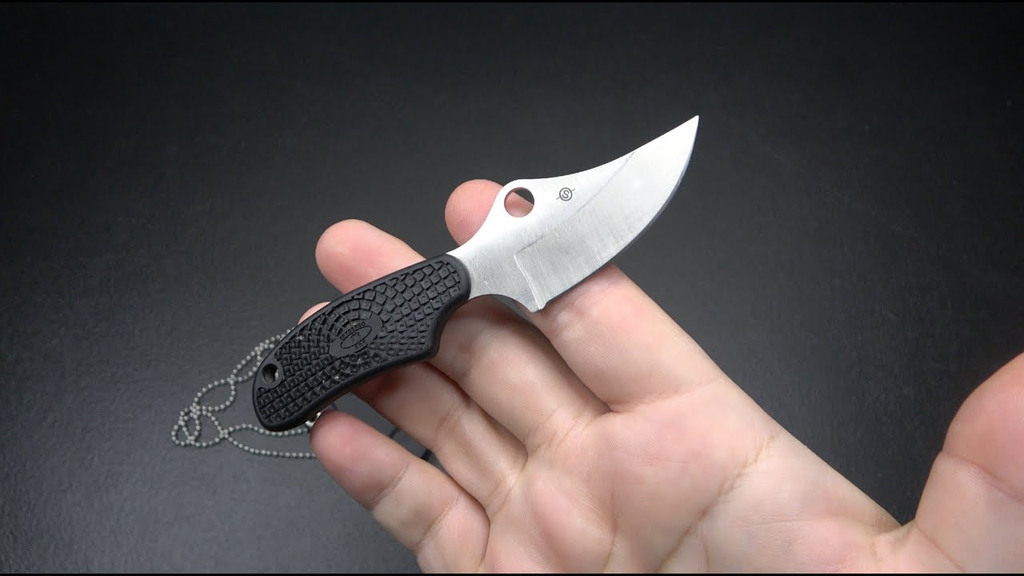
The ARK has one shape: a clip point with a deeply curved belly. That curve packs a lot of slicing power into a short blade, and the clip point gives you a sharp, strong tip for piercing. The edge is only about 2.1 inches (53 mm), but because it’s curved, it cuts cord, rope, plastic packaging and fishing line with surprisingly little effort.
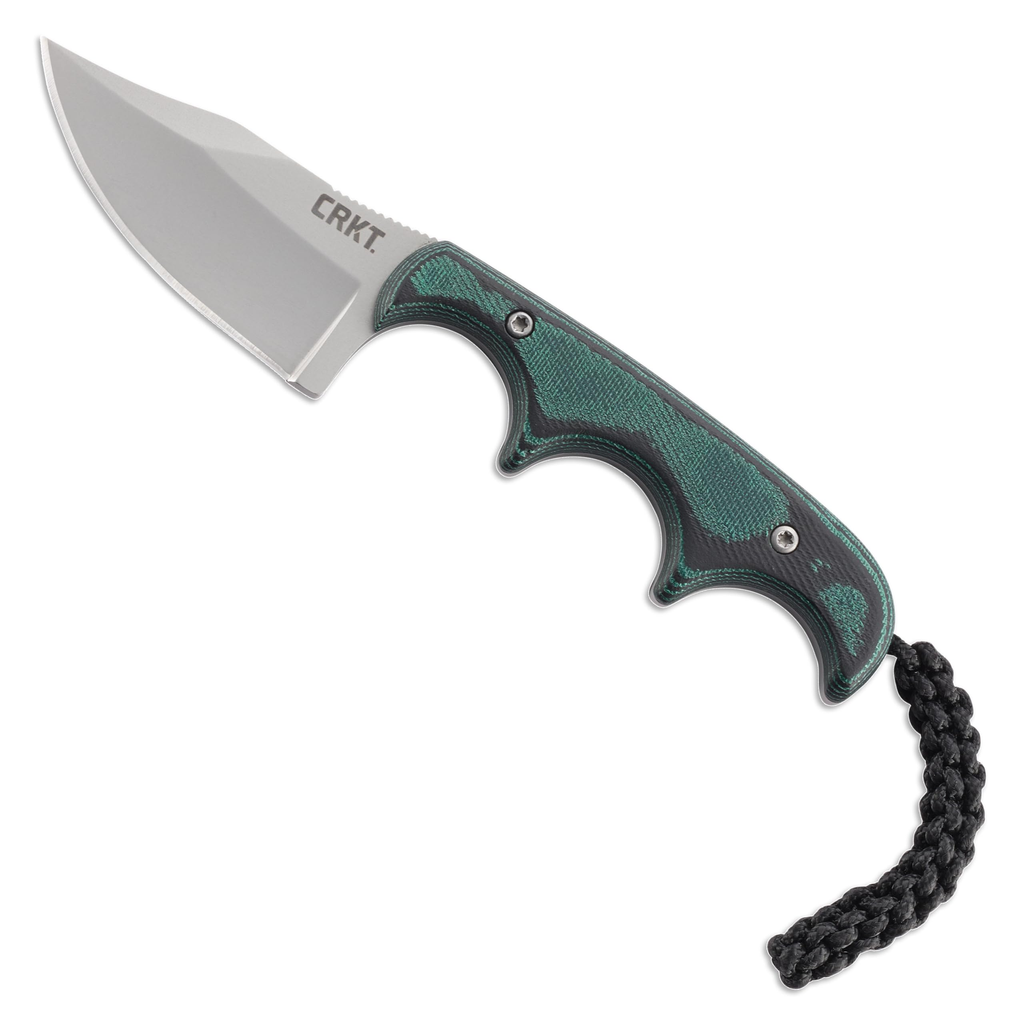
The Minimalist is a family, not a single knife. You can pick a Bowie (clip point), drop point, tanto, Wharncliffe, cleaver, Persian and others. For everyday utility, the drop point and Wharncliffe are the most practical, because they give you a straight, controllable edge and a precise tip. The Minimalist’s blade is also thicker at 0.11 inches (2.7 mm) versus the ARK’s 0.08 inches (2 mm), so it feels sturdier for light scraping and harder cutting.
If your real goal is trimming fat off a brisket or breaking down a whole chicken, a 2-inch neck knife is the wrong tool. Grab one of the best knives for cutting meat instead and keep the neck knife for everything around the cook.
[PHOTO: close-up of the ARK’s curved clip point next to the Minimalist drop point, edges facing the camera]
Fact 3: Grip and Handle Comfort
Small knives live or die by their grip. The ARK’s handle is molded FRN with a textured surface and a single index-finger groove, about 2.33 inches (59 mm) long. It’s built to lock into a closed fist and stay put with wet hands, which matters on a boat or in the rain.
The Minimalist’s handle is longer, at about 3 inches (76 mm) on the Bowie version, and uses G-10 or Micarta scales. Alan Folts shaped it so your fingers wrap around it fully, and some versions add jimping on the spine for your thumb. If you have large hands, the Minimalist is the more comfortable knife for longer cutting jobs.
Common Mistake: Judging a neck knife only by blade length. With knives this small, the handle decides how much control you have. If you can’t get three fingers on it, you’ll feel it the first time you cut something stubborn.
Fact 4: Sheath, Carry and Draw
Both knives are designed to hang upside down around your neck, which keeps them out of the way and quick to reach.
The ARK comes with an injection-molded polymer neck sheath and a breakaway ball chain. If the chain snags on something, it pulls apart instead of choking you, which is a smart safety feature. Some owners say the retention is very tight out of the box and the draw takes practice.
The Minimalist ships with a thermoplastic (Zytel) sheath, a neck cord and belt-mount options, so it’s easier to move from neck to belt to pack strap. That flexibility is a real plus if you don’t love wearing anything around your neck while you cook or work.
Test retention before you trust either one: hold the sheathed knife upside down and shake it firmly. It should stay put.
Fact 5: Weight and Size
Both knives disappear once you put them on. The ARK weighs just 0.9 ounces (26 g) on its own and about 2.0 ounces (57 g) with its sheath, according to Spyderco. That’s lighter than most key rings. The Minimalist Bowie weighs 1.6 ounces (45 g) for the knife alone, per CRKT.
The ARK’s longer blade (2.56 in vs 2.13 in) gives it slightly more reach, while the Minimalist’s thicker stock and longer handle make it feel like more knife in the hand.
Fact 6: Price and Value
This is where the two knives split hard. The ARK typically sells for about 90–125 and is made in Japan. You’re paying for specialty steel and Japanese manufacturing. The Minimalist usually sells for about 35–45 and is made in China.
For the price of one ARK, you could buy two or three Minimalists: one for the tackle box, one for the camping bin and one for the grill station. If rust isn’t a problem where you live and work, the Minimalist is the better value.
Fact 7: What Each Knife Was Designed to Do
Design intent explains almost everything above. Spyderco calls the ARK, short for “Always Ready Knife,” a purpose-designed personal-defense knife conceived by U.S. Army combat veteran John Shirley and knifemaker Sam Owens. The fist-lock grip, curved slicing edge and corrosion-proof steel all point to a knife meant to be worn every day, everywhere, in any weather.
The CRKT Minimalist, designed by Alan Folts, is described by CRKT as a compact fixed blade neck knife. It’s an everyday utility tool first. The range of blade shapes, the fuller handle and the flexible sheath all make it better at ordinary chores: opening boxes, cutting twine, slicing an apple at camp.
Fixed-blade and neck-carry laws vary by state and country. Check your local rules before you carry either knife in public.
Spyderco ARK vs CRKT Minimalist: Which Is Best for What?
| Job | Better pick | Why |
| Saltwater fishing, boating, cutting bait | Spyderco ARK | H-series steel shrugs off salt and moisture |
| Hiking, running or sweaty everyday carry | Spyderco ARK | Lightest option, won’t rust against your skin |
| Opening charcoal bags, cutting twine and zip ties at the grill | CRKT Minimalist | Cheap, grippy and easy to resharpen |
| Camping chores and light camp food prep | CRKT Minimalist | Fuller handle and more practical blade shapes |
| Large hands or longer cutting sessions | CRKT Minimalist | Longer, fuller handle |
| Gift for a griller or angler under $50 | CRKT Minimalist | Strong value for the money |
| Trimming brisket, breaking down chicken | Neither | Use a proper butcher knife |
| Opening oysters | Neither | Use a dedicated shucking knife |
Around the cook, a neck knife is a support tool. It’s perfect for cutting the bag when you’re starting your grill, snipping butcher’s twine or opening a vacuum-sealed pack of ribs. For real meat work, a full-size blade from our best butcher knives guide is safer and far faster. And if you’re shucking oysters at the cookout, a stubby neck knife can slip; reach for a dedicated oyster shucking knife and a pair of cut-resistant shucking gloves instead.
Choose the Spyderco ARK If…
- You fish, kayak, boat or live near the coast.
- You sweat a lot or carry a knife against your skin all day.
- You want the lightest possible fixed blade, at about 0.9 oz (26 g).
- You prefer a strong fist grip and a curved slicing edge.
- Rust resistance is worth paying roughly 90–125 to you.
Choose the CRKT Minimalist If…
- You want a dependable utility knife for about 35–45.
- You’d like to choose your blade shape (drop point and Wharncliffe are the most practical).
- You have larger hands or want a fuller grip.
- You want to switch between neck, belt and pack carry.
- You’d rather own two knives (one for the car, one for the grill) than one premium blade.
Cost Comparison: What You Really Pay
Up front, the ARK costs roughly two to three times as much as a Minimalist. Over time, the gap can narrow if you live in a salty, humid climate. A rust-pitted budget knife gets replaced, while a well-kept ARK can last for many years. In a dry climate, or if you carry mostly around the house, yard and grill, the Minimalist delivers more knife for the money.
Prices change often, so check current listings before you buy. The ranges here reflect typical retail pricing at the time of writing.
How to Care for and Sharpen Each Knife
After cutting food: If you slice raw meat, fish or bait, wash the blade in hot, soapy water and dry it completely. Cleaning utensils and surfaces after raw meat is one of FoodSafety.gov’s four core steps to food safety. Don’t put either knife in the dishwasher.
After saltwater: Rinse the ARK in fresh water and let both the knife and sheath air-dry. With the Minimalist, also wipe on a thin coat of food-safe mineral oil now and then to keep spots away.
Sharpening the ARK: H-series steel is sharpened like other stainless steels. Use a ceramic rod or a guided system, hold the factory angle and use light strokes. Plain edges benefit from frequent quick touch-ups instead of rare heavy sessions. Serrated versions are best sharpened with a tapered ceramic rod, one scallop at a time.
Sharpening the Minimalist: 5Cr15MoV sharpens quickly on a medium whetstone or pull-through ceramic. Finish with a few stropping passes, and you’ll have a shaving edge in minutes.
Sheath care: Shake out grit and sand, and let the sheath dry fully before you put the knife back in. Trapped moisture is the most common cause of rust on any carry knife.
[PHOTO: sharpening the Minimalist on a ceramic rod at the grill station]
Frequently Asked Questions
Is the Spyderco ARK rustproof?
The ARK is about as close to rustproof as knife steel gets. Its H-series steel uses nitrogen instead of carbon, so it resists corrosion even in saltwater. No steel is fully maintenance-free, though. Rinse it in fresh water after salt exposure and dry the sheath to keep it looking new.
Is the CRKT Minimalist good for everyday carry?
Yes. The Minimalist is one of the most popular budget neck knives for everyday carry. It’s light, about 1.6 oz (45 g), comfortable in the hand and comes in several blade shapes. Its 5Cr15MoV steel sharpens easily, though it needs drying after wet use to avoid spotting.
Which CRKT Minimalist blade shape is best?
For most people, the drop point or Wharncliffe is the best all-around choice. The drop point handles general cutting and light camp food prep well, and the Wharncliffe gives a straight edge and precise tip for packaging, cord and detail work. The Bowie and tanto lean more toward looks and piercing.
Is the Spyderco ARK worth the money?
The ARK is worth it if corrosion is your main problem, for example if you fish, boat, live near the coast or carry against sweaty skin. If you mostly cut boxes, twine and charcoal bags in a dry climate, the cheaper Minimalist does the same everyday jobs for less than half the price.
Can you use a neck knife for food prep?
You can use either knife for light food tasks such as slicing cheese, sausage or fruit at camp. Wash the blade with hot, soapy water afterward, especially after raw meat or fish. For trimming, carving or butchering, use a full-size kitchen or butcher knife, which is safer and more efficient.
Is it legal to carry a neck knife?
It depends on where you live. Fixed-blade, concealed-carry and blade-length rules vary by state, city and country, and neck knives are often treated as fixed blades. Check your local laws before carrying either the Spyderco ARK or the CRKT Minimalist in public, at work or while traveling.
Conclusion: Spyderco ARK vs CRKT Minimalist
The Spyderco ARK vs CRKT Minimalist debate isn’t about which knife is “better”. It’s about where you’ll use it. The Spyderco ARK is a specialist: feather-light, Japanese-made and built from steel that laughs at saltwater and sweat. If you fish, boat, hike or live by the coast, it’s the knife that will still look new years from now.
The CRKT Minimalist is the everyday workhorse. It’s affordable, comfortable, comes in a blade shape for every taste and is easy to keep sharp. For cutting twine, zip ties and charcoal bags at the grill or handling chores at camp, it gives you the most knife for your money.
Our recommendation: buy the ARK for wet, salty, sweaty carry, and buy the Minimalist for everything else. Whichever you choose, keep a real kitchen knife for the meat itself. If you’re upgrading those too, our Santoku vs Nakiri comparison and best sushi knife guide are good next reads.
Eliza Sadler

Eliza Sadler is a professional journalist with over four years of experience. She also works as a freelancer and writes many articles for Bestessay.com. She always focused on doing quality work to achieve her goals and objectives.