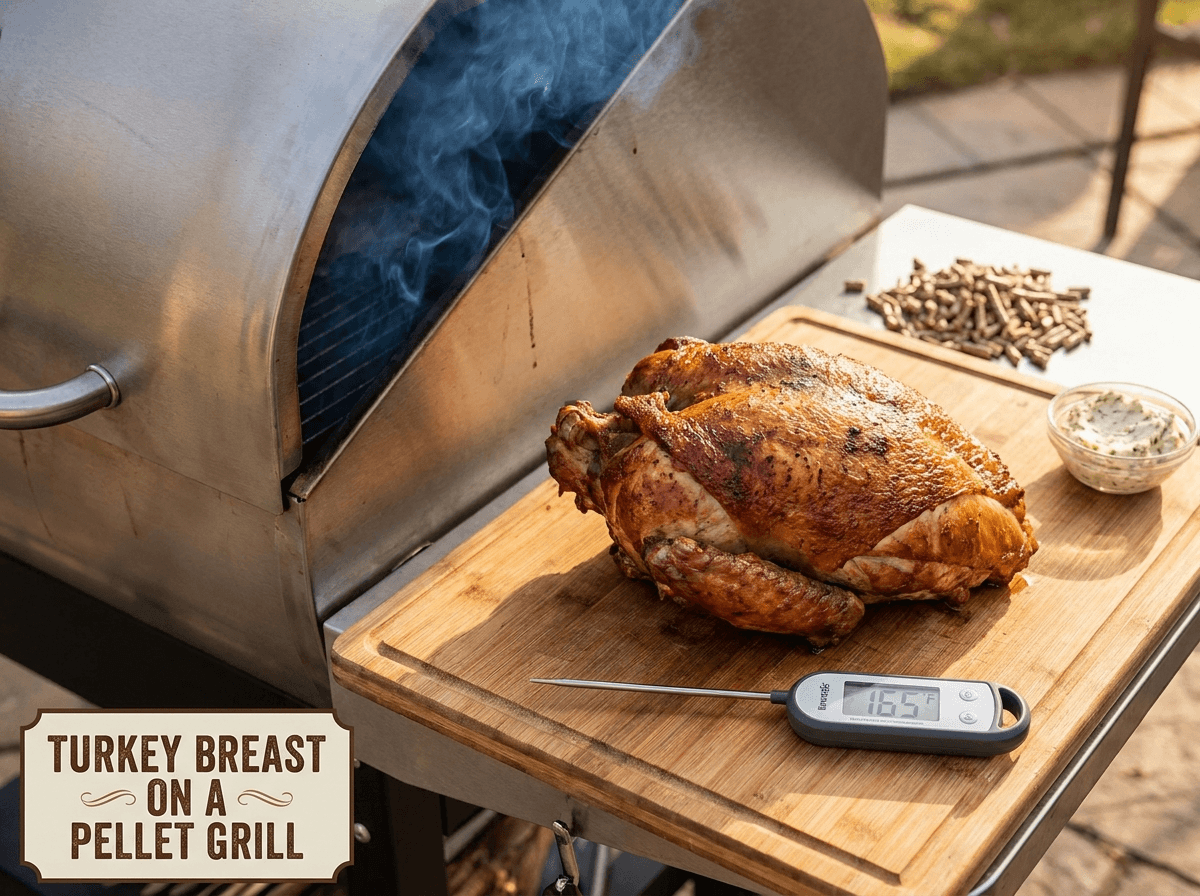
A turkey breast on a pellet grill is the easiest way to get smoked turkey without committing to a whole bird. It fits on any grate, cooks in about 2 to 3 hours, and feeds a family dinner or a small holiday table. Your grill holds the heat steady, so you can focus on seasoning and thermometer work.
This recipe covers everything for bone-in and boneless breasts. You’ll get a dry brine, a butter rub, a time and temp chart, pull temperatures, and fixes for common problems. If you’re planning a full holiday spread, our Thanksgiving smoker recipes round out the menu.
Quick Answer: Smoke a 6 to 8 lb (2.7 to 3.6 kg) bone-in turkey breast at 275°F (135°C) for about 2 hours 20 minutes to 3 hours. Pull it when the thickest part reads 165°F (74°C), the USDA’s safe minimum. Rest 20 minutes before carving. Use a thermometer, not the clock.
Why This Turkey Breast Recipe Works
Turkey breast is lean, so it dries out fast. This recipe fixes that with a few simple choices:
- Dry brine: Salt seasons the meat deeply and helps it hold moisture.
- Air-dried skin: Leaving the breast uncovered in the fridge dries the skin so it crisps on the grill.
- 275°F (135°C) cook temp: Hot enough to render fat and brown the skin, cool enough to take on real smoke.
- Butter under and over the skin: Fat protects the lean meat and adds flavor.
- Pulling at 165°F (74°C): Cooking past that point is where the dryness starts.
A pellet grill also takes away the biggest variable, fire management. You set the dial, and the controller feeds pellets to hold the temperature. That makes this a great first smoke for beginners.
Ingredients and Equipment
Ingredients (serves 8 to 10)
- 1 bone-in, skin-on turkey breast, 6 to 8 lb (2.7 to 3.6 kg)
- 2 tablespoons plus 1 teaspoon Diamond Crystal kosher salt (use about half if you use Morton)
- 1 tablespoon black pepper
- 2 teaspoons garlic powder
- 2 teaspoons smoked paprika
- 1 teaspoon onion powder
- 4 tablespoons (57 g) unsalted butter, softened
- 1 tablespoon fresh thyme or rosemary, finely chopped (optional)
- Apple, cherry, or pecan pellets
Equipment
- A pellet grill (Traeger, Pit Boss, Camp Chef, Z Grills, Weber SmokeFire, or similar)
- An instant-read thermometer and a leave-in probe thermometer
- A wire rack and rimmed sheet pan for brining
- A disposable foil pan (optional, to catch drippings)
- Paper towels and aluminum foil
- A sharp carving knife
Substitutions
- Butter: Use olive oil or avocado oil if you want a higher smoke point.
- Boneless breast: Works well, but cooks faster. See the chart below.
- Rub: Swap in your favorite poultry rub, but go easy on salt since you already dry brined.
- No pellet grill? See the variations section for offset, charcoal, and oven options.
If you’re still shopping for a cooker, our guide to the best pellet grills for beginners covers models that hold temperature well.
Choosing and Prepping the Turkey Breast
Pick the right breast
Look for a bone-in, skin-on breast. The bone slows cooking and protects the meat, and the skin shields the breast from drying out. Boneless breasts work, but they have less margin for error.
Check the label carefully. Many store-bought breasts are “enhanced” with a salt solution. If the package says “contains up to 8% solution” or “self-basting,” skip the dry brine or cut the salt to a light sprinkle.
Thaw safely
Never smoke a partially frozen breast. The USDA says to thaw turkey in the refrigerator, allowing about 24 hours for every 4 to 5 lb (1.8 to 2.3 kg), in its turkey thawing and cooking guide. A 7 lb breast takes about 1.5 to 2 days.
Trim and dry
Pat the breast completely dry with paper towels. Trim any loose, ragged skin or excess fat from the edges. Leave the skin intact on top.
Dry brine for 12 to 24 hours
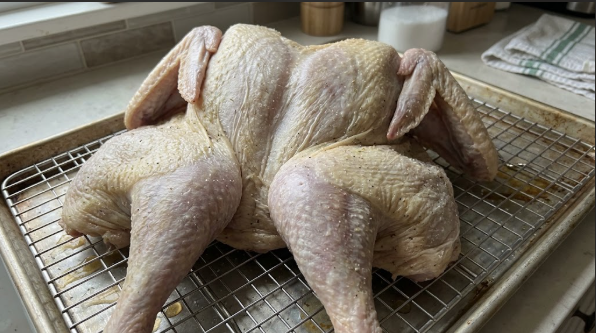
Rub the salt all over the breast, including under the skin. Place it on a rack set over a sheet pan and refrigerate uncovered for 12 to 24 hours. The salt first pulls out moisture, then the meat reabsorbs it as a seasoned brine.
If you’re short on time, even 4 to 6 hours helps. The skin will also dry as it sits, which gives you better texture later.
Pitmaster Tip: Leave the breast uncovered in the fridge. The cold, dry air pulls moisture off the skin. Dry skin crisps. Wet skin turns rubbery.
Step-by-Step: Turkey Breast on a Pellet Grill
Step 1: Preheat the grill
Fill the hopper with apple, cherry, or pecan pellets. Set the grill to 275°F (135°C) and let it preheat for 15 minutes with the lid closed. If your grill has a smoke setting, run it for the first 20 to 30 minutes for extra flavor, then switch to 275°F.
Our guide on how to start a grill covers startup basics if you’re new to your cooker. Pellet grills have their own routine, so check your manual too.
Step 2: Season the breast
Take the turkey out of the fridge about 20 minutes before cooking. Mix the pepper, garlic powder, paprika, and onion powder. Don’t add more salt.
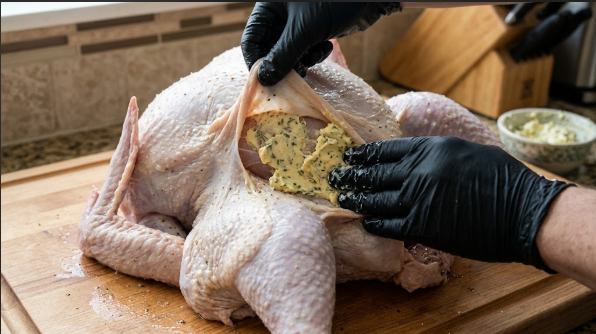
Carefully loosen the skin from the meat with your fingers. Spread half the butter under the skin directly on the meat. Rub the rest of the butter over the skin, then sprinkle the seasoning on top.
[PHOTO: Butter being worked under the skin of the turkey breast]
Step 3: Insert the probe
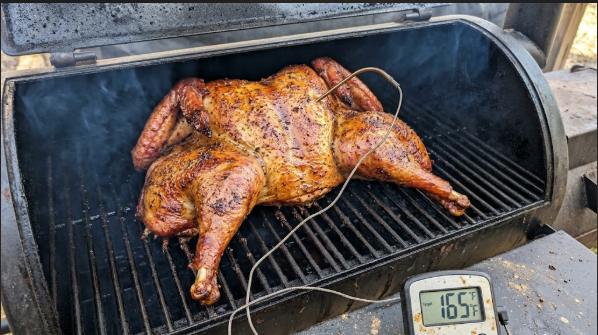
Push a leave-in probe into the thickest part of the breast, from the side. Keep the tip in the center of the meat, not touching the bone. Bone reads hotter than meat and can give a false reading.
Step 4: Smoke the turkey
Place the breast on the grate, skin-side up, with the thick end toward the hottest part of the grill. Close the lid. Don’t open it for the first 90 minutes.
After that, check the temperature every 20 to 30 minutes. Every peek drops the heat and adds time.
Step 5: Watch the skin
The skin should turn golden by the 1.5-hour mark. If it browns too fast, tent the top loosely with foil. If it’s pale and soft near the end, raise the grill to 350 to 375°F (177 to 191°C) for the last 10 to 15 minutes to crisp it.
Step 6: Pull at 165°F (74°C)
Pull the breast when the thickest part reads 165°F (74°C). Confirm the reading in a second spot with an instant-read thermometer. Move the turkey to a cutting board.
Don’t wait for a certain color. Smoke makes the skin dark early, so color is not a reliable sign of doneness.
Step 7: Rest, then carve
Rest the breast for 20 minutes, loosely tented with foil. Resting lets the juices settle so they stay in the meat. Carve it across the grain into thick slices.
Time and Temperature Table
These times are estimates for a 7 lb (3.2 kg) bone-in breast. Your cooker, the weather, and how often you open the lid will shift them. Cook to temperature, not time.
| Grill Temp | Minutes per Pound | Estimated Time (7 lb / 3.2 kg) |
| 225°F (107°C) | 30 to 35 | 3 h 30 m to 4 h 5 m |
| 250°F (121°C) | 25 to 30 | 2 h 55 m to 3 h 30 m |
| 275°F (135°C) | 20 to 25 | 2 h 20 m to 2 h 55 m |
| 300°F (149°C) | 17 to 20 | 2 h to 2 h 20 m |
| 325°F (163°C) | 14 to 17 | 1 h 40 m to 2 h |
Time by Weight at 275°F (135°C)
| Turkey Breast | Estimated Time |
| Boneless, 3 lb (1.4 kg) | 1 h to 1 h 30 m |
| Boneless, 4 lb (1.8 kg) | 1 h 20 m to 1 h 50 m |
| Bone-in, 6 lb (2.7 kg) | 2 h to 2 h 30 m |
| Bone-in, 7 lb (3.2 kg) | 2 h 20 m to 2 h 55 m |
| Bone-in, 8 lb (3.6 kg) | 2 h 40 m to 3 h 20 m |
Boneless breasts cook faster and dry out faster, so start checking early. For a related method, our guide to turkey breast at 250 shows how a lower temperature changes the timeline.
How to Tell When It’s Done
Temperature is the only reliable sign. The USDA says poultry must reach a safe minimum internal temperature of 165°F, measured with a food thermometer. The USDA also says to check the thickest part of the breast, as noted in its turkey cooking guidance.
Here’s what a finished breast looks like and feels like:
- Temperature: 165°F (74°C) in the thickest part, away from the bone
- Skin: Deep golden brown, tight, and mostly dry to the touch
- Meat: Firm but with a little give when pressed
- Juices: Run clear or pale gold when you slice
- Color: A pink tinge near the surface is normal in smoked poultry and comes from the smoke, not undercooking
Don’t pull early based on a “pitmaster pull temp” you read elsewhere. For turkey breast, the safe move is to reach 165°F before removing it from the heat. Going much past 170°F (77°C) is where the meat starts drying out.
Common Mistake: Probing the meat right next to the bone. Bone holds heat and reads high, so you’ll pull the breast too early. Keep the probe in the center of the thickest meat, and double-check with an instant-read in a second spot.
Best Wood Pellets for Turkey Breast
Poultry is mild, so a strong wood can overpower it. Here are the best options.
- Apple: Sweet and light, and it gives the skin a lovely golden color. The safest choice for beginners.
- Cherry: Mild and slightly fruity, with a rich red-brown tint.
- Pecan: Nutty and balanced. A great all-purpose turkey pellet.
- Maple: Gentle and slightly sweet.
- Hickory: Classic smoke flavor, but can turn bitter. Use a blend of hickory and fruitwood.
- Mesquite: Usually too harsh for turkey.
Many brands sell “poultry” or “competition” blends that mix these woods. Check that the pellets are 100 percent hardwood with no fillers. Keep pellets dry in a sealed container, because damp pellets burn poorly and can jam the auger.
Resting, Slicing, and Serving
Rest the breast for 20 minutes. A bird this size holds heat well, so it stays warm. Tent it loosely with foil, and leave the skin uncovered if you want to keep it crisp.
To carve a bone-in breast, run the knife along the breastbone and peel the meat away in one piece. Then slice it across the grain into slices about 1/2 inch (1.3 cm) thick. A long, sharp blade makes clean cuts. Our roundup of the best knives for cutting meat covers good carving options.
Spoon any pan juices over the slices before serving. They add moisture and flavor.
What to Serve With Smoked Turkey Breast
Classic sides pair well with the smoky flavor:
- Mashed potatoes and gravy
- Green bean casserole or roasted green beans
- Cornbread, such as this cornbread recipe
- Cranberry sauce
- Roasted Brussels sprouts with bacon
- Apple slaw for a crisp, tangy contrast
For dessert, try a smoked pecan pie, which you can cook on the same grill.
Storing, Freezing, and Reheating Leftovers
Refrigerating
The USDA says to refrigerate meat and poultry within 2 hours of removing it from the smoker. Slice it or cut it into smaller pieces and use shallow, covered containers, per the USDA’s smoking meat and poultry guidance]. Plan to eat leftovers within 3 to 4 days.
Freezing
Freeze sliced turkey in airtight freezer bags with a splash of broth or gravy. Press out as much air as possible and label the bag with the date. Check the University of California extension turkey guide for storage times.
Reheating
Reheat slices gently in a covered pan with a splash of broth until they reach 165°F (74°C). Microwave in short bursts, covered, and stir or flip between each. Avoid high heat, which dries lean meat quickly.
Don’t toss the bone. Simmer it in a large stockpot with onion, carrot, and celery for a smoky turkey stock.
Variations: Other Cookers and Methods
Pellet grill with a different style
- Boneless breast: Pull at 165°F (74°C). It usually takes 1 to 1.5 hours at 275°F (135°C). Tie it with butcher’s twine so it cooks evenly.
- Spice it up: Add cayenne and chili powder to the rub for heat.
- Maple glaze: Brush with a mix of maple syrup and butter in the last 15 minutes.
- Wrapped method: Wrap the breast in foil at 150°F (66°C) to speed things up, but note this softens the skin.
Offset smoker
Burn a clean, hot fire with split hardwood and keep the chamber at 275°F (135°C). Place the breast on the grate away from direct flame. Our tips for using lump charcoal in an offset smoker help you hold a steady temperature [NOTE: remove this link if it pushes you past 10 total].
Charcoal kettle or kamado
Set up for indirect heat, with coals on one side and the breast on the other. Add a chunk of apple or pecan wood. Keep the vents about one-third open and aim for 275°F (135°C).
Oven backup
If weather or equipment fails, finish the breast in the oven at 325°F (163°C) until it reaches 165°F (74°C). Smoke it for the first hour, then move indoors to save the flavor.
Troubleshooting Common Problems
The skin is rubbery. The skin was wet or the grill was too cool. Next time, air-dry the breast longer, then raise the grill to 350 to 375°F (177 to 191°C) for the last 10 to 15 minutes.
The meat is dry. It cooked too long or past 170°F (77°C). Pull at 165°F (74°C), rest it, and consider a dry brine for more moisture.
The smoke taste is bitter. The smoke was thick and white, usually from damp pellets or a dirty firepot. Use dry pellets and clean the grill regularly.
The skin is too dark. The rub has sugar or the grill runs hot. Tent the breast with foil, and avoid sugary rubs.
The temperature swings. Wind, cold weather, or lid openings can throw it off. Use a grill cover or windbreak, and keep the lid closed. A heavy-duty grill cover also protects your cooker between cooks.
The meat is too salty. The breast was likely pre-brined. Check the label next time and skip the extra salt.
It’s done way earlier than expected. A small breast, a hot grill, or a poorly placed probe can all cause this. Rest the turkey longer and tent it with foil.
Food Safety Notes
- Use a thermometer. You can’t tell if poultry is safe by color.
- Thaw in the fridge. Never at room temperature.
- Cook stuffing separately. The USDA recommends this, per its guide on stuffing and food safety.
- Chill leftovers within 2 hours.
- Reheat to 165°F (74°C).
- Wash hands and surfaces after handling raw poultry, and keep raw juices away from other foods.
Recipe Card: Turkey Breast on a Pellet Grill
| Servings | 8 to 10 |
| Prep time | 20 minutes (plus 12 to 24 hours dry brine) |
| Cook time | 2 hours 20 minutes to 3 hours |
| Rest time | 20 minutes |
| Grill temp | 275°F (135°C) |
| Pull temp | 165°F (74°C) in the thickest part |
Ingredients: 6 to 8 lb (2.7 to 3.6 kg) bone-in turkey breast; 2 tbsp plus 1 tsp Diamond Crystal kosher salt; 1 tbsp black pepper; 2 tsp garlic powder; 2 tsp smoked paprika; 1 tsp onion powder; 4 tbsp (57 g) butter; apple, cherry, or pecan pellets.
Short steps:
- Thaw fully in the fridge. Pat dry.
- Dry brine with salt, uncovered, in the fridge for 12 to 24 hours.
- Preheat the pellet grill to 275°F (135°C).
- Rub butter under and over the skin, then add the seasoning.
- Insert a probe in the thickest part. Smoke skin-side up.
- Pull at 165°F (74°C).
- Rest 20 minutes, then carve across the grain.
Frequently Asked Questions
How long does a turkey breast take on a pellet grill?
At 275°F (135°C), a 7 lb (3.2 kg) bone-in turkey breast takes about 2 hours 20 minutes to 2 hours 55 minutes. A boneless breast takes 1 to 1.5 hours. Always rely on a thermometer, since weather and grill type can change the time.
What temperature should I smoke a turkey breast?
Smoke it at 275°F (135°C) for the best mix of smoke flavor and browned skin. You can drop to 225 or 250°F (107 or 121°C) for more smoke, or go to 325°F (163°C) to save time. Lower temperatures add about an hour.
What internal temperature is a smoked turkey breast done?
Pull the turkey breast when the thickest part reads 165°F (74°C), the USDA’s safe minimum for poultry. Check it in two spots, away from the bone. Cooking much past 170°F (77°C) tends to dry out lean breast meat.
Should I brine a turkey breast before smoking?
A dry brine works best. Rub kosher salt on the breast and refrigerate it uncovered for 12 to 24 hours. It seasons the meat, helps it stay juicy, and dries the skin for better crisping. Skip it if the breast is pre-brined or self-basting.
Do I need to wrap a turkey breast while smoking?
No. Turkey breast cooks fast enough that wrapping isn’t needed. Foil softens the skin, so keep it unwrapped for crisp skin. If the skin darkens too quickly, tent it loosely with foil for the last part of the cook instead.
What pellets are best for turkey breast?
Apple, cherry, and pecan pellets are the best choices because they’re mild and slightly sweet. Maple also works well. Hickory is good in a blend, but can overpower poultry on its own. Avoid mesquite, which is usually too strong for turkey.
Conclusion
Cooking a turkey breast on a pellet grill gives you juicy meat, crisp skin, and real smoke flavor in about 2 to 3 hours. Dry brine it, smoke it at 275°F (135°C), and pull it at 165°F (74°C). Then rest it for 20 minutes before slicing.
Use the time and temp table as your planning tool, and let your thermometer make the final call. For more holiday ideas, you can also explore our pellet grill ribs method to put your grill to work on other cuts.
Laura Smith

I'm Laura, I like all the kind of delicious grilled foods which makes me hungry all the time I see them. That's why I built this blog to share with you all of my Grilling experiences, recipes, and all the tips about foods that I've learned from food experts.