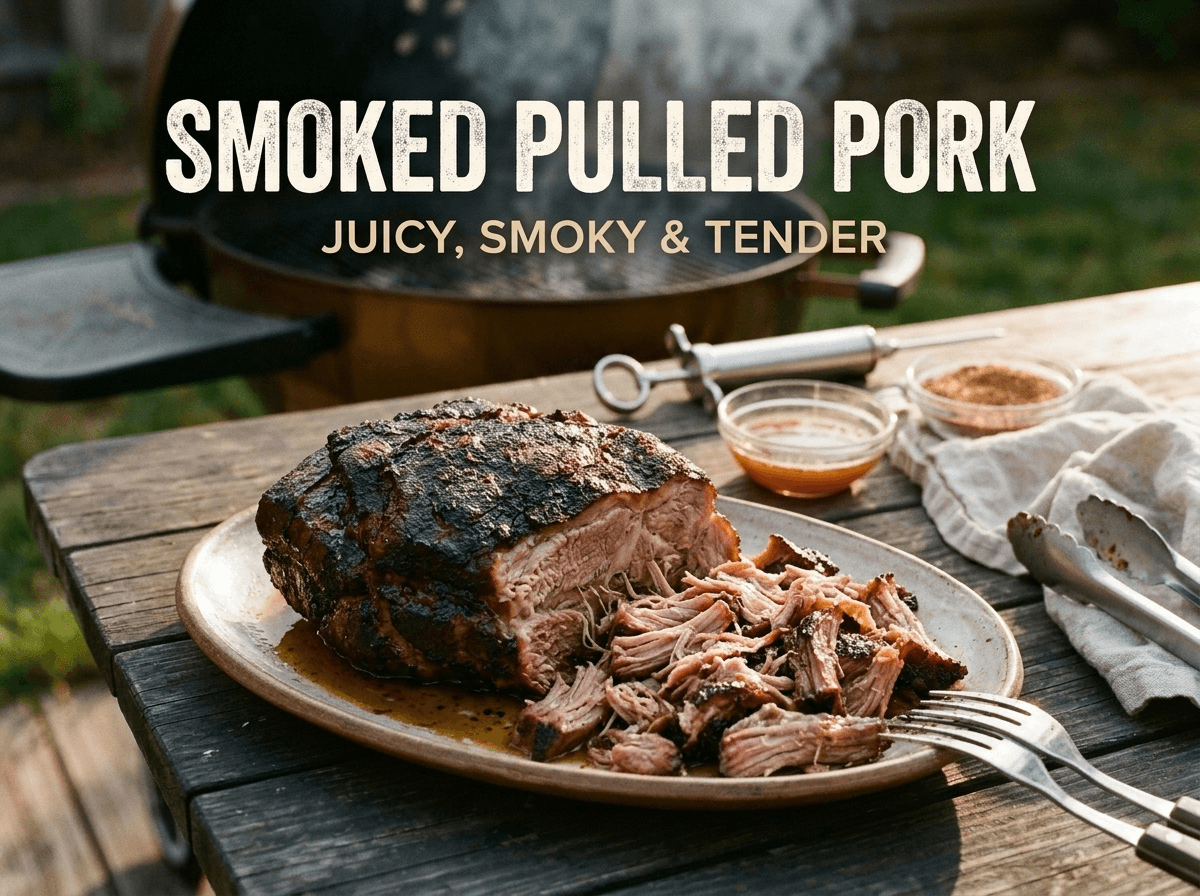
This pork butt injection recipe pushes flavor and moisture deep into the meat before it ever touches the smoker. A pork butt is a big, forgiving cut, but the center can still taste bland and dry out during a 12-hour cook. Injecting a simple apple juice and seasoning mix fixes both problems.
You do not need fancy gear. A $10 meat injector, a pan, and a good rub are enough. Below you will find the exact injection ratio, smoker temps, wrap timing, pull temps, and fixes for common problems like a long stall or a mushy bark.
Quick Answer: Inject an 8 lb (3.6 kg) pork butt with about 1 cup (240 ml) of apple juice injection, spaced 1 inch (2.5 cm) apart. Rub it, then smoke at 250°F (120°C) for 10-14 hours until it reaches 200-205°F (93-96°C) and probes tender. Rest 1 hour before pulling.
Why This Pork Butt Injection Recipe Works
A pork butt is rich in fat and connective tissue, so it handles a long, slow cook well. The problem is that a rub only seasons the surface. Salt from a rub moves into the meat slowly, and the center of an 8-10 lb (3.6-4.5 kg) roast gets very little of it.
Injection solves that by putting salty, slightly sweet liquid right where you need it. The salt helps the meat hold onto water as it cooks, and the sugar and apple juice add flavor that survives the long smoke. You still get a dark bark from the rub, and the inside tastes seasoned all the way through.
The second reason is timing. Pork butt goes through a long stall, when the surface cools from evaporation and the internal temperature hangs around 150-170°F (65-77°C) for hours. Extra moisture inside the meat gives you a bit more cushion during that stretch.
Finally, this recipe keeps the injection simple. Too much salt, vinegar, or phosphate-heavy commercial product can leave pork tasting ham-like. A balanced homemade mix keeps it tasting like pork.

Ingredients and Equipment
Makes 12-16 servings (about 5-6 lb / 2.3-2.7 kg of pulled pork). Prep 30 minutes, cook 10-14 hours, rest 1-2 hours.
Pork and binder
- 1 bone-in pork butt (Boston butt), 8-10 lb (3.6-4.5 kg)
- 2 tablespoons yellow mustard, as a binder
Injection (makes about 1½ cups / 360 ml)
- 1 cup (240 ml) apple juice, unsweetened
- ½ cup (120 ml) water
- 2 tablespoons Worcestershire sauce
- 1 tablespoon kosher salt (Diamond Crystal; use half if using fine table salt)
- 1 tablespoon brown sugar
- 1 teaspoon garlic powder
- 1 teaspoon onion powder
- ½ teaspoon white or black pepper
Pork rub
- 3 tablespoons brown sugar
- 2 tablespoons smoked paprika
- 1 tablespoon kosher salt
- 1 tablespoon coarse black pepper
- 2 teaspoons garlic powder
- 2 teaspoons onion powder
- ½ teaspoon cayenne (optional)
Spritz (optional)
- ½ cup (120 ml) apple juice and ½ cup (120 ml) apple cider vinegar in a spray bottle
Equipment
- Smoker or grill set up for indirect heat (pellet, offset, charcoal kettle, or electric)
- Meat injector with a 2 oz (60 ml) capacity and a large-hole needle
- Rimmed sheet pan or foil roasting pan
- Instant-read thermometer and a leave-in probe
- Pink butcher paper or heavy-duty foil
- Insulated cooler and clean towels (for the hold)
- Heat-resistant gloves or shredding claws
- Wood: hickory, oak, apple, or cherry chunks or pellets
Substitutions
- Apple juice: Use pineapple juice (lighter, less sweet-sour) or just water with extra brown sugar.
- Worcestershire: Use soy sauce, but cut the salt in the injection by half.
- Binder: Olive oil or hot sauce works. Skip it if you prefer; the rub still sticks.
- Brown sugar: Honey or maple syrup in the injection. Keep sugar in the rub modest to avoid a bitter, burnt bark.
- Pork shoulder: A whole shoulder or picnic roast works. Adjust times and expect a bit more fat and skin.
Choosing and Prepping the Pork Butt
Buy a bone-in butt if you can. The bone helps the meat cook more evenly and makes it easy to tell when it is done, because it slides out clean at the finish. Look for a good fat cap, even marbling, and a roast that feels firm. Avoid packages with lots of liquid, which can mean the pork was already enhanced or injected. Check the label for “contains up to X% solution” .
If the butt is frozen, thaw it in the refrigerator at 40°F (4°C) or below for 24 hours per 4-5 lb (1.8-2.3 kg), following USDA FSIS thawing guidance]. An 8-10 lb roast needs 2-3 days.
Trim the butt
Pat the roast dry. Trim hard, silver-dollar-sized chunks of fat and any loose flaps that will burn. Leave a fat layer about ¼ inch (6 mm) thick on top. A sharp blade makes trimming faster, and our guides to the best butcher knives can help if your knife is dull.
Pitmaster Tip: Inject the butt on a sheet pan with a rim. Injection liquid will run back out of the holes, and the pan catches it. Pour any liquid that collects into the pan and rub it over the surface as a free flavor boost.
How to inject a pork butt
Mix the injection until the salt and sugar are fully dissolved. Fill the injector and push the needle in at a slight angle, going deep into the thickest part of the meat. Inject slowly while pulling the needle out, so the liquid spreads along the track rather than collecting in a pocket.
Space injection points about 1 inch (2.5 cm) apart in a grid pattern. Use roughly ½-1 oz (15-30 ml) of liquid per pound of meat, which is about 1 cup (240 ml) total for an 8 lb (3.6 kg) butt. Aim to inject across the whole roast, going in from the top and the sides. Skip the bone and avoid hitting it with the needle.
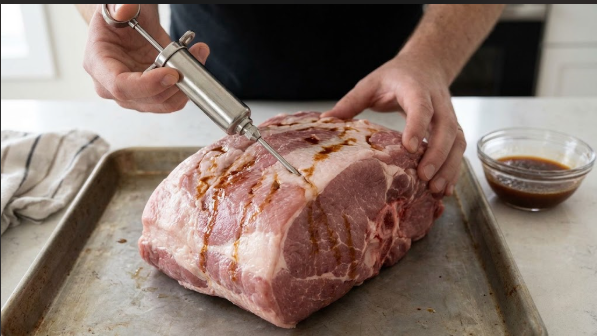
Common Mistake: Injecting too much liquid too fast. Meat that is overfilled leaks, turns spongy, and can taste like ham. Inject slowly in small amounts at each site, and stop if liquid runs out the top.
Food safety with injection
Injecting pushes anything on the surface deeper into the meat, so use a clean injector and fresh liquid. Never reuse leftover injection that touched raw pork, and discard it after use. Wash your hands, the injector, and the pan with hot, soapy water.
Because the needle breaks the surface, cook the roast to at least the USDA’s minimum internal temperature of 145°F (63°C) with a 3-minute rest, per USDA FSIS safe temperature guidance . For pulled pork, you cook far past that point, to 200-205°F (93-96°C), for tenderness.
When to inject
Inject 1-4 hours before smoking and keep the roast in the refrigerator, or inject right before it goes on the smoker. You can also inject the night before. Use a lighter hand with salt if you inject early, because salt starts to cure the surface and can make it texture firm.Season the butt
Brush the surface with mustard, then coat every side with the rub, pressing it in. Salt in the injection and in the rub adds up, so do not add extra salt. Let the seasoned butt sit at room temperature while the smoker heats, but no longer than 30 minutes.
Step-by-Step Instructions
- Thaw and trim. Thaw fully in the refrigerator, then pat dry and trim loose fat to about ¼ inch (6 mm).
- Mix the injection. Whisk the apple juice, water, Worcestershire, salt, brown sugar, garlic powder, onion powder, and pepper until the salt and sugar dissolve.
- Inject. Place the butt in a pan. Inject in a 1-inch (2.5 cm) grid, using about 1 cup (240 ml) for an 8 lb (3.6 kg) roast. Rub any leaked liquid over the surface.
- Apply the binder and rub. Coat with mustard and cover every side with rub. Let it rest 15-30 minutes while the smoker comes up to temperature.
- Set up the smoker. Heat to 250°F (120°C) with hickory, oak, apple, or cherry wood. Our guide to lump charcoal in an offset smoker covers fire management if you cook on a stick burner.
- Smoke fat-cap up. Place the butt directly on the grate or in a pan. Insert the leave-in probe into the thickest part, away from the bone. Close the lid and leave it for 3 hours.
- Spritz (optional). After the bark sets, around 3 hours in, spritz every 60-90 minutes. Keep the lid closed as much as possible.
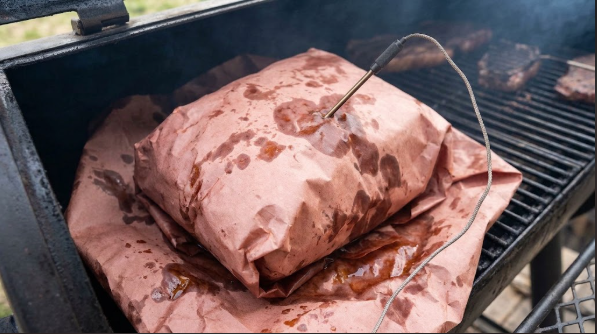
- Wrap at the stall. When the bark is dark mahogany and does not rub off, and the internal temp is 165-170°F (74-77°C), wrap tightly in butcher paper or foil. Paper keeps the bark firmer, foil speeds the cook and makes it juicier but softer.
- Continue cooking. Return to the smoker at 250°F (120°C). Start checking tenderness at 198°F (92°C).
- Pull at 200-205°F (93-96°C). The probe should slide in like it is going into warm butter. The bone should wiggle loose.
- Rest. Vent the wrap for 10 minutes, then re-wrap, wrap in towels, and rest in a dry cooler for 1-2 hours. Keep the meat above 140°F (60°C) the entire time.
- Pull and serve. Remove the bone, shred the meat by hand, and toss it with the juices.
Time and Temperature Table
| Stage | Smoker Temp | Meat Temp | Approx. Time (8 lb / 3.6 kg) | Notes |
| Injection and rub | n/a | Fridge, 40°F (4°C) or below | 30 min prep | Inject 1-4 hours ahead or just before |
| Smoke, bark setting | 250°F (120°C) | 40-150°F (4-65°C) | 3-4 hours | Spritz after the first 3 hours |
| The stall | 250°F (120°C) | 150-170°F (65-77°C) | 2-4 hours | Wrap at 165-170°F (74-77°C) |
| Wrapped cook | 250°F (120°C) | 170-203°F (77-95°C) | 3-5 hours | Probe tender, bone wiggles |
| Rest | Cooler | Hold above 140°F (60°C) | 1-2 hours | Vent 10 minutes first |
| Hot and fast alternative | 275-300°F (135-150°C) | 200-205°F (93-96°C) | 6-8 hours total | Less smoke, firmer bark |
As a rule of thumb, plan on 1.25-1.75 hours per pound at 250°F (120°C), so an 8 lb (3.6 kg) butt takes about 10-14 hours. Build in a buffer, because a long rest in a cooler is better than serving late.
How to Tell When Your Pork Butt Injection Recipe Is Done
The USDA’s minimum safe internal temperature for fresh pork is 145°F (63°C) with a 3-minute rest, per FoodSafety.gov’s safe minimum temperature chart. Pulled pork is a different goal. You need 200-205°F (93-96°C) so the collagen melts into gelatin and the meat shreds.
Temperature is a guide, and tenderness is the real test. Check these signs:
- Probe tender: An instant-read probe slides in with almost no resistance, like pushing into soft butter.
- Bone wiggle: The blade bone moves freely and pulls out clean.
- Jiggle: The whole roast shakes like gelatin when you move the pan.
- Bark: Dark mahogany and set, with a sticky shine under the wrap.
If the probe still grabs at 203°F (95°C), keep cooking and check every 20 minutes. Different parts of the roast finish at different times.

Resting, Pulling, and Serving
Resting matters as much as the cook. Vent the wrapped butt for 10 minutes so the steam escapes, then re-wrap, cover with towels, and place it in a dry cooler for 1-2 hours. Keep the meat above 140°F (60°C), the top of the USDA’s danger zone
Unwrap over a pan to catch the juices. Pull out the bone, then shred the meat with gloves or claws, discarding large chunks of fat. A sharp knife helps for chopped pork, and our list of the best knives for cutting meat has solid options. Toss the pulled pork with some of the collected juices, and add a splash of apple juice if it looks dry.
Serve on soft buns with coleslaw and pickles, in tacos, over baked potatoes, or on nachos. Offer sauce on the side so people can taste the pork first.
What to Serve with Smoked Pulled Pork
- Coleslaw: The crunch and acidity cut the richness.
- Cornbread: Try this Redstone-style corn bread for sopping up juice.
- Baked beans and mac and cheese: Classic comfort sides that hold well.
- Pickles and onions: Quick-pickled red onions brighten each bite.
- Ribs: For a big cookout, pair it with pellet grill ribs.
- Potato salad or grilled corn: Easy sides for a crowd.
Cooking for a party? Our tips for hosting a summer BBQ on a budget cover how to plan portions and timing.
Storing, Freezing, and Reheating Leftovers
Refrigerate pulled pork within 2 hours of finishing, or within 1 hour if the air temperature is above 90°F (32°C), following USDA FSIS leftover guidance]. Store it in shallow containers with a little juice. Cooked pork keeps 3-4 days at 40°F (4°C) or below, according to FoodSafety.gov’s cold storage chart.
Freezing: Portion into freezer bags with juice, squeeze out the air, and flatten. It keeps best quality for 2-3 months. Thaw in the refrigerator overnight.
Reheating: Warm leftovers to 165°F (74°C). Reheat in a covered pan with a splash of apple juice or broth over low heat, or in a 300°F (150°C) oven, covered with foil, for 20-30 minutes. Vacuum-sealed bags can go in simmering water.
Variations
Pellet grill
Set the pellet grill to 250°F (120°C) and use hickory or apple pellets. Pellet grills run cleaner and with less smoke, so use the “super smoke” setting if you have one for the first 2 hours. If you are shopping for one, see our best pellet grills for beginners.
Offset smoker
Build a small, clean-burning fire with oak or hickory splits and hold 250°F (120°C) at the grate. Rotate the roast every 2 hours in case of hot spots. A budget cooker works fine; our affordable offset smoker picks are a place to start.
Charcoal kettle
Use a snake method or two-zone fire with unlit coals to hold 250°F (120°C). Add a wood chunk every hour for the first 3 hours. Expect to refuel and check temps often.
Oven backup
Skip the smoke and cook at 275°F (135°C) in a covered roasting pan, fat side up, for 6-8 hours until 200-205°F (93-96°C). Add 1 teaspoon of liquid smoke to the injection if you like. You will not get a true bark, so finish uncovered under the broiler for 5 minutes. For a bonus, our bacon on a pellet grill guide is a good pairing for breakfast sandwiches.
Flavor ideas
- Carolina-style: Add 2 tablespoons apple cider vinegar and a pinch of red pepper flakes to the injection.
- Sweet and tangy: Swap Worcestershire for pineapple juice.
- Spicy: Add ½ teaspoon cayenne to the rub and 1 tablespoon hot sauce to the injection.
- Beer-based: Replace the water with a light lager.
Troubleshooting
| Problem | Likely cause | Fix |
| Meat tastes like ham | Too much salt or injection | Cut the salt, inject less, skip salty rubs |
| Dry pulled pork | Pulled too early or rested too little | Cook to 200-205°F (93-96°C) and rest 1-2 hours; toss with juices |
| Mushy or spongy texture | Over-injected or over-wrapped | Inject ½-1 oz per lb; use paper instead of foil |
| Long stall | Normal evaporative cooling | Wrap at 165-170°F (74-77°C) or wait it out |
| Burnt, bitter bark | Too much sugar or fire too hot | Lower sugar in rub, keep 250°F (120°C), wrap sooner |
| Injection leaks out | Needle pulled too fast | Inject slowly while withdrawing, in small amounts |
| Bland center | Injection too sparse | Use a tighter 1-inch (2.5 cm) grid |
| Tough at 195°F (91°C) | Not rendered yet | Keep cooking and check for probe tenderness |
Recipe Card: Pork Butt Injection Recipe
Servings: 12-16 | Prep: 30 min | Cook: 10-14 hours | Rest: 1-2 hours | Smoker temp: 250°F (120°C)
Ingredients: 8-10 lb (3.6-4.5 kg) bone-in pork butt; 2 tbsp mustard; injection of 1 cup apple juice, ½ cup water, 2 tbsp Worcestershire, 1 tbsp kosher salt, 1 tbsp brown sugar, 1 tsp garlic powder, 1 tsp onion powder, ½ tsp pepper; rub of 3 tbsp brown sugar, 2 tbsp paprika, 1 tbsp salt, 1 tbsp pepper, 2 tsp garlic powder, 2 tsp onion powder.
Steps:
- Trim the butt and mix the injection.
- Inject in a 1-inch (2.5 cm) grid, about 1 cup (240 ml) total.
- Coat with mustard and rub.
- Smoke at 250°F (120°C), fat side up, for about 3 hours.
- Spritz every 60-90 minutes if desired.
- Wrap at 165-170°F (74-77°C) when the bark is set.
- Cook to 200-205°F (93-96°C) and probe tender.
- Rest in a cooler for 1-2 hours above 140°F (60°C).
- Shred, toss with juices, and serve.
Pork Butt Injection FAQ
How much injection do you put in a pork butt? Use about ½-1 oz (15-30 ml) per pound of meat, or roughly 1 cup (240 ml) for an 8 lb (3.6 kg) butt. Inject in a 1-inch (2.5 cm) grid, and go slowly so the liquid spreads instead of pooling or leaking out.
How long before smoking should you inject a pork butt? Inject anywhere from just before the cook to 4 hours ahead, with the meat chilled in the refrigerator. Overnight works too, but use a lighter hand with salt. Injecting right before the rub keeps the process simple and the surface texture normal.
Should you inject pork butt? It is optional but worth it. Injection seasons the interior and adds moisture, especially on a large 8-10 lb (3.6-4.5 kg) roast where the rub only reaches the surface. If your butt is already enhanced with a solution, skip it.
What is the best injection for pork butt? A simple mix of apple juice, water, Worcestershire, salt, brown sugar, and garlic and onion powders works well. It adds sweet, savory flavor without tasting like ham. Keep salt moderate, since the rub adds more.
Do you wrap an injected pork butt? Yes, wrapping is common. Wrap at 165-170°F (74-77°C) in butcher paper for a firmer bark or foil for a juicier, softer result. Injection helps moisture, but wrapping still shortens the stall and speeds the cook.
What internal temp is pulled pork done? Pull at 200-205°F (93-96°C) when the probe slides in with little resistance. The USDA’s minimum safe temperature for pork is 145°F (63°C), but pulled pork needs far more heat to break down collagen and shred easily.
Conclusion
A good pork butt injection recipe gives you juicy, seasoned pulled pork from the bone to the bark. Keep the injection balanced, cook low and slow at 250°F (120°C), wrap at the stall, and pull at 200-205°F (93-96°C) once the probe slides in like butter.
Rest it well, serve it with simple sides, and save the juices. Make this pork butt injection recipe once and you will have a base you can tweak for any cookout.
Laura Smith

I'm Laura, I like all the kind of delicious grilled foods which makes me hungry all the time I see them. That's why I built this blog to share with you all of my Grilling experiences, recipes, and all the tips about foods that I've learned from food experts.