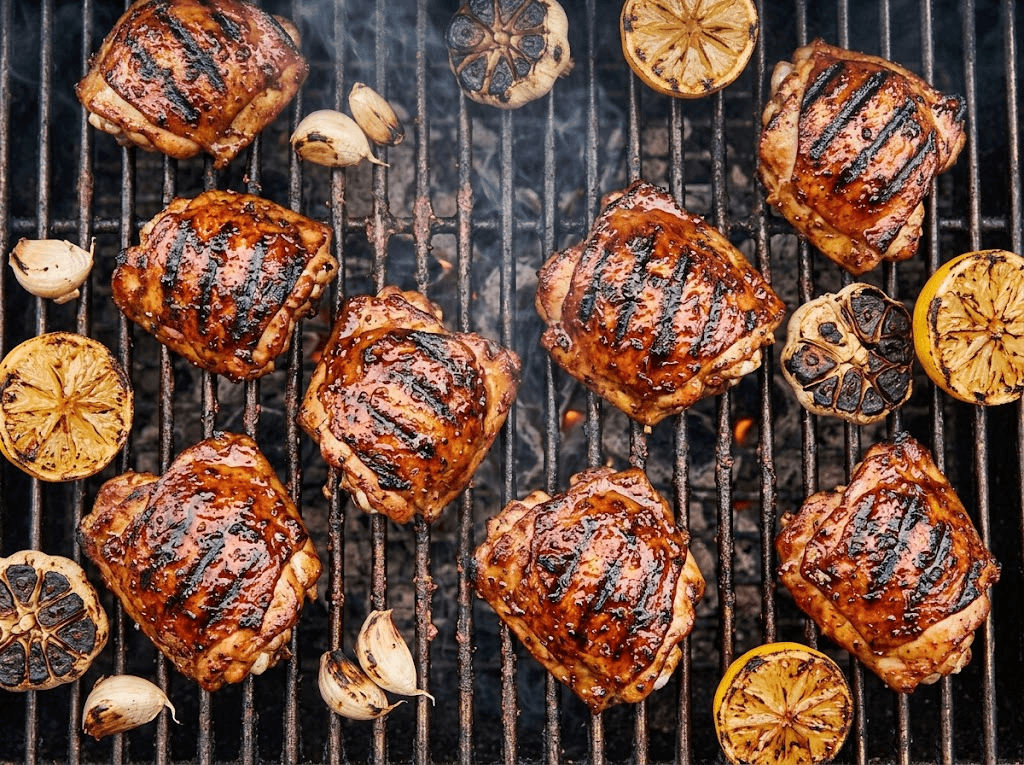
The best chicken thighs marinade for the grill does three jobs at once. It seasons the meat, adds a little tang at the surface, and helps build a sticky, charred crust. This one uses lemon juice, olive oil, soy sauce, Dijon, garlic, brown sugar, and smoked paprika.
You can mix it in five minutes and let the fridge do the work. Thighs are the forgiving cut for grilling because their extra fat keeps them juicy even if you run a few degrees past done. Below you’ll find exact grill temps, cook times, pull temps, and fixes for the usual problems.
Quick Answer
Marinate 3 lb (1.4 kg) of thighs in lemon, olive oil, soy, garlic, Dijon, brown sugar, and smoked paprika for 2–8 hours in the fridge. Grill at 400–425°F (204–218°C) for 35–45 minutes if bone-in. Pull at 175–185°F (79–85°C) for tender meat. USDA’s safe minimum is 165°F (74°C).
Why This Best Chicken Thighs Marinade for the Grill Works
Every ingredient has a job, so nothing here is filler. Understanding the jobs also lets you swap ingredients without ruining the balance.
- Salt (from soy sauce and Worcestershire): seasons the meat and helps it hold moisture.
- Acid (lemon juice): adds brightness and works on the outer surface only.
- Oil: carries the fat-soluble flavors in garlic and paprika, and helps the surface brown.
- Sugar (brown sugar): caramelizes into that dark, sticky edge everyone wants.
- Dijon mustard: keeps the oil and lemon blended so the marinade clings instead of pooling.
- Smoked paprika: gives a “cooked over wood” flavor and a deep red color, even on a gas grill.
One honest note: a marinade does not soak deep into the meat. Most of the flavor sits in the outer layer, which is why the char, the glaze, and the seasoning on the surface matter so much. Also, marinating does not make chicken safe to eat. Only heat does that.
Thighs are also a better match for this style of cooking than breasts. They have more connective tissue and fat, which break down between about 175°F and 185°F (79–85°C). That is why a thigh pulled at 175°F often tastes better than one pulled at the bare minimum.
Ingredients and Equipment
Marinade (for 3 lb / 1.4 kg bone-in, skin-on thighs, about 8 pieces):
- ¼ cup (60 ml) olive oil
- ¼ cup (60 ml) fresh lemon juice (about 2 lemons)
- 3 tbsp (45 ml) soy sauce
- 2 tbsp (30 ml) Worcestershire sauce
- 1 tbsp Dijon mustard
- 2 tbsp packed brown sugar
- 4 garlic cloves, finely minced
- 2 tsp smoked paprika
- 1 tsp dried oregano
- 1 tsp black pepper
- ½ tsp onion powder
- Optional: ½ tsp crushed red pepper flakes
Equipment:
- A gallon zip-top bag or a shallow glass dish with a lid
- An instant-read thermometer (non-negotiable)
- Long tongs
- A clean basting brush
- Paper towels
- A sheet pan or clean platter for cooked chicken
- A chimney starter if you use charcoal
Smart substitutions:
| Ingredient | Swap | Note |
| Lemon juice | Lime juice | Slightly sharper; same amount |
| Soy sauce | Tamari or coconut aminos | Tamari is gluten-free; coconut aminos taste sweeter, so cut the sugar to 1 tbsp |
| Worcestershire | Extra soy plus 1 tsp vinegar | Loses some depth, still good |
| Dijon | 1 tbsp yellow mustard | Milder |
| Brown sugar | 1½ tbsp honey | Burns a little faster, so watch it |
| Smoked paprika | Sweet paprika plus a pinch of cayenne | Less smoky |
Want heat? Add a spoonful of chili paste. If you’re out, these chili paste substitutions work well.
Choosing and Prepping the Thighs
Both cuts work, but they behave differently on the grill.
- Bone-in, skin-on: more forgiving and more flavorful, with crisp skin if you handle the fire right. Look for pieces that are similar in size, about 5–7 oz (140–200 g) each.
- Boneless, skinless: faster and easier to eat, but they dry out sooner. Choose pieces of even thickness, or pound the thick spots lightly.
Trim any big, loose flaps of skin and heavy fat pockets. They cause flare-ups and never crisp. A sharp butcher knife makes this quick work, and a sharp knife is safer than a dull one.
Pat the thighs dry with paper towels before they go into the marinade. Dry surfaces hold marinade better. For bone-in thighs, make two shallow slits down to the bone on the meaty side so the heat and the marinade reach the thickest part.
Marinating times:
| Cut | Minimum | Best window | Maximum |
| Boneless, skinless | 1 hour | 2–6 hours | 8 hours |
| Bone-in, skin-on | 2 hours | 4–8 hours | 12 hours |
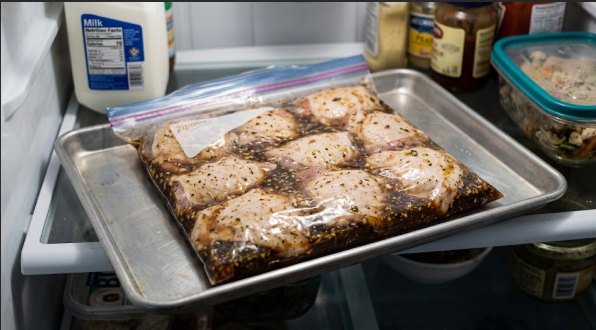
Always marinate in the refrigerator, never on the counter. The USDA says to marinate meat in the fridge, not at room temperature. Past about 12 hours, the lemon juice starts turning the surface mushy, so don’t go “overnight plus a day.”
Common Mistake: Marinating at room temperature “to speed it up.”
Thighs left on the counter spend time in the temperature range where bacteria multiply. Keep them cold, and keep the bag on a tray in case it leaks. If you’re short on time, use a smaller, thinner cut instead.
Step-by-Step: How to Grill Marinated Chicken Thighs
- Mix the marinade. Whisk everything in a bowl until the mustard has blended the oil and lemon into a loose, cloudy mixture.
- Set aside a clean portion. Pour about ¼ cup (60 ml) into a small container, cover it, and refrigerate it. This is your safe basting liquid. Do this before the chicken touches anything.
- Bag the chicken. Add the thighs to the bag with the rest of the marinade, squeeze out the air, and seal. Lay the bag flat on a tray and refrigerate. Flip it once halfway through.
- Build a two-zone fire. You want a hot side and a cooler side. If you need a refresher, here’s how to start a grill the right way.
- Gas: Heat all burners on high for 10 minutes. Then leave one side on medium-high and turn the other side to off or low.
- Charcoal: Pile lit coals on one half of the grate. Adjust the vents until the lid thermometer reads about 400°F (204°C).
- Clean and oil the grates. Scrape with a grill brush, then wipe with an oiled paper towel held in tongs.
- Pat off the excess. Take the thighs out of the bag and blot off the extra marinade with paper towels. Throw out the leftover bag marinade. This one step prevents most burning and flare-ups.
- Cook on the cool side first. Place the thighs skin-side down on the indirect (cooler) side. Close the lid and cook 12–15 minutes, then flip and cook another 12–15 minutes.
- Finish over direct heat. Move the thighs to the hot side, skin-side down. Brush with the reserved clean marinade, and grill 3–5 minutes until the skin is deep mahogany and crisp. Flip for 1–2 minutes. Watch closely, because the sugar can go from charred to burnt fast.
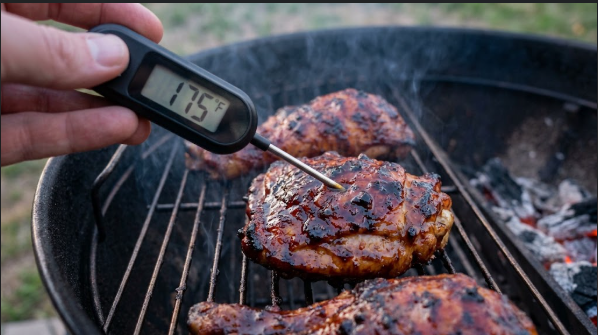
- Check the temperature. Slide the thermometer into the thickest part, away from the bone. Pull the thighs at 175–185°F (79–85°C).
- Rest. Move them to a clean platter, tent loosely with foil, and rest 5–10 minutes.
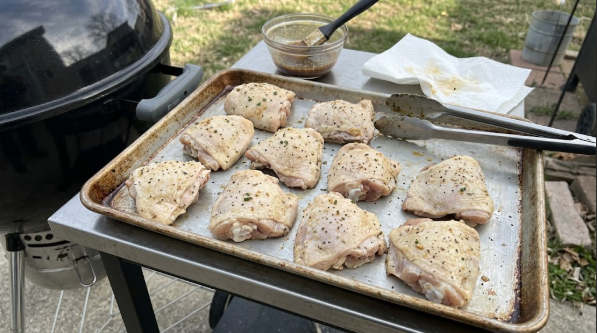
Pitmaster Tip: Cook indirect first, sear last.
Sugary marinades burn quickly over direct flame. Cooking the thighs gently on the cool side, then finishing them over the fire, gives you cooked-through meat and a good char without black, bitter spots. Think of the direct side as a finishing tool, not the main stage.
For boneless, skinless thighs, skip the indirect step. Cook them over direct medium-high heat, 400–425°F (204–218°C), for 5–7 minutes per side. Brush with the clean marinade in the last 2 minutes. Total time is 10–14 minutes.
Time and Temperature Table
| Cut / Method | Grill temp | Time | Pull temp | Rest |
| Bone-in, skin-on, gas or charcoal (indirect, then sear) | 400–425°F (204–218°C) | 35–45 min total | 175–185°F (79–85°C) | 5–10 min |
| Boneless, skinless, direct heat | 400–425°F (204–218°C) | 10–14 min total | 175°F (79°C) | 5 min |
| Bone-in on a pellet grill | 375°F (190°C), finish at 450°F (232°C) | 40–50 min plus 5 min finish | 175–185°F (79–85°C) | 5–10 min |
| Bone-in in the oven (backup) | 425°F (218°C) | 35–45 min | 175–185°F (79–85°C) | 5–10 min |
| USDA safe minimum for any chicken | n/a | n/a | 165°F (74°C) | n/a |
These times are ranges, not promises. Thigh size, grill hot spots, wind, and outside temperature all change the clock. The thermometer is your real timer.
How to Tell When Grilled Chicken Thighs Are Done
Start with the number. The USDA lists 165°F (74°C) as the minimum for all poultry, including thighs, measured with a food thermometer. Thighs taste better and feel more tender at 175–185°F (79–85°C), which is why we pull in that range.
Then check the signs your eyes and hands can catch:
- Skin: deep golden-brown to mahogany, dry to the touch, with a few darker char marks. It should not look pale or rubbery.
- Juices: they run clear to light gold when you poke the thickest part, not cloudy pink.
- Feel: the meat gives gently when you press it, and the thigh bone wiggles a little in the joint.
- Look near the bone: some pinkness here can remain even when the chicken is fully cooked, which is why color alone is a poor test. Extension guidance agrees that you can’t judge doneness by sight.
If a thigh reads under 165°F (74°C) anywhere, keep cooking. If one piece is far behind the others, move it to the hot side for a few more minutes.
Resting, Slicing, and Serving
Resting lets the juices settle so they don’t run all over the board. Five to ten minutes under loose foil is plenty. Don’t wrap tightly, because trapped steam will soften the crisp skin you worked for.
For bone-in thighs, you can serve them whole. For boneless, slice across the grain into ½-inch (1.3 cm) strips if you’re making salads, bowls, or tacos. A good set of knives for cutting meat gives cleaner slices and less shredding.
Finish with a squeeze of fresh lemon and a pinch of flaky salt. Spoon on a little of the warmed, clean reserved marinade only if it was set aside before the chicken touched it. Never serve the marinade that sat with the raw chicken.
What to Serve With Grilled Chicken Thighs
Because this marinade is bright, savory, and a little sweet, pair it with sides that are mild, starchy, or crunchy.
- Rice: fluffy white or jasmine soaks up the juices. These rice cooker tips give you consistent results.
- Corn bread: sweet and crumbly, it is a classic BBQ partner. Try Redstone corn bread.
- Grilled vegetables: zucchini, bell pepper, and corn on the cob cook on the cool side while the chicken rests.
- Crunchy slaw: a vinegar-based slaw cuts through the richness.
- Potato salad or roasted potatoes: hearty and easy to make ahead.
Feeding a crowd? These summer BBQ party tips help you plan without overspending.
Storing, Freezing, and Reheating Leftovers
Cooked chicken should not sit out. The USDA says to keep perishable food out no longer than two hours, or one hour when it is above 90°F (32°C). After that, refrigerate it.
- Fridge: store in a shallow, covered container for 3–4 days, per FSIS leftovers guidance.
- Freezer: wrap tightly or use a freezer bag for 3–4 months for best quality, per the same FSIS page.
- Reheat: bring leftovers to 165°F (74°C), as that FSIS page states. In the oven, use 350°F (177°C) for 15–20 minutes on a rack, covered loosely. In the microwave, cover the chicken and heat in short bursts.
You can also freeze raw thighs in the marinade for later. Thaw them in the refrigerator, not on the counter, and cook within a day or two of thawing .
Variations: Pellet Grill, Charcoal, Gas, and Oven
Pellet grill: Set it to 375°F (190°C) with apple or cherry pellets. Cook bone-in thighs 40–50 minutes, then raise the heat to 450°F (232°C) for about 5 minutes to crisp the skin. If you’re shopping, here are some beginner-friendly pellet grills.
Charcoal: Use briquettes for steady heat, or lump for a hotter, faster burn. Add one or two fist-size chunks of apple or hickory wood to the coals for light smoke. Keep the vents partly open and adjust gradually.
Gas grill: The two-zone method works perfectly. Use the warm side of the grill to keep cooked pieces hot while you finish the rest. A gas grill side burner is handy for heating a pot of sauce or sides.
Oven backup: Place thighs on a wire rack over a sheet pan at 425°F (218°C) for 35–45 minutes. Broil 2–3 minutes at the end for color.
Flavor swaps (same method, same times):
- Honey-garlic-ginger: swap brown sugar for 2 tbsp honey, and add 1 tbsp grated ginger.
- Lime-cilantro: use lime juice, add ¼ cup chopped cilantro, and skip the Worcestershire.
- Spicy: add 1 tsp cayenne or a spoonful of chili paste.
Troubleshooting
- Burnt outside, raw inside: the fire was too hot, or you cooked over direct heat the whole time. Use the two-zone method and move to the cool side sooner.
- Rubbery skin: the thighs were wet, or the fire was too low. Pat dry, cook on the cool side, then sear.
- Dry, tough meat: you may have pulled too early, with collagen still unbroken, or overcooked boneless pieces. Use 175–185°F (79–85°C) for bone-in thighs, and watch boneless pieces closely.
- Flare-ups: too much marinade on the meat, or too much fat dripping. Blot the thighs, trim fat, and keep a cool zone for escape.
- Mushy surface: the marinade sat too long with acid. Stay under the maximum times in the table.
- Bland flavor: under-marinated, or too much marinade wiped off. Marinate at least 4 hours for bone-in, and add salt at the table if needed.
- Sticking to the grate: the grates weren’t clean or oiled, or you flipped too early. Wait until the thigh releases easily.
Recipe Card: Best Chicken Thighs Marinade for the Grill
Serves: 4–6 | Prep: 15 minutes | Marinate: 2–8 hours | Cook: 35–45 minutes | Rest: 5–10 minutes
Ingredients: 3 lb (1.4 kg) bone-in, skin-on chicken thighs; ¼ cup (60 ml) olive oil; ¼ cup (60 ml) lemon juice; 3 tbsp (45 ml) soy sauce; 2 tbsp (30 ml) Worcestershire; 1 tbsp Dijon; 2 tbsp brown sugar; 4 minced garlic cloves; 2 tsp smoked paprika; 1 tsp oregano; 1 tsp black pepper; ½ tsp onion powder.
Steps:
- Whisk the marinade and set aside ¼ cup (60 ml) in a clean container in the fridge.
- Marinate the thighs in a bag, in the fridge, for 2–8 hours.
- Set up a two-zone fire at 400–425°F (204–218°C).
- Blot the thighs, then cook skin-side down on the cool side for 12–15 minutes.
- Flip and cook 12–15 minutes more.
- Move to direct heat, brush with the clean marinade, and sear 3–5 minutes.
- Pull at 175–185°F (79–85°C), minimum 165°F (74°C).
- Rest for 5–10 minutes, then serve.
FAQ
How long should you marinate chicken thighs?
Marinate bone-in thighs 4–8 hours and boneless thighs 2–6 hours, always in the refrigerator. Going past about 12 hours with lemon juice can make the surface mushy. If you only have an hour, it still helps, though the flavor will be lighter.
Can you marinate chicken thighs overnight?
Yes, if the marinade is not too acidic and you keep it under about 12 hours. This lemon-based recipe is best at 4–8 hours. For a true overnight soak, use a less acidic version with more soy, oil, and spices, and less lemon.
What temperature should chicken thighs be on the grill?
Grill at 400–425°F (204–218°C), using two zones. Cook the thighs until they reach at least 165°F (74°C), which is the USDA minimum for poultry. For best texture, pull bone-in thighs at 175–185°F (79–85°C).
Should you pat chicken dry after marinating?
Yes. Blotting off extra marinade with paper towels reduces flare-ups and helps the skin crisp. The flavor is already on the surface, so you won’t lose it. Save a clean, unused portion of marinade for basting at the end.
Is it better to use bone-in or boneless thighs on the grill?
Bone-in, skin-on thighs are more forgiving and flavorful, but they take 35–45 minutes. Boneless thighs cook in 10–14 minutes and suit weeknights or slicing. Choose bone-in for flavor and boneless for speed.
Can you reuse the marinade as a sauce?
Not raw. Marinade that touched raw chicken carries bacteria and should be thrown out. Set aside a clean portion before adding the chicken, and use that for basting or serving.
Conclusion: Your Go-To Best Chicken Thighs Marinade for the Grill
The best chicken thighs marinade for the grill is simple: acid, salt, oil, sugar, and a few strong spices. Marinate for 4–8 hours in the fridge, cook indirect first, sear last, and trust your thermometer over the clock. Pull bone-in thighs at 175–185°F (79–85°C), and never below the USDA’s 165°F (74°C).
Make it once as written, then tweak it with the swaps above. Once you know how the fire and the timing behave, it becomes an easy weeknight staple and a reliable cookout win.
Laura Smith

I'm Laura, I like all the kind of delicious grilled foods which makes me hungry all the time I see them. That's why I built this blog to share with you all of my Grilling experiences, recipes, and all the tips about foods that I've learned from food experts.